The updated federal guidelines incorporate new policies created in the 2021 infrastructure law.


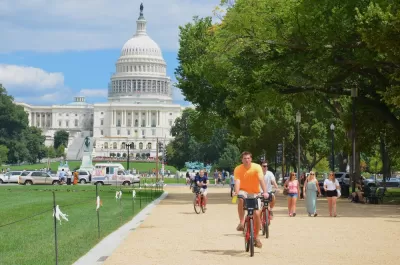
The Federal Highway Administration released updated guidance for bicycle, pedestrian, and micromobility projects to align with new policies in the 2021 infrastructure law and improve safety for bicyclists and pedestrians.
As Michael Brady explains in Smart Cities Dive, “Several measures in the 2021 infrastructure law aim to help state and local governments develop and implement policies, programs and projects that advance those transportation modes.”
Among other programs such as Safe Streets for All, “The Transportation Department also awarded $800 million in February to improve road redesign and intersections and address roadway safety under the Safe Streets and Roads for All grant program. The Federal Transit Administration also said in March it would waive the local funding match requirement for Complete Streets planning activities covered by the Metropolitan Planning Program and the State Planning and Research Program.”
Despite pledges and efforts by cities around the country to improve road safety, pedestrian and cyclist deaths on U.S. roads continue to climb, in part due to road design guidelines and the design and size of many new SUVs and trucks, which can make blind spots larger and make it more difficult for drivers to see pedestrians.
FULL STORY: New federal guidance unveiled for bicycle, pedestrian and micromobility projects

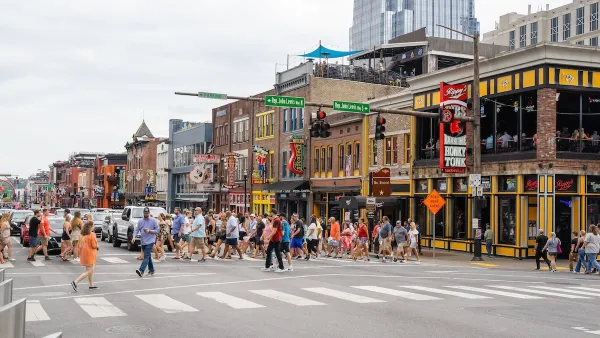
The Best Complete Streets Policies in the US, Ranked
San Antonio and Nashville top the list, with most large cities not making an appearance in the top 40.
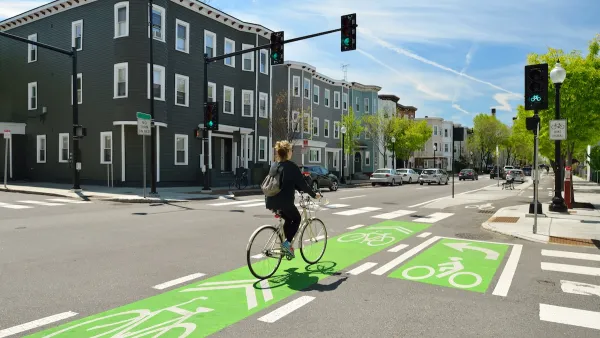
NACTO Releases Updated Urban Bikeway Guide
The third edition of the nationally recognized road design guide includes detailed design advice for roads that prioritize safety and accessibility for all users.
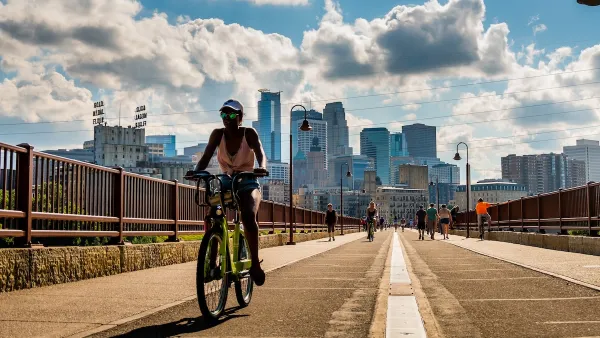
The 5 Safest Cities for Cyclists in America — and What They Have in Common
Cities with low fatality rates for people on bikes have made strong commitments to building safe, protected bike networks and supporting Complete Streets.

Planetizen Federal Action Tracker
A weekly monitor of how Trump’s orders and actions are impacting planners and planning in America.

The state-sanctioned urbicide of Austin
People don’t kill cities. Freeways do.

US to reduce Colorado River water deliveries to Mexico
A new Colorado Treaty amendment reduces Mexico’s Colorado River water allocation by 250,000 acre feet.

Baltimore to break ground on $50 million Transit Priority Project
The project will bring faster bus trips, safer streets and better bike connections to Baltimore.

Airbnb launches $250 million 'last-dollar financing' housing accelerator, makes first investment in Austin
The company will put $6.4 million towards affordable housing development in Texas’ capital.

Guerilla urbanists are building DIY bus stop benches in Chicago
A before-and-after of one of the bus stops with a new bench. The new benches are not officially sanctioned or permitted, but the residents who placed them hope they will be the start of a network of DIY benches across the city.

FREE Course: Walkable City 1: Why Walkability?
After describing his path towards focusing on walkability as the essence of good planning, Jeff Speck marches through his five principal reasons for making more walkable places.
Reinventing Malls: Planning Alchemy—Turning Gray Fields Into Gold
The course focuses on the opportunities and imperatives that shape reinvention of mall sites.

Eagle County Government
Harvard University Graduate School of Design
Nashville Planning Department
The Architects Foundation
University of Cincinnati Online
The Pocatello Development Authority
The Urban Renewal Agency of the City of Pocatello
Journal of the American Planning Association