The city is implementing its first-ever Vision Zero Action Plan in an effort to reduce pedestrian and cyclist deaths and serious injuries.


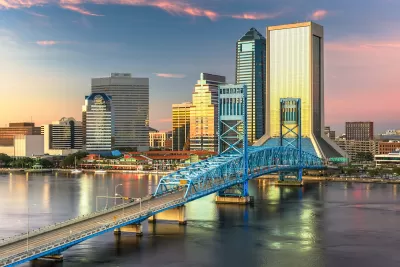
Jacksonville, Florida is launching its first Vision Zero Action Plan, in a welcome piece of news for road safety advocates in the third most dangerous city for cyclists in the country.
As Christina Burgess explains in First Coast News, “The city plans on using proactive ways to make streets safer like pinpointing the most dangerous intersections, improving crosswalks and bike lanes, and garnering community feedback to know what the public envisions.”
City officials say they plan to implement quick-build, temporary projects to assess their effectiveness and the community response. “The River City will be collaborating with the Jacksonville Transportation Authority, the Florida Department of Transportation and local law enforcement on this safety plan to cover state and local roads,” Burgess adds.
While few cities have ever achieved ‘Vision Zero,’ these plans help reorient priorities around street design and safety to focus on protecting the most vulnerable road users.
Read the full story: City of Jacksonville unveils 'Vision Zero Action Plan' designed to end traffic fatalities

Pedestrian Deaths Tick Down — But Rose 58 Percent in the Last Decade
Road fatalities fell by a meager 4 percent in the first half of 2023.
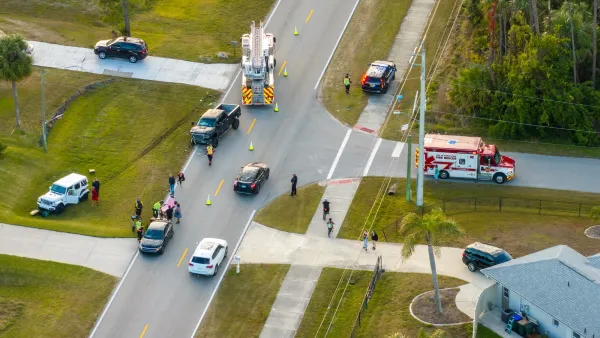
Pedestrian Deaths Fell by Largest Percentage in 15 Years, but Remain Above Pre-Pandemic Levels
After a spike in deaths during the Covid-19 years, road deaths fell to 3,024 in the first half of 2025.
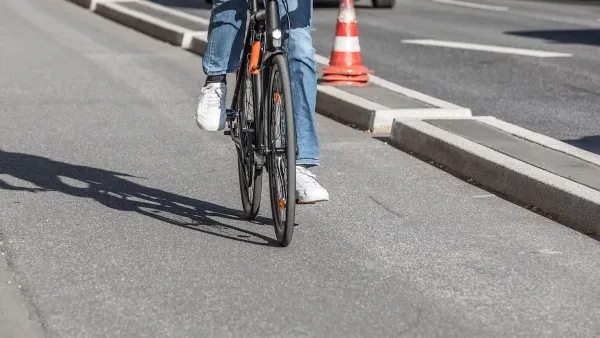
Southeast LA Road Safety Advocates Call for Improved Infrastructure
Streets in southeastern Los Angeles County have a severe lack of protected bike lanes and traffic safety measures, leading to high numbers of fatalities in a community where many residents depend on walking and biking for daily needs.

Planetizen Federal Action Tracker
A weekly monitor of how Trump’s orders and actions are impacting planners and planning in America.

California plans to bury El Niño’s downpour
If the state plays its cards right, it may be able to store a billion acre-feet of El Niño’s water in aquifers.

Chicago breaks ground on $3 billion megadevelopment
The new neighborhood, titled Foundry Park, will one day host 3,700 residences.

California High-Speed Rail Authority CEO resigns after $600,000 scandal
Under Ian Choudri, the authority used taxpayer dollars to fund first class flights and trips to nightclubs.

Want to study the Missouri River? Soon, you may need unanimous approval from 10 states
Legislation would require 10 governors’ permission to study or build projects moving water outside the basin.

Desperate measures: Advocates weigh draining Lake Powell to fill Colorado River
Draining the reservoir could reduce evaporation losses by a couple hundred thousand acre-feet.

FREE Course: Walkable City 1: Why Walkability?
After describing his path towards focusing on walkability as the essence of good planning, Jeff Speck marches through his five principal reasons for making more walkable places.
Reinventing Malls: Planning Alchemy—Turning Gray Fields Into Gold
The course focuses on the opportunities and imperatives that shape reinvention of mall sites.

City of Rosemead
Rutgers University, Edward J. Bloustein School of Planning and Public Policy
One Hundred Miles
Hunter College, City University of New York (CUNY)
The Architects Foundation
University of Cincinnati Online
City of Cambridge
Montrose County
The Pocatello Development Authority