Creativity has long been key to great urban design. What if we see AI as our new creative partner?



This piece is the second installment of AICP planner and AI specialist Tom Sanchez’s new monthly column on AI and urban planning. Read his first column, “Four Reasons Planners Can’t Ignore AI” here.
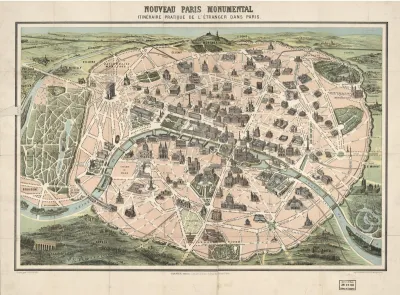
Urban planning has always been a creative field. From Haussmann’s grand redesign of Paris in the 1860s to Jane Jacobs’ fight to preserve the lively streets of Greenwich Village in the 1960s, creativity and design have shaped how cities look, feel, and function. In The Death and Life of Great American Cities, Jacobs said that “Cities have the capability of providing something for everybody, only because, and only when, they are created by everybody.” Her quote implies the importance of both creativity and inclusiveness in the planning process.
Today, however, planners are facing challenges that seem bigger and more complex than ever, including climate change, housing shortages, and the rapid pace of technological change. Meeting these challenges will require knowledge, ideas, and innovative approaches. The emergence of artificial intelligence (AI), particularly Generative AI (GenAI), has been gaining attention (and concern) for designing urban spaces.
In a recent piece I wrote for TAD Journal (Technology | Architecture + Design), I suggested that AI isn’t just a technical tool, but it can potentially serve as a creative partner, extending to imagery, text, coding, and knowledge management. For me, it’s almost like bouncing ideas off a colleague, sometimes one with deep subject expertise, other times someone outside the field entirely who offers a fresh, unexpected take. In both cases, AI can help me see things I might not have considered on my own, pushing my thinking in new and sometimes surprising directions. But before discussing how AI fits in, let’s step back and think about what creativity means, as well as its connection to planning today.
What creativity means in planning
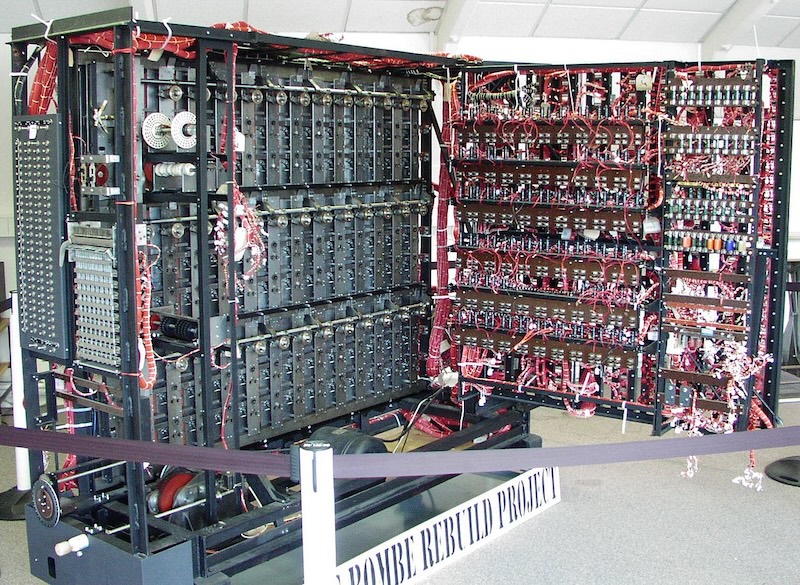
When most people hear the word “creativity,” they probably think about painting, music, writing, or other artistic pursuits. These activities reflect a process of exploration, experimentation, and refinement, where ideas evolve through persistence and engagement rather than sudden inspiration. But creativity isn’t limited to the arts; it plays a critical role in all fields. In technical innovation, creativity drives the discovery of new solutions and the blending of ideas across disciplines, rethinking what is possible. The creation of computers and analytical processes is a notable example, particularly when considering the contributions of Alan Turing, John von Neumann, and Benoit Mandelbrot. Their work not only transformed mathematics and computing but also opened up entirely new ways of thinking about complexity, systems and patterns, concepts that are central to modern urban planning.
Norm Wright, AICP, a seasoned planner, offers a helpful way to think about creativity in our field: “Creativity is the natural response to unique problems. With planning, it isn’t so much a conscious choice to be ‘creative.’ It happens when we understand the issues we’re facing and accept the confines of our resources to provide solutions.” In other words, creativity in planning is about solving problems in ways that yield better results as soon as possible, not creativity for its own sake.
Take, for example, Wright’s experience managing oil and gas fracking conflicts along Denver’s suburban fringe. Severely constrained by state preemption and competing interests among industries, communities, and environmental groups, Wright and his team avoided a one-size-fits-all solution. Instead, they developed three carefully designed policy alternatives, each addressing different stakeholder concerns. This approach, providing a “choice architecture” rather than a single compromised policy, helped build trust and made it easier for elected officials to make informed decisions. This case shows that creativity in planning often lies not in bold visions alone but in structuring real choices that address complexity head-on.
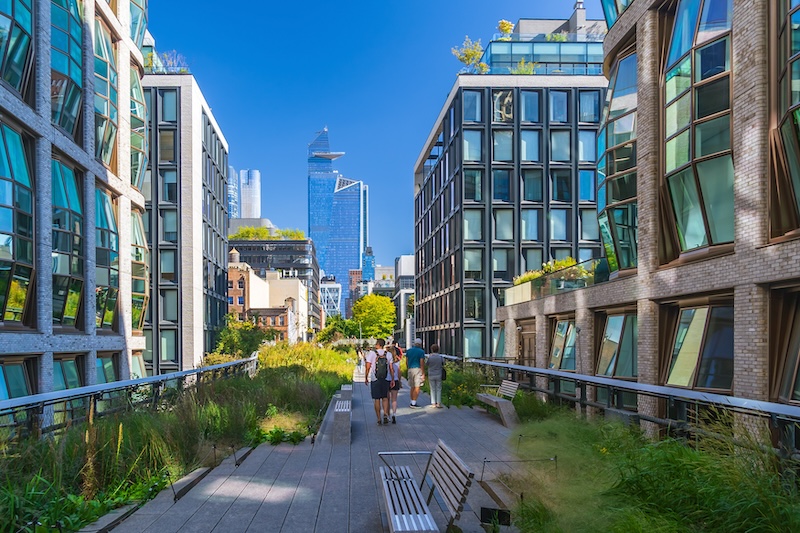
Other examples include the High Line in New York City, once an abandoned raised rail line, now one of the world’s most famous urban parks, designed by Field Operations, Diller Scofidio + Renfro, and Piet Oudolf. And the Superblocks (Superilles) in Barcelona, first implemented in 2016, reimagined streets for people rather than cars. These examples show that creativity in planning isn’t just about making something look nice; it’s about solving tough problems and improving the quality of life while juggling budgets, policies, and politics.

How AI can help spark new ideas
I don’t think AI will replace planners, but hopefully, it will open up new ways to think about the issues we face. GenAI tools, such as Midjourney, DALL·E, or Adobe Firefly, can generate quick design ideas or visualizations that surpass what we might come up with on our own. These tools can suggest possibilities we might not see by simply sticking to the usual methods. Even if the results are imperfect, they stimulate other ideas. In essence, they act as creative partners, offering new perspectives and accelerating the early stages of design and problem-solving.
Simulation tools can also help. Want to know how a new park might affect traffic patterns or local temperatures? AI can model different scenarios, allowing planners to visualize potential impacts before any construction begins. And when it comes to public engagement, AI can help visualize these possibilities in ways that communities can understand and engage with more easily.
The role of the human, and in this case, the planner, depends heavily on the quality of the prompts, or the questions we ask an AI or the directions we give it. A well-crafted prompt helps guide the AI toward outputs that are relevant, insightful, and creatively valuable. In many ways, prompting becomes a new form of design thinking: it requires clarity, curiosity, and a sense of exploration. The better we are at asking AI thoughtful questions or framing specific challenges, the more effectively it can expand our creative possibilities and support communication with stakeholders.
The following is a very simple example of how the specificity of GenAI prompts can make a difference in the types of output generated. Starting with a basic image of a park space, I asked ChatGPT (i.e., Dall-E 3, a text-to-image model) “I am looking for ideas to improve this park space to be more appealing to children. Please provide an image with suggestions.” I uploaded the following image, along with the prompt.
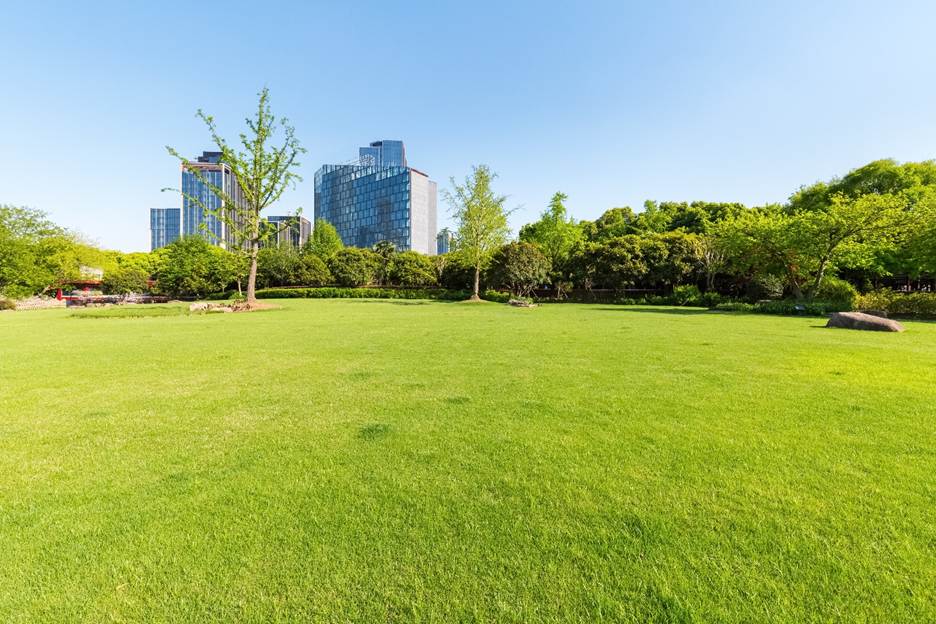
The result of the simple prompt was the following:
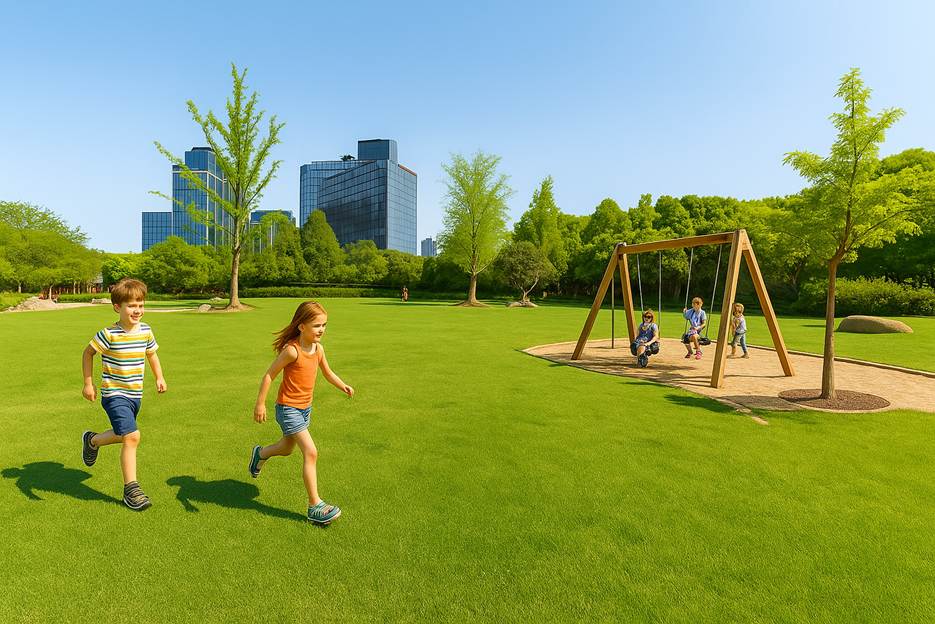
This output can be compared to the relatively more detailed prompt, “I am looking for ideas to improve this park space to be more appealing to children. This might include seating areas for kids and parents that are shaded and perhaps a water fountain. Please provide an image with suggestions.” This produced the following image:
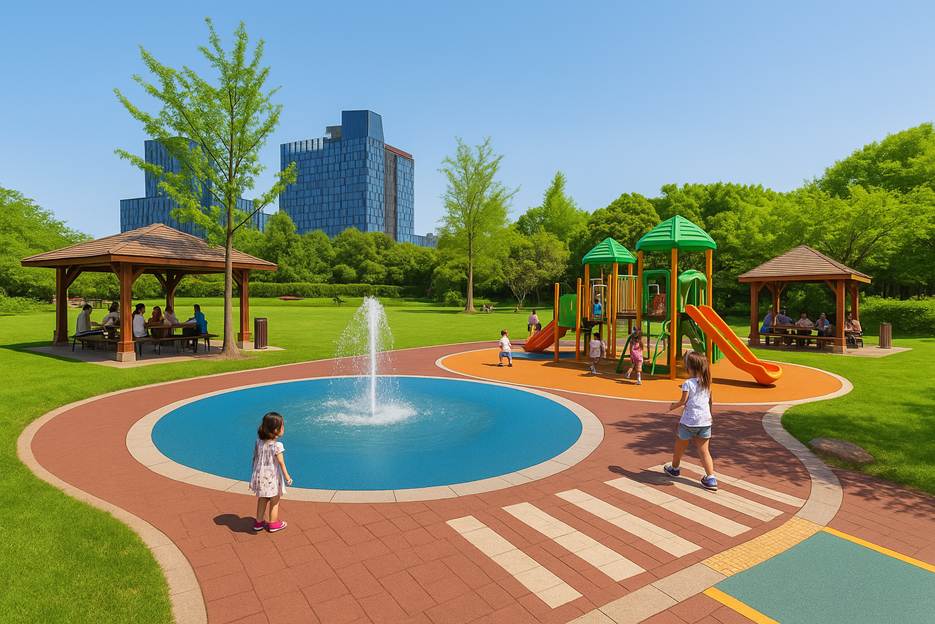
Further iterations, which include requests for modifications, simulate conversations and interactions with a creative partner. The quality, detail, and specificity of a prompt directly shape the relevance and usefulness of the output. A vague prompt often results in generic, low-impact responses, while a well-crafted, specific prompt guides the model to produce content that better matches your intent. Detailed prompts help the AI understand context, constraints, and desired outcomes making the generated ideas more actionable and aligned with real-world needs.
Keeping the human side front and center
Even with all this technology, creativity still starts with people. No AI tool can replace a good conversation with a community member or the insight that comes from walking a neighborhood. Sometimes, it’s the simplest methods—sketching an idea on paper or talking through a problem face-to-face—that lead to creative solutions.
Norm Wright cautions that while there are risks of AI reinforcing the status quo, the greater danger lies in how we use these tools: “AI is just the tool. It’s the users that reinforce the status quo through their own lack of creativity.” The real problem is not technological, but human. We have been producing formulaic plans long before AI entered the picture, which is what AI has learned from. If we’re not careful, AI will simply reflect the mistakes we’ve already been making for years. The challenge for planners is to remain critical and purposeful, using AI to innovate rather than entrench familiar patterns.
Working across disciplines is essential. Collaborating with architects, landscape architects, engineers, artists, and technologists brings in diverse perspectives that can help spark new ideas. AI integrates knowledge and techniques from each of these fields. Contributing to a culture where planners feel free to experiment, where trying something new is encouraged rather than being frowned upon, is key to real innovation. Whether engaging with colleagues or prompting an AI model, creativity thrives in conversation and collaboration.
Working across disciplines is essential. Collaborating with architects, landscape architects, engineers, artists, and technologists brings in diverse perspectives that can help spark new ideas. AI integrates knowledge and techniques from each of these fields. Building a culture where planners feel free to experiment, where trying something new is encouraged rather than penalized, is key to real innovation. Whether engaging with colleagues or prompting an AI model, creativity thrives in conversation and collaboration.
The real advantage
Cities should be shaped by creative thinking, and today’s challenges demand more of it than ever. Planners are in a unique position to combine deep local knowledge with new technologies, such as AI, to imagine, design, plan, and implement. AI should be seen not as a shortcut, but it has incredible potential as a partner or assistant with encyclopedic knowledge that helps planners stretch their creativity even further. As Wright advises, planners should challenge themselves with constraints to spark creativity: For instance, “What would you do if you had to write an entire zoning ordinance with 10 rules or less to make a sustainable built environment?” Such exercises encourage us to set clearer goals and find better solutions.
By combining traditional tools with emerging technologies, planners can design places that are not only functional but also vibrant, equitable, and resilient.
As we explore these ideas together, I’d love to hear from you. How have you used creativity, with or without AI, in your planning work? Have you tried any new tools or approaches that sparked unexpected results? Send your thoughts, experiences, or questions to [email protected].
I want to thank Norm Wright, AICP, for his insightful comments and thoughts. Norm is the Founder and Principal of Parameter Consultants.
Thanks also to linn meyers for her thoughts on creativity. linn is a visual artist based in Washington, D.C. and Los Angeles.

5 ways to hallucination-proof your AI output
With public trust on the line, the stakes are high for urban planners to ensure accuracy in our AI work. Here’s how to do it.

Getting Started with AI: A Practical Guide for Urban Planners
Planetizen’s resident AI and planning expert answers the number one question he gets asked: where do I begin?
Will Urban Planners Lose Their Jobs to AI?
Let’s see what the data says.

Planetizen Federal Action Tracker
A weekly monitor of how Trump’s orders and actions are impacting planners and planning in America.

The state-sanctioned urbicide of Austin
People don’t kill cities. Freeways do.

US to reduce Colorado River water deliveries to Mexico
A new Colorado Treaty amendment reduces Mexico’s Colorado River water allocation by 250,000 acre feet.

Brightline West’s future may rely on $6 billion federal loan
The company has until Nov. 2 to make a $400 million equity investment into its proposed high-speed rail line.

LA Metro’s ultimatum: no extra buses for LA28 if federal funding isn’t imminently secured
If Metro does not provide additional buses, LA28 organizers will have to find a new way to manage Olympic traffic. LA28’s budget does not include a line item for transit.

Colorado’s Largest Data Center Could Rise Next to Homes — Without a Public Hearing
The proposed campus would consume 11 times the power of Denver International Airport; as it has across the country, opposition mounts.

FREE Course: Walkable City 1: Why Walkability?
After describing his path towards focusing on walkability as the essence of good planning, Jeff Speck marches through his five principal reasons for making more walkable places.
Reinventing Malls: Planning Alchemy—Turning Gray Fields Into Gold
The course focuses on the opportunities and imperatives that shape reinvention of mall sites.

Eagle County Government
Harvard University Graduate School of Design
Nashville Planning Department
The Architects Foundation
University of Cincinnati Online
The Pocatello Development Authority
The Urban Renewal Agency of the City of Pocatello
Journal of the American Planning Association


