SFUSD joins a growing list of school districts using their land holdings to address housing affordability challenges faced by their own employees.


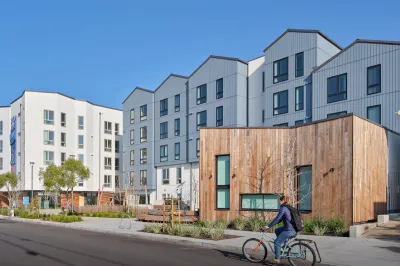
The San Francisco Unified School District opened its first affordable housing development, Shirley Chisholm Village, “a 135-unit housing complex in San Francisco’s oceanside Sunset District. Built on district-owned land, with affordable rents and preference given to SFUSD educators.”
As Nate Berg explains in Fast Company, “The $105 million project was developed by the nonprofit MidPen Housing with a design by San Francisco-based BAR Architects & Interiors in association with G7A | Gonzales Architects, and in coordination with the San Francisco Mayor’s Office of Housing and Community Development.”
The units are reserved for residents who make between 30 and 100 percent of the area median income and represent a growing movement by school districts to use their resources to provide workforce housing for educators and district employees. The district has three additional housing projects in the works.
The building includes a fifth floor work-from-home area and gathering space separate from the private living spaces. “Though the project was not required to include parking under the city’s zoning code, the developers chose to include some underground spaces, partly to assuage neighborhood concerns about street parking and partly at the request of the educators who helped guide the design process.”
Prior to the housing development, the lot was vacant, with the community using it as a park. To address the loss of this communal space, the development includes a public plaza, playground, and seating area accessible from the street.
FULL STORY: San Francisco transformed an old parking lot into affordable housing for public school teachers

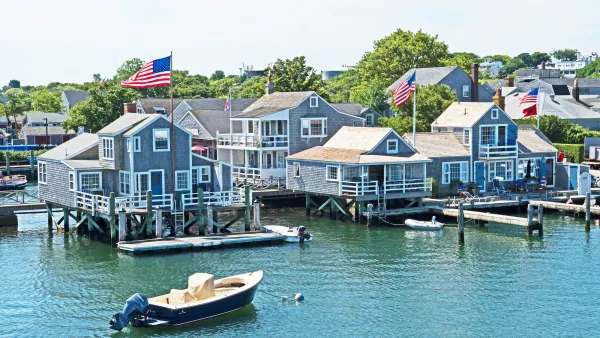
In Nantucket, where over half of homes are for seasonal use, workers struggle to find affordable housing
The island is short roughly 892 to 1,081 rental units.

This Colorado Ski Town Saves 75% of its Full-time Housing for Local Workers
Breckenridge has invested millions in creating deed-restricted workforce housing for local residents.

How a San Francisco Land Trust is Preserving Affordable Housing for Artists
The Artist Space Trust has received $10 million in properties bequeathed by artists that will become permanently affordable housing.

Planetizen Federal Action Tracker
A weekly monitor of how Trump’s orders and actions are impacting planners and planning in America.

The state-sanctioned urbicide of Austin
People don’t kill cities. Freeways do.

US to reduce Colorado River water deliveries to Mexico
A new Colorado Treaty amendment reduces Mexico’s Colorado River water allocation by 250,000 acre feet.

5 New England states march closer to 800 megawatt wind energy project
Securing federal approval for the project may be complicated under the Trump administration, which has historically been hostile towards domestic wind power.

Baltimore to break ground on $50 million Transit Priority Project
The project will bring faster bus trips, safer streets and better bike connections to Baltimore.

Airbnb launches $250 million 'last-dollar financing' housing accelerator, makes first investment in Austin
The company will put $6.4 million towards affordable housing development in Texas’ capital.

FREE Course: Walkable City 1: Why Walkability?
After describing his path towards focusing on walkability as the essence of good planning, Jeff Speck marches through his five principal reasons for making more walkable places.
Reinventing Malls: Planning Alchemy—Turning Gray Fields Into Gold
The course focuses on the opportunities and imperatives that shape reinvention of mall sites.

Eagle County Government
Harvard University Graduate School of Design
Nashville Planning Department
The Architects Foundation
University of Cincinnati Online
The Pocatello Development Authority
The Urban Renewal Agency of the City of Pocatello
Journal of the American Planning Association