In a new report, U.S. PIRG and the Frontier Group describe nine costly highway projects amounting to $30 billion in their fourth annual "Highway Boondoggles" report. All share the theme of induced travel demand.


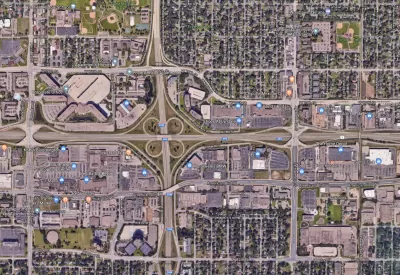
"Nine proposed highway expansion projects across the country – slated to cost $30 billion – exemplify the need for a fresh approach to transportation planning and spending," write researchers Gideon Weissman, Policy Analyst in Frontier Group’s Boston office, and Matt Casale, Director of the Highway Boondoggles Campaign for the U.S. PIRG Education Fund, in the executive summary of the 48-page report [pdf] released June 26. See base of this post for links to the three prior reports.
As America considers how to meet its infrastructure needs in a fiscally responsible way, the nation cannot afford expensive “boondoggle” projects that don’t meet our most important transportation needs.
And this year's nine winners are:
-
“Traffic Relief Plan;” Maryland; $9 billion – A plan to spend $9 billion on new highways comes as Maryland struggles to fix the Baltimore Metro, which was forced to close for urgent repairs in February 2018. [The plan would destroy affordable housing and displace low-income residents.]
-
I-49 Inner City Connection; Shreveport, Louisiana; $547 million to $640 million – A proposed new highway would slice through the heart of a neighborhood.
-
U.S. Highway 101 Expansion; San Mateo, California; $534 million – Widening U.S. Highway 101 in the San Mateo area will bring more cars into an already congested area, while directly conflicting with California’s global warming goals. [Public appears receptive to plans to add 14 miles of express lanes.]
-
Interstate 35 Expansion; Austin, Texas; $8.1 billion – Despite enormous state highway debt, and the growing need for transit and complete streets to create more compact and connected neighborhoods, policymakers have proposed spending $8 billion to expand I-35 through the middle of Austin.
-
[Update: It's not clear if this project is going forward as it was counting on using state funding from two voter-approved measures, Prop. 7 and Prop. 1, that prohibited expenditure on toll lanes, which are a major component of this project. See KXAN: "Toll road politics shut the door on I-35 overhaul plan," April 2018 and Planetizen: "Huge Toll Lane Setback in Texas," December 2017.]
-
LBJ East Expansion; Dallas, Texas; $1.6 billion – The costly expansion of an already enormous highway will create 14 lanes (plus two frontage roads) of roadway. [Includes addition of a general purpose lane in each direction and rebuilding of existing high occupancy toll (HOT) lanes]
-
Pennsylvania Turnpike Expansion; $6.9 billion – Despite a precarious financial situation that threatens transit systems across the state, the Pennsylvania Turnpike Commission is undertaking an expensive highway widening project on 470 miles of highway.
-
I-94 North South Expansion; Wisconsin; $1.7 billion to $1.9 billion - A highway expansion that would drain resources from other state projects is moving forward as part of an economic incentive package for electronics manufacturing company Foxconn. [The NAACP sued the project as a matter of environmental justice.]
-
I-285 & SR 400 Interchange Rebuilding; Atlanta, Georgia; $596 million – An expensive interchange project is moving forward even as Atlanta residents clamor for more and better transit.
-
North Spokane Corridor; Spokane, Washington; $1.5 billion - A proposed highway will slice through a historic Spokane neighborhood and take money from other transportation priorities, in order to take just minutes off the drive to low-density suburbs north of the city. [Two women prevented highway incursion into a Spokane] neighborhood in the 1970s.]
While the $30 billion may bring initial congestion relief, Weissman and Casale write that the expanded highways will draw "new drivers to the roads, often resulting in a rapid return to the congested conditions the expansion project was originally supposed to solve. The return to congestion after a road expansion is so predictable it has been called the 'Fundamental Law of Road Congestion.'"
A related article in Strong Towns by Rachel Quednau, who cites the new study, highlights the "fundamental law" noted above, aka induced (travel) demand, by describing "two key reasons why the conversation on congestion is so misguided and why the proposed solution is no solution at all."
"The real question is: how do we want our congestion? Do we want it in two lanes, four lanes, or eight lanes?” asked Strong Towns president, Chuck Marohn.
Past coverage of U.S. PIRG/Frontier Group reports on highway boondoggles by Planetizen:
-
April 20, 2017
-
January 19, 2016
More from U.S. PIRG/Frontier Group:
- Fact sheet [pdf] on Highway Boondoggles 4 (June 2018)
- First Highway Boondoggles report, 2014
Hat tip to David Orr.
FULL STORY: Highway Boondoggles 4: Big Projects. Bigger Price Tags. Limited Benefits.

PIRG Releases Third Highway Boondoggles Report
A new report from the U.S. Public Interest Research Group and the Frontier Group indicates that highway boondoggles have been getting bigger, more costly, with the benefits more limited. Nine projects are analyzed in "Highway Boondoggles 3."
Report Identifies 12 'Highway Boondoggles'
A new report by U.S. PIRG and the Frontier Group identifies the highway projects most likely to break the transportation funding bank.
When Carpool Lanes Cause Mayhem
A newly widened Bay Area freeway serves as a reminder of the futility of HOV lanes. There are better ways to manage and mitigate traffic.

Planetizen Federal Action Tracker
A weekly monitor of how Trump’s orders and actions are impacting planners and planning in America.

The state-sanctioned urbicide of Austin
People don’t kill cities. Freeways do.

US to reduce Colorado River water deliveries to Mexico
A new Colorado Treaty amendment reduces Mexico’s Colorado River water allocation by 250,000 acre feet.

Mamdani overhauls NYC's Vision Zero plan with 100 new policy goals
The overhaul aims to reduce traffic deaths and make streets safer for pedestrians, cyclists and drivers through lower speed limits, new safety infrastructure and more.

Amtrak not solely to blame for New Jersey commuter rail's unreliability, report finds
A new study from the Garden State Initiative found that NJ Transit’s budget grew 20% across a 4 year period, but reliability declined significantly over the same period.

EPA erases limits on planet-warming pollution from power plants
Under Monday’s plan, power plants would still have some limits on how much mercury, arsenic and other contaminants they can emit.

FREE Course: Walkable City 1: Why Walkability?
After describing his path towards focusing on walkability as the essence of good planning, Jeff Speck marches through his five principal reasons for making more walkable places.
Reinventing Malls: Planning Alchemy—Turning Gray Fields Into Gold
The course focuses on the opportunities and imperatives that shape reinvention of mall sites.

Eagle County Government
Harvard University Graduate School of Design
Nashville Planning Department
The Architects Foundation
University of Cincinnati Online
The Pocatello Development Authority
The Urban Renewal Agency of the City of Pocatello
Journal of the American Planning Association