The proposed widening of I-94 in Milwaukee is a $1.1 billion chunk of a $6.4 billion road widening program in the region. The NAACP sued the project as a matter of environmental justice.


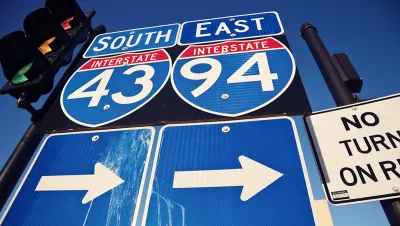
"The Wisconsin Department of Transportation is asking the federal government to rescind its decision to expand a section of Interstate-94 in Milwaukee," reports Lisa Neff.
Neff reports the details of the letter, which is shared in full alongside the article, in addition to the full text of the NAACP vs. Ross lawsuit that is challenging the expansion plan. The lawsuit centers on "environmental impacts not considered during planning for the project," such as "highway run-off of oil and other vehicular fluids" and "air pollution."
Neff also adds: "Environmental hazards would disproportionately affect African Americans and Latinos, who comprise 57.1 percent of the area surrounding the project, according to the complaint."
Environmental attorney Dennis Grzezinski is quoted in the article saying the state's letter should be a "no-brainer" for the federal government to put an end of the project, but a final decision will come in a few weeks. The lawsuit, meanwhile, will stay in federal court.
For more background on the big news, see an article by Angie Schmitt for Streetsblog USA.
FULL STORY: WisDOT asks feds to rescind decision for controversial I-94 expansion in Milwaukee

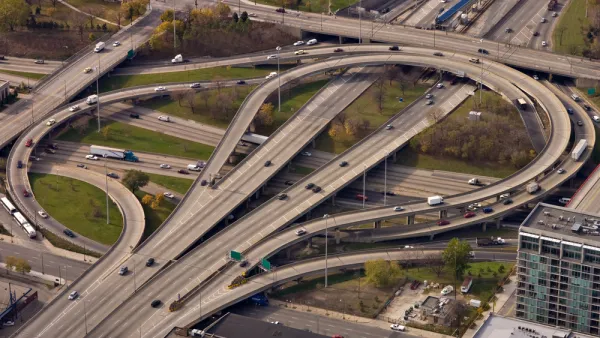
Confronting Wisconsin's $1.1 Billion Highway Widening Proposal
A coalition of environmentalists, civil rights activists, and other community interests teamed up to successfully oppose a Milwaukee highway widening proposal. In an interview, one of the leading lawyers discusses his work.
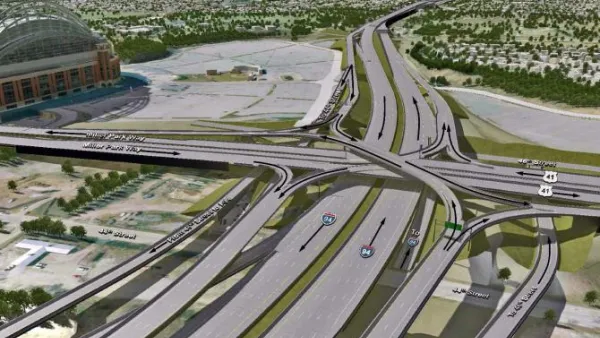
Opinion: Proposed I-94 Expansion a 'Fiasco' for Milwaukee
An opinion piece published by Urban Milwaukee argues against a proposed expansion of three miles of Interstate 94 in Milwaukee.
Civil Right Groups, Environmentalists Team Up to Block Milwaukee Highway Expansion
An already troubled proposal to widen the I-94 Freeway in Milwaukee has now encountered a legal setback.

The state-sanctioned urbicide of Austin
People don’t kill cities. Freeways do.

US to reduce Colorado River water deliveries to Mexico
A new Colorado Treaty amendment reduces Mexico’s Colorado River water allocation by 250,000 acre feet.

New Jersey’s second-largest city bans standalone data centers
Jersey City will continue to allow co-location facilities, such as those meant for research institutions that store their own data.

Amtrak not solely to blame for New Jersey commuter rail's unreliability, report finds
A new study from the Garden State Initiative found that NJ Transit’s budget grew 20% across a 4 year period, but reliability declined significantly over the same period.

EPA erases limits on planet-warming pollution from power plants
Under Monday’s plan, power plants would still have some limits on how much mercury, arsenic and other contaminants they can emit.

Phoenix announces new on-demand transit service, more frequent RAPID buses
Both new services will launch in October, and are part of Phoenix's Project Effective Access Solutions for Easing Congestion.

FREE Course: Walkable City 1: Why Walkability?
After describing his path towards focusing on walkability as the essence of good planning, Jeff Speck marches through his five principal reasons for making more walkable places.
Reinventing Malls: Planning Alchemy—Turning Gray Fields Into Gold
The course focuses on the opportunities and imperatives that shape reinvention of mall sites.

Eagle County Government
Harvard University Graduate School of Design
Nashville Planning Department
The Architects Foundation
University of Cincinnati Online
The Pocatello Development Authority
The Urban Renewal Agency of the City of Pocatello
Journal of the American Planning Association