The region spanning the two central Texas cities is growing fast, posing challenges for local infrastructure and water supplies.


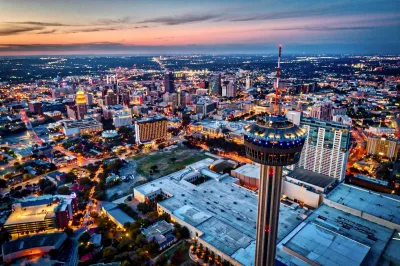
The Central Texas region between Austin and San Antonio is growing into one massive metro area, writes Jared Brey in Governing.
Small towns dotting the area between the two cities are exploding with new development. One such town, Cedar Park, grew from 5,000 people in 1990 to over 77,000 people today. According to Brey, “Between July 2023 and July 2024 alone, the Texas population grew by nearly 563,000. Its economy is now larger than Canada’s, and second among U.S. states only to California.” This growth comes with a new tax base — and a need for new and upgraded infrastructure.
Growth at this scale is causing some real headaches, notably in areas such as traffic and water. Texas already has too much of one and not enough of the other. But rapid and sustained growth has showered benefits on local governments. Many of them can invest at a scale they’ve never experienced before.
Brey notes that the challenges and opportunities aren’t localized, and many require action at a regional scale. “At the top of everyone’s list is traffic congestion on Interstate 35, which has slowed to a crawl as the region has boomed,” with the drive between Austin and San Antonio now taking at least twice as long as a decade ago. A proposal to build a high-speed rail line between the two cities could help, but federal funding for the project is uncertain during the current administration.
Cities in the region are also struggling to meet demand for water, which primarily comes from local aquifers. The Edwards Aquifer, the most important in the area, is at its lowest level since 1990.
FULL STORY: Texas Cities Encourage and Cope With Massive Growth

Study: There's a Lot of Vacant Land in Texas Cities
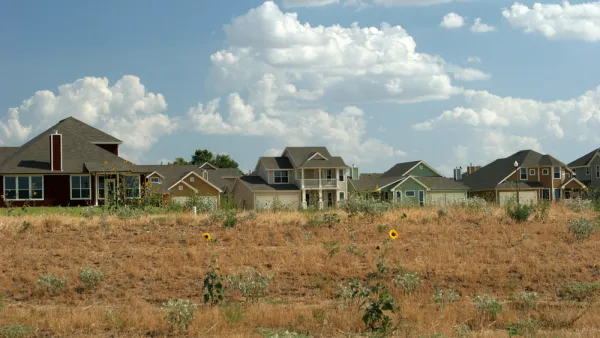
All that empty acreage means that these big, rapidly developing cities don’t really have to sprawl.
The Massive Growth Along the I-35 Corridor in Texas
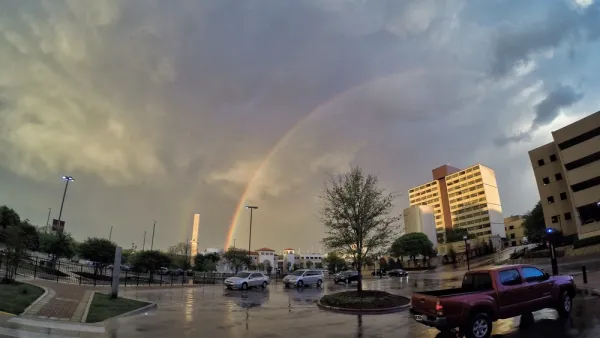
In a Forbes piece, Joel Kotkin details the rapid growth in population and economy (especially jobs) of Austin and San Antonio and the emerging city of San Marcos between the two.
America's Expanding Cities
Nate Berg explains why recent headlines about the rise of the country's urban population shouldn't have smart growth advocates claiming victory just yet.

Planetizen Federal Action Tracker
A weekly monitor of how Trump’s orders and actions are impacting planners and planning in America.

The state-sanctioned urbicide of Austin
People don’t kill cities. Freeways do.

US to reduce Colorado River water deliveries to Mexico
A new Colorado Treaty amendment reduces Mexico’s Colorado River water allocation by 250,000 acre feet.

5 New England states march closer to 800 megawatt wind energy project
Securing federal approval for the project may be complicated under the Trump administration, which has historically been hostile towards domestic wind power.

Baltimore to break ground on $50 million Transit Priority Project
The project will bring faster bus trips, safer streets and better bike connections to Baltimore.

Airbnb launches $250 million 'last-dollar financing' housing accelerator, makes first investment in Austin
The company will put $6.4 million towards affordable housing development in Texas’ capital.

FREE Course: Walkable City 1: Why Walkability?
After describing his path towards focusing on walkability as the essence of good planning, Jeff Speck marches through his five principal reasons for making more walkable places.
Reinventing Malls: Planning Alchemy—Turning Gray Fields Into Gold
The course focuses on the opportunities and imperatives that shape reinvention of mall sites.

Eagle County Government
Harvard University Graduate School of Design
Nashville Planning Department
The Architects Foundation
University of Cincinnati Online
The Pocatello Development Authority
The Urban Renewal Agency of the City of Pocatello
Journal of the American Planning Association