In the wake of Trump’s cuts to high-speed rail projects, rail authorities are looking to private-public partnerships to supplement their budgets.


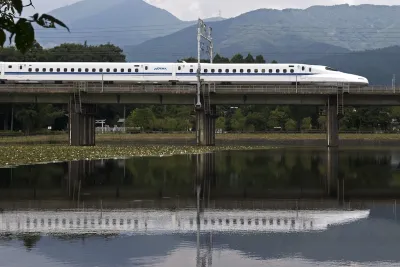
The California High-Speed Rail Authority is seeking outside funding to continue its work on an HSR line that would eventually connect Los Angeles and San Francisco.
According to Dan Zukowski of Smart Cities Dive, “Possible areas of discussion include monetizing assets such as train sets, station facilities, track access, fast cargo and parcels movement. Other opportunities include transit-oriented development, real estate, allowing fiber optic lines along the right-of-way and leasing certain assets to the private sector.” Authority CEO Ian Choudri says the agency has reached out to private sector investors who have expressed “strong and growing interest” and will release a request for expression of interest for private-public partnerships soon.
In Texas, USDOT also pulled funding for the proposed Dallas-to-Houston HSR line, ending Amtrak’s involvement in the project. Now, Texas Central officials are similarly seeking out private investment to make up for the loss.
Read the full story: California high-speed rail project seeks outside investors

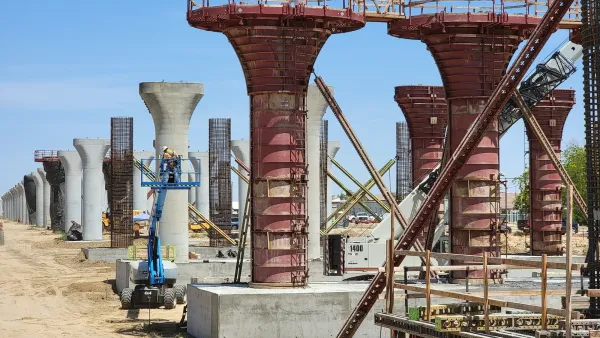
Legal Standoff Over Federal Funding for California High-Speed Rail Heats up
A judge dismissed the Trump administration’s request to throw out a lawsuit brought by the state’s high-speed rail authority.
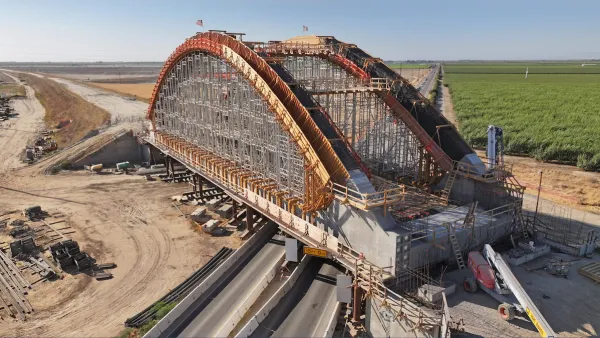
62% of Californians Still Want High-Speed Rail
The majority of Californians want the state to keep building the California High-Speed Rail Project, which is moving ahead despite the loss of federal funding.
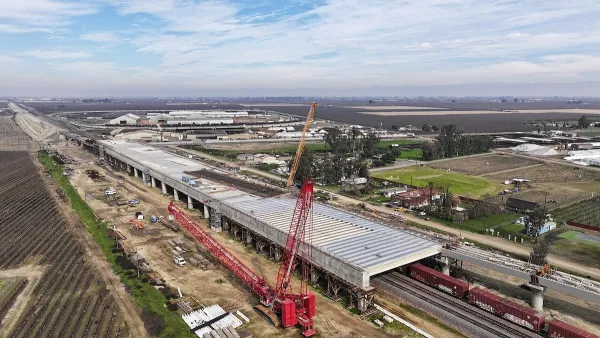
DOT Officially Cancels California High-Speed Rail Funding
The Trump administration has repeatedly taken aim at the LA-to-Bay Area rail project, blaming Democratic leaders for cost overruns and delays.

Planetizen Federal Action Tracker
A weekly monitor of how Trump’s orders and actions are impacting planners and planning in America.

California plans to bury El Niño’s downpour
If the state plays its cards right, it may be able to store a billion acre-feet of El Niño’s water in aquifers.

Chicago breaks ground on $3 billion megadevelopment
The new neighborhood, titled Foundry Park, will one day host 3,700 residences.

Satanic Place Names
From streams and lakes to valleys and canyons, I mapped more than 1,000 places named after the Devil.

California High-Speed Rail Authority CEO resigns after $600,000 scandal
Under Ian Choudri, the authority used taxpayer dollars to fund first class flights and trips to nightclubs.

Want to study the Missouri River? Soon, you may need unanimous approval from 10 states
Legislation would require 10 governors’ permission to study or build projects moving water outside the basin.

FREE Course: Walkable City 1: Why Walkability?
After describing his path towards focusing on walkability as the essence of good planning, Jeff Speck marches through his five principal reasons for making more walkable places.
Reinventing Malls: Planning Alchemy—Turning Gray Fields Into Gold
The course focuses on the opportunities and imperatives that shape reinvention of mall sites.

City of Rosemead
Rutgers University, Edward J. Bloustein School of Planning and Public Policy
One Hundred Miles
Hunter College, City University of New York (CUNY)
The Architects Foundation
University of Cincinnati Online
City of Cambridge
Montrose County
The Pocatello Development Authority