Nate Berg explains why recent headlines about the rise of the country's urban population shouldn't have smart growth advocates claiming victory just yet.


It seems that the recently released census figures provide some interesting findings regarding the quality of America's urban population growth, and not just its quantity. As Berg explains, it appears as our appetites for urban living have continued to grow, so has the sheer size of many cities and urban areas.
According to Berg, between 2000 and 2010, "There were 29 [cities] that saw increases of 100 square miles or more. And 76 saw increases of 50 square miles or more." Although Atlanta led the pack with the largest absolute increase in its urban area (nearly 683 square miles), four of the top ten growing cities are in Texas.
To what is this expansion attributable? Kevin Hawley, a geographer at the Census Bureau, looks to the continued outward growth of suburbs. "These growing urban areas aren't just cities extending their borders, according to Hawley, but rather clusters of urban development on the fringes of cities that are growing towards each other. As two areas spread out and get closer together, the space in between 'gets sort of swallowed as growth between the two areas happens,' Hawley says."
FULL STORY: America's Growing Urban Footprint


City vs. State: Mayors Want Power to Require Mask Wearing to Slow Coronavirus Spread
Coronavirus cases are surging in the Lone Star State's urban areas, so mayors of nine of its largest cities asked Greg Abbott for the power to mandate the wearing of masks or facial coverings, prohibited by executive order, to slow viral spread.
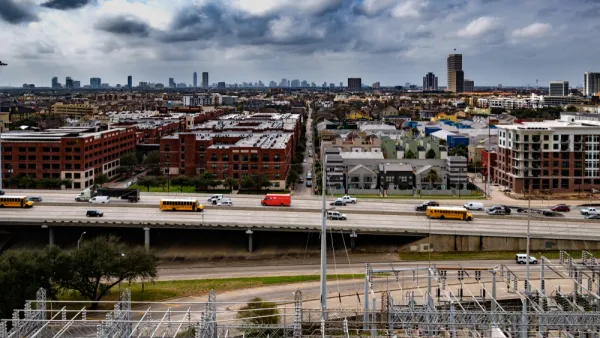
Texas Losing its Housing Affordability Advantage
Trends pre-dating Covid-19 showed housing affordability slipping away from many residents in Texas. The pandemic will likely only exacerbate the trend, according to this analysis.
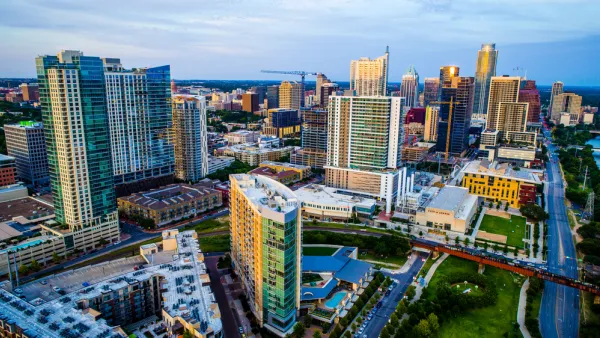
'Urban Luxury' Housing Skyrockets in Texas and Beyond
An explosion of upscale multifamily development in Texas cities reflects trends in the national housing market.

The state-sanctioned urbicide of Austin
People don’t kill cities. Freeways do.

US to reduce Colorado River water deliveries to Mexico
A new Colorado Treaty amendment reduces Mexico’s Colorado River water allocation by 250,000 acre feet.

New Jersey’s second-largest city bans standalone data centers
Jersey City will continue to allow co-location facilities, such as those meant for research institutions that store their own data.

Amtrak not solely to blame for New Jersey commuter rail's unreliability, report finds
A new study from the Garden State Initiative found that NJ Transit’s budget grew 20% across a 4 year period, but reliability declined significantly over the same period.

EPA erases limits on planet-warming pollution from power plants
Under Monday’s plan, power plants would still have some limits on how much mercury, arsenic and other contaminants they can emit.

Phoenix announces new on-demand transit service, more frequent RAPID buses
Both new services will launch in October, and are part of Phoenix's Project Effective Access Solutions for Easing Congestion.

FREE Course: Walkable City 1: Why Walkability?
After describing his path towards focusing on walkability as the essence of good planning, Jeff Speck marches through his five principal reasons for making more walkable places.
Reinventing Malls: Planning Alchemy—Turning Gray Fields Into Gold
The course focuses on the opportunities and imperatives that shape reinvention of mall sites.

Eagle County Government
Harvard University Graduate School of Design
Nashville Planning Department
The Architects Foundation
University of Cincinnati Online
The Pocatello Development Authority
The Urban Renewal Agency of the City of Pocatello
Journal of the American Planning Association