Trends pre-dating Covid-19 showed housing affordability slipping away from many residents in Texas. The pandemic will likely only exacerbate the trend, according to this analysis.


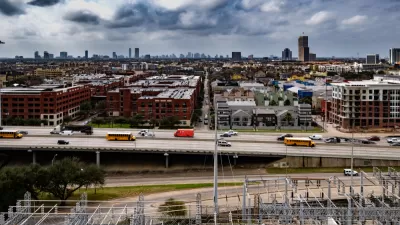
William Fulton writes about an ongoing shift in the housing market, dating back previous to the coronavirus outbreak in the United States, that threatens to end one of the economic advantages of Texas—housing affordability.
Texas has a reputation as an affordable place to live — largely because the cost of housing is much less than on the coasts. But the truth of the matter is that housing in Texas is gradually becoming less affordable — especially in the large metropolitan areas where virtually all of the population and economic growth is taking place. And that trend could prove to be a brake on Texas’ economic growth down the road.
The team at the Kinder Institute pulled data from the Joint Center for Housing Studies at Harvard University's State of the Nation’s Housing 2019 report to inform analysis of the housing market in Houston, producing a few big take-aways, with more detail in the source article:
- The state’s housing problem is concentrated in the Triangle
- The rate of homeownership in large Texas metros lags behind the nation
- The ratio of home price to income is rising in Texas
- Renters are cost-burdened and their options are dwindling
While the analysis looked at the pre-Covid housing market in Texas, some experts are predicting that the housing market will be out of reach for more Americans due to high unemployment, further reducing access to affordability in cities all over the country. Fulton predicts that similar trends in Texas will likely hasten the trends identified in the report.
Fulton also notes that the solution to Texas' housing affordability concerns vary depending on political affiliation. "For conservatives, the most important policy issue has been property taxes," according to Fulton, while liberals call for "significant government interventions similar to those used in the 'blue' states and metros on the coasts."
FULL STORY: Can Texas afford to lose its housing affordability advantage?

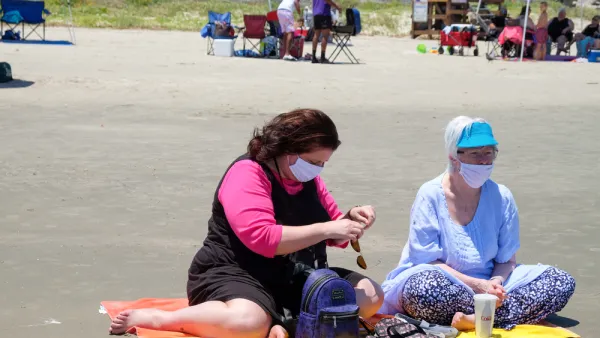
City vs. State: Mayors Want Power to Require Mask Wearing to Slow Coronavirus Spread
Coronavirus cases are surging in the Lone Star State's urban areas, so mayors of nine of its largest cities asked Greg Abbott for the power to mandate the wearing of masks or facial coverings, prohibited by executive order, to slow viral spread.

A Look at Houston's Demographic Future
Using the Urban Institute's Mapping America's Futures tool, the Kinder Institute overviews likely racial demographics in Texas and elsewhere by 2030.
Texas Embraces Cycling to Slim Down Residents and Beef Up Economies
From the panhandle to the Gulf coast, cities across traditionally car-crazed Texas are building bike-share systems and expanding bike infrastructure to lure businesses, residents, and improve public health.

Planetizen Federal Action Tracker
A weekly monitor of how Trump’s orders and actions are impacting planners and planning in America.

The state-sanctioned urbicide of Austin
People don’t kill cities. Freeways do.

US to reduce Colorado River water deliveries to Mexico
A new Colorado Treaty amendment reduces Mexico’s Colorado River water allocation by 250,000 acre feet.

Airbnb launches $250 million 'last-dollar financing' housing accelerator, makes first investment in Austin
The company will put $6.4 million towards affordable housing development in Texas’ capital.

Guerilla urbanists are building DIY bus stop benches in Chicago
A before-and-after of one of the bus stops with a new bench. The new benches are not officially sanctioned or permitted, but the residents who placed them hope they will be the start of a network of DIY benches across the city.

Mamdani overhauls NYC's Vision Zero plan with 100 new policy goals
The overhaul aims to reduce traffic deaths and make streets safer for pedestrians, cyclists and drivers through lower speed limits, new safety infrastructure and more.

FREE Course: Walkable City 1: Why Walkability?
After describing his path towards focusing on walkability as the essence of good planning, Jeff Speck marches through his five principal reasons for making more walkable places.
Reinventing Malls: Planning Alchemy—Turning Gray Fields Into Gold
The course focuses on the opportunities and imperatives that shape reinvention of mall sites.

Eagle County Government
Harvard University Graduate School of Design
Nashville Planning Department
The Architects Foundation
University of Cincinnati Online
The Pocatello Development Authority
The Urban Renewal Agency of the City of Pocatello
Journal of the American Planning Association