Free or low-cost taxi rides can help women navigate cities more safely, but critics say the programs don't address the root causes of violence against women.



German cities are offering vouchers or subsidies for taxi rides in the wake of growing violence against women, reports Marilen Martin for Bloomberg.
“In 2023, crimes against females increased in all categories, with sexual offenses surging by more than 6%, reaching 52,330 reported cases countrywide.” Cities like Mannheim and Munich (which will issue over 100,000 vouchers this year) are now paying for women to take cab rides when they have safety concerns.
“Such schemes have proved hugely popular with users, but their effectiveness in changing overall conditions remains a matter of debate,” Martin adds. The policy addresses immediate concerns but doesn’t get at the root problem of the violence. And not all women can afford the cost of longer rides to outlying areas, which vouchers don’t fully cover.
How can cities be made safer for women? “Apart from more lighting or police patrols, it can also mean designing cities that feel inclusive and revitalizing neglected public spaces. Having diverse people out in the streets at night — instead of only groups of men — also increases safety perceptions.” Cities and transit agencies can also work to increase representation among planners and designers to shift the male-centered perspective of urban planning.
Read the full story: How German Cities Are Rethinking Women’s Safety — With Taxis


Crime Continues to Drop on Philly, San Francisco Transit Systems
SEPTA and BART both saw significant declines in violent crime in the first quarter of 2025.
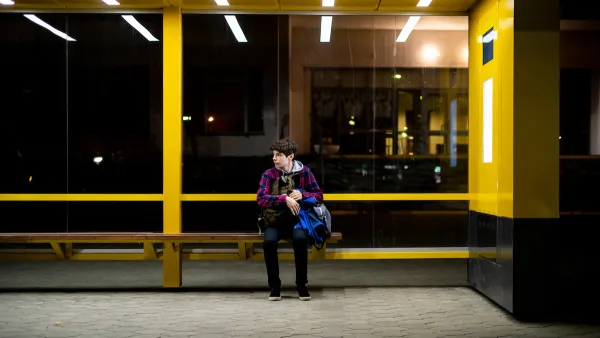
Study: How To Make Transit Safer
A new report recommends boosting ‘ambassador programs,’ improving reliability and frequency, and supporting more anti-harassment initiatives.
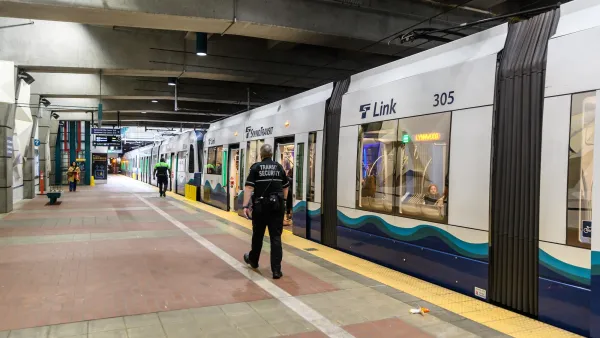
Perception vs. reality: NYC transit crime declined by 14% since 2019
In spite of popular perceptions, crime on many US transit systems is steadily dropping.

Planetizen Federal Action Tracker
A weekly monitor of how Trump’s orders and actions are impacting planners and planning in America.

California plans to bury El Niño’s downpour
If the state plays its cards right, it may be able to store a billion acre-feet of El Niño’s water in aquifers.

Chicago breaks ground on $3 billion megadevelopment
The new neighborhood, titled Foundry Park, will one day host 3,700 residences.

California High-Speed Rail Authority CEO resigns after $600,000 scandal
Under Ian Choudri, the authority used taxpayer dollars to fund first class flights and trips to nightclubs.

Want to study the Missouri River? Soon, you may need unanimous approval from 10 states
Legislation would require 10 governors’ permission to study or build projects moving water outside the basin.

Desperate measures: Advocates weigh draining Lake Powell to fill Colorado River
Draining the reservoir could reduce evaporation losses by a couple hundred thousand acre-feet.

FREE Course: Walkable City 1: Why Walkability?
After describing his path towards focusing on walkability as the essence of good planning, Jeff Speck marches through his five principal reasons for making more walkable places.
Reinventing Malls: Planning Alchemy—Turning Gray Fields Into Gold
The course focuses on the opportunities and imperatives that shape reinvention of mall sites.

City of Rosemead
Rutgers University, Edward J. Bloustein School of Planning and Public Policy
One Hundred Miles
Hunter College, City University of New York (CUNY)
The Architects Foundation
University of Cincinnati Online
City of Cambridge
Montrose County
The Pocatello Development Authority