A new report recommends boosting ‘ambassador programs,’ improving reliability and frequency, and supporting more anti-harassment initiatives.


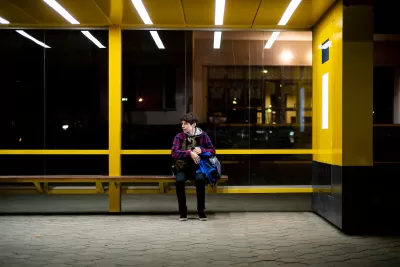
A study from TransForm called Ride Fearlessly: A Framework for Reimagining Transit Safety assesses how transit agencies can improve real and perceived public safety on trains and buses and in transit stations.
According to a story by Roger Rudick in Streetsblog San Francisco, “The study argues that systems across the country, from Philadelphia's SEPTA to the Bay Area's BART, should grow their "ambassador" programs. That means hiring people with crisis intervention skills to patrol the systems instead of flooding them with more police.”
The study also highlights enhanced service and frequency as a key way to avoid forcing riders to wait on dimly lit streets and at isolated stations. “Knowing when a bus or train is going to come allows riders to time their arrival at bus stops and stations, reducing the potential for incidents. Increasing transit frequency reduces wait times, similarly lowering the likelihood of harm.”
Read the full story: New Study Looks at How to Make Transit Feel Safe for Everyone


German Cities Subsidize Taxis for Women Amid Wave of Violence
Free or low-cost taxi rides can help women navigate cities more safely, but critics say the programs don't address the root causes of violence against women.
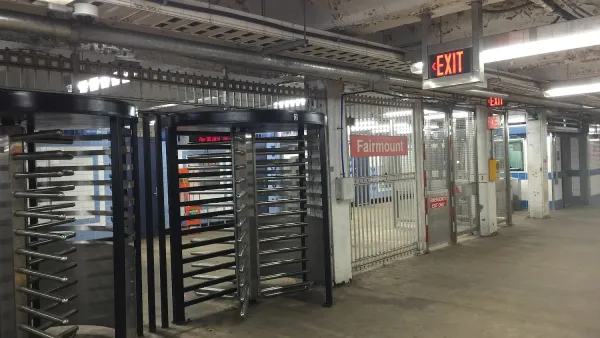
Crime Continues to Drop on Philly, San Francisco Transit Systems
SEPTA and BART both saw significant declines in violent crime in the first quarter of 2025.
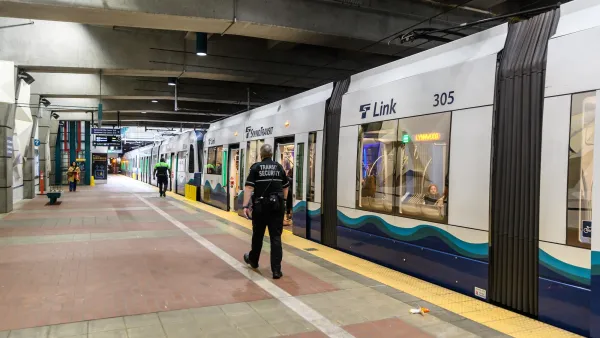
Perception vs. reality: NYC transit crime declined by 14% since 2019
In spite of popular perceptions, crime on many US transit systems is steadily dropping.

Planetizen Federal Action Tracker
A weekly monitor of how Trump’s orders and actions are impacting planners and planning in America.

California plans to bury El Niño’s downpour
If the state plays its cards right, it may be able to store a billion acre-feet of El Niño’s water in aquifers.

Chicago breaks ground on $3 billion megadevelopment
The new neighborhood, titled Foundry Park, will one day host 3,700 residences.

California High-Speed Rail Authority CEO resigns after $600,000 scandal
Under Ian Choudri, the authority used taxpayer dollars to fund first class flights and trips to nightclubs.

Want to study the Missouri River? Soon, you may need unanimous approval from 10 states
Legislation would require 10 governors’ permission to study or build projects moving water outside the basin.

Desperate measures: Advocates weigh draining Lake Powell to fill Colorado River
Draining the reservoir could reduce evaporation losses by a couple hundred thousand acre-feet.

FREE Course: Walkable City 1: Why Walkability?
After describing his path towards focusing on walkability as the essence of good planning, Jeff Speck marches through his five principal reasons for making more walkable places.
Reinventing Malls: Planning Alchemy—Turning Gray Fields Into Gold
The course focuses on the opportunities and imperatives that shape reinvention of mall sites.

City of Rosemead
Rutgers University, Edward J. Bloustein School of Planning and Public Policy
One Hundred Miles
Hunter College, City University of New York (CUNY)
The Architects Foundation
University of Cincinnati Online
City of Cambridge
Montrose County
The Pocatello Development Authority