An explosion of upscale multifamily development in Texas cities reflects trends in the national housing market.


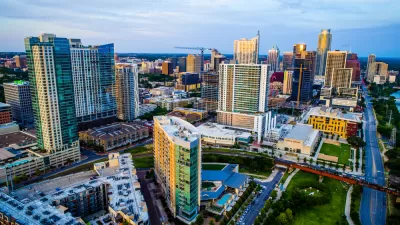
In Curbed, Patrick Sisson presents development in Texas as a microcosm of the national housing market, which is trending toward urban growth and widening inequality. "The growing number of luxury rentals—and more importantly, luxury renters—in Austin exemplifies a trend in cities across the nation: the bifurcating housing market," he writes.
Across the country, multifamily development has grown faster than single-family development ever since the recession. In Texas, that has proven true even in cities like Dallas, Houston, and San Antonio—where "sprawl has traditionally been the winning formula for growth," says Sisson.
Sisson identifies two main trends driving this demand: an influx of wealthy renters, and a preference for urban over suburban lifestyles. As more Americans have become renters over the past decade, the share of wealthy renters has increased by 142 percent in Austin, 91 percent in Dallas, 73 percent in San Antonio, and 59 percent in Houston, he reports. And the demand for upscale urban real estate is helped along in Austin by the growing presence of tech giants like Google, Apple, Facebook, and Amazon.
FULL STORY: In Texas, high-end renters spur urban luxury boom


City vs. State: Mayors Want Power to Require Mask Wearing to Slow Coronavirus Spread
Coronavirus cases are surging in the Lone Star State's urban areas, so mayors of nine of its largest cities asked Greg Abbott for the power to mandate the wearing of masks or facial coverings, prohibited by executive order, to slow viral spread.
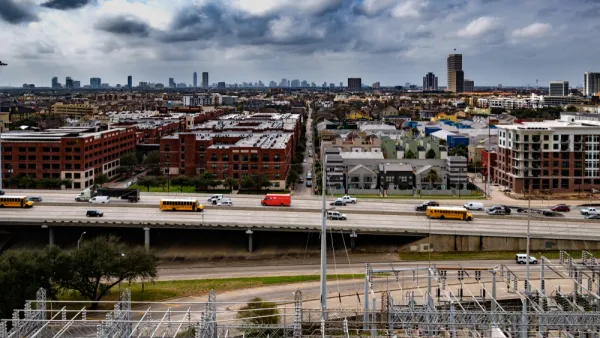
Texas Losing its Housing Affordability Advantage
Trends pre-dating Covid-19 showed housing affordability slipping away from many residents in Texas. The pandemic will likely only exacerbate the trend, according to this analysis.
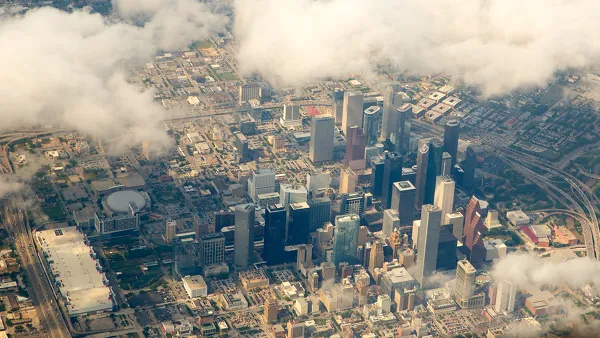
A Look at Houston's Demographic Future
Using the Urban Institute's Mapping America's Futures tool, the Kinder Institute overviews likely racial demographics in Texas and elsewhere by 2030.

Planetizen Federal Action Tracker
A weekly monitor of how Trump’s orders and actions are impacting planners and planning in America.

The state-sanctioned urbicide of Austin
People don’t kill cities. Freeways do.

US to reduce Colorado River water deliveries to Mexico
A new Colorado Treaty amendment reduces Mexico’s Colorado River water allocation by 250,000 acre feet.

5 New England states march closer to 800 megawatt wind energy project
Securing federal approval for the project may be complicated under the Trump administration, which has historically been hostile towards domestic wind power.

Baltimore to break ground on $50 million Transit Priority Project
The project will bring faster bus trips, safer streets and better bike connections to Baltimore.

Airbnb launches $250 million 'last-dollar financing' housing accelerator, makes first investment in Austin
The company will put $6.4 million towards affordable housing development in Texas’ capital.

FREE Course: Walkable City 1: Why Walkability?
After describing his path towards focusing on walkability as the essence of good planning, Jeff Speck marches through his five principal reasons for making more walkable places.
Reinventing Malls: Planning Alchemy—Turning Gray Fields Into Gold
The course focuses on the opportunities and imperatives that shape reinvention of mall sites.

Eagle County Government
Harvard University Graduate School of Design
Nashville Planning Department
The Architects Foundation
University of Cincinnati Online
The Pocatello Development Authority
The Urban Renewal Agency of the City of Pocatello
Journal of the American Planning Association