The ‘Orange Code’ seeks to rectify decades of sprawl-inducing, car-oriented development.


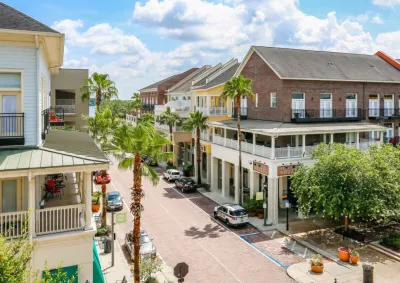
Orange County, Florida has adopted what could be the nation’s largest form-based code (FBC). The ‘Orange Code,’ as it’s being called, was adopted at the same time as the county’s Vision 2050 comprehensive plan.
“The code covers land containing approximately 900,000 residents in unincorporated areas of Orange County and is designed to accommodate and direct growth toward walkable urbanism.” In a piece for CNU’s Public Square, Robert Steuteville explains that the code update does not apply to cities, which have their own zoning codes, and is geared toward suburban retrofits.
The code, which streamlines development applications and reviews and reduces the document from 1,200 pages to 400, is also being dubbed ‘Sprawl Repair’ for its goals of reducing outward expansion and encouraging infill development and increased density (although it doesn’t entirely eliminate minimum parking requirements, for example).
According to Matt Lambert of DPZ CoDesign, a consulting firm that spearheaded the new code’s creation, “The focus is to redevelop the county’s suburban arterials and collectors to create walkable urban centers connected by urbanized corridors that support public transit—this is 6 percent of the county’s land area.”
FULL STORY: Big form-based Orange Code adopted to repair Orlando sprawl

Commentary: We Need a Return to the Adaptability of Traditional Urban Form
How the rigidity of modern suburban development fails to prepare cities for the future.
Commentary: Minimum Lot Sizes Drive Up Housing Costs
How making residential building requirements more flexible can ease the housing crisis and make neighborhoods more livable for more households.

Seattle Works To Revise Comprehensive Plan
The city has developed five concepts for updating its comprehensive plan to increase density and reverse the legacy of exclusionary zoning.

Planetizen Federal Action Tracker
A weekly monitor of how Trump’s orders and actions are impacting planners and planning in America.

The state-sanctioned urbicide of Austin
People don’t kill cities. Freeways do.

US to reduce Colorado River water deliveries to Mexico
A new Colorado Treaty amendment reduces Mexico’s Colorado River water allocation by 250,000 acre feet.

5 New England states march closer to 800 megawatt wind energy project
Securing federal approval for the project may be complicated under the Trump administration, which has historically been hostile towards domestic wind power.

Baltimore to break ground on $50 million Transit Priority Project
The project will bring faster bus trips, safer streets and better bike connections to Baltimore.

Airbnb launches $250 million 'last-dollar financing' housing accelerator, makes first investment in Austin
The company will put $6.4 million towards affordable housing development in Texas’ capital.

FREE Course: Walkable City 1: Why Walkability?
After describing his path towards focusing on walkability as the essence of good planning, Jeff Speck marches through his five principal reasons for making more walkable places.
Reinventing Malls: Planning Alchemy—Turning Gray Fields Into Gold
The course focuses on the opportunities and imperatives that shape reinvention of mall sites.

Eagle County Government
Harvard University Graduate School of Design
Nashville Planning Department
The Architects Foundation
University of Cincinnati Online
The Pocatello Development Authority
The Urban Renewal Agency of the City of Pocatello
Journal of the American Planning Association