Social distancing requirements and changes in travel patterns prompted cities to pilot new uses for street and sidewalk space. Then it got complicated.


Five years ago, cities across America witnessed something remarkable. The Covid-19 pandemic, for all its painful effects, showed us that cities can change far more rapidly than many ever thought possible. It showed us that with the right incentives, transformation can happen almost literally overnight and that officials can act quickly and nimbly to implement quick, low-cost programs that make the places we live safer, more accessible, and even more convivial.
In the context of the crisis, interventions that advocates have spent years arguing for — like improved pedestrian infrastructure and protected bike lanes — cascaded across the country in the form of ‘open streets’ programs and more. Even as transit agencies struggled to maintain their budgets (as they continue to today), many transit systems across the country offered free fares during the pandemic to reduce interactions with drivers and support essential workers who still had to travel to work, recognizing once and for all how critical these systems are to the functioning of society.
As planners, Covid forced us to reassess our priorities and understand how we can become more nimble in the face of emergencies. Most importantly, it forced us to act, cautiously but decisively, and to find ways to ensure the fabric of cities didn’t collapse under the weight of the pandemic and its economic and social tolls.
Moving dining outdoors
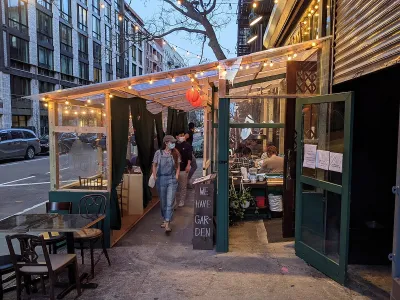
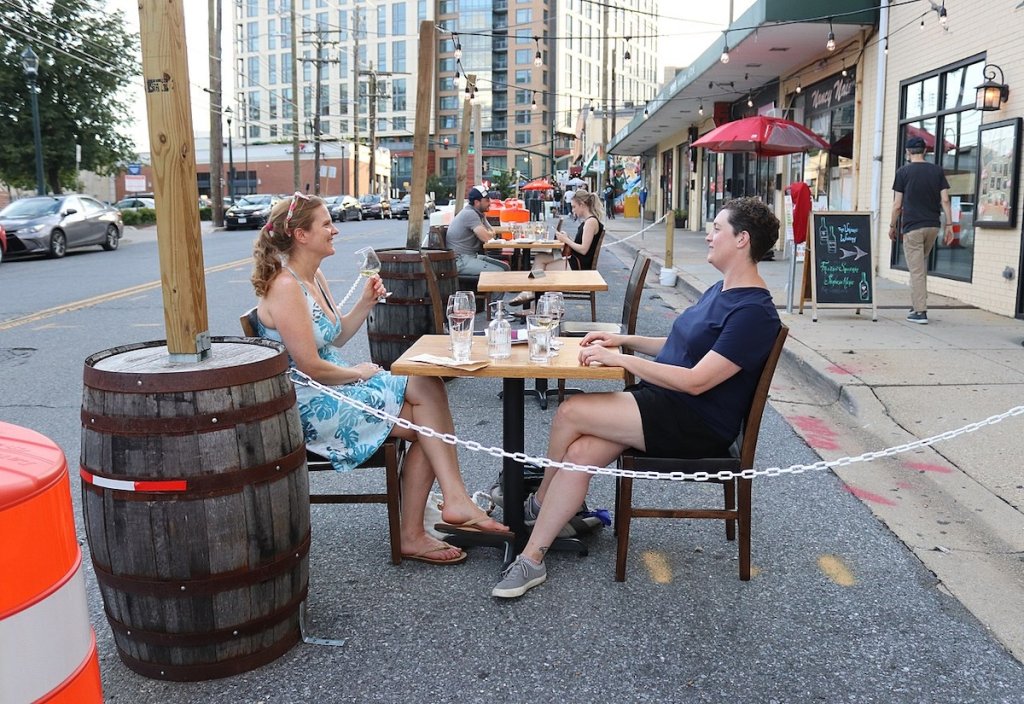
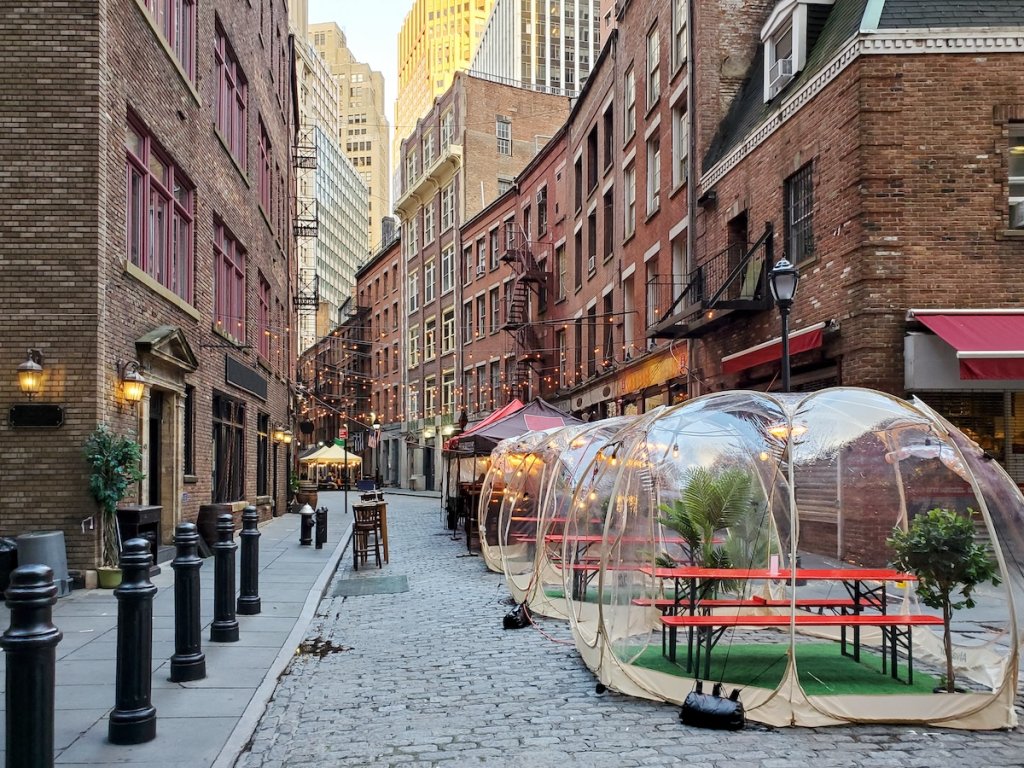
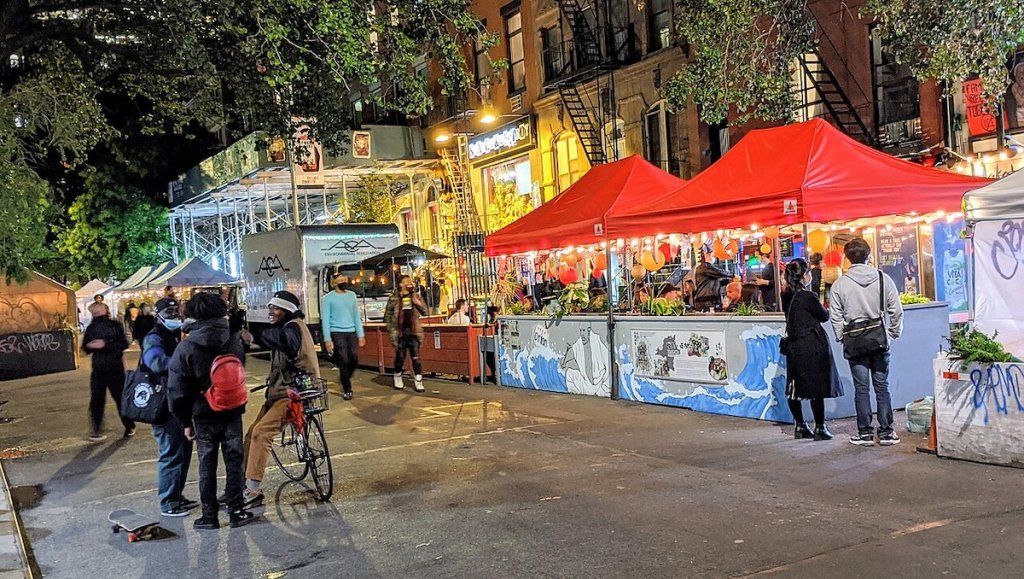
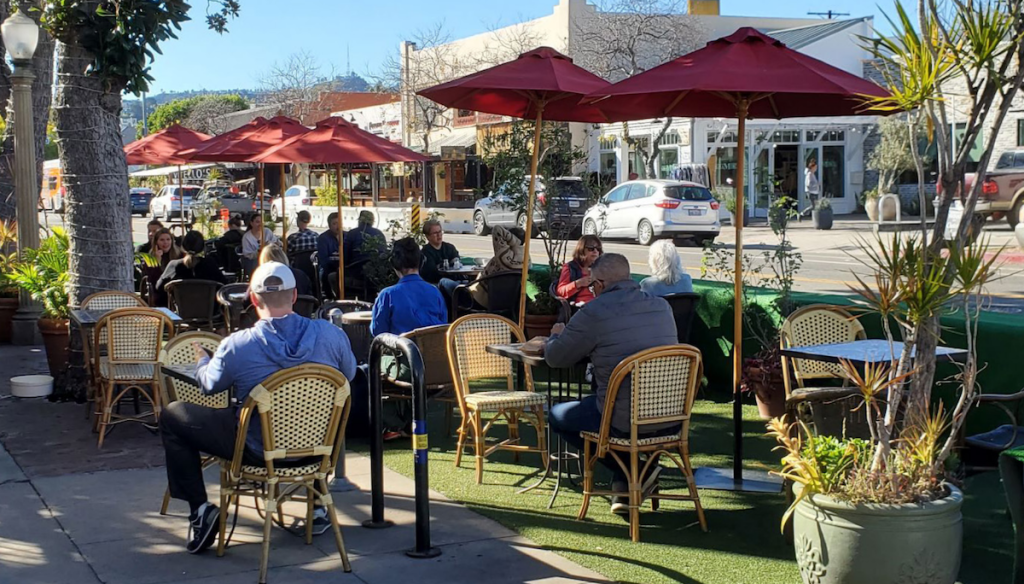
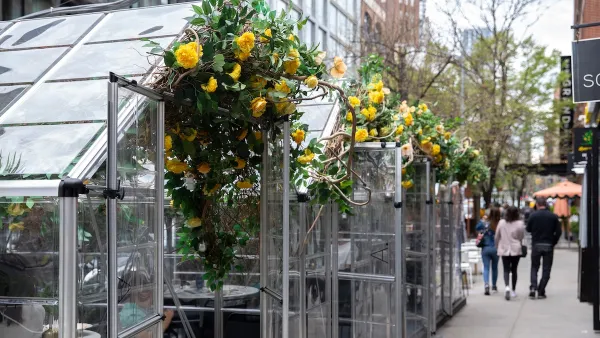
Restaurants, as one of the hardest-hit public-facing businesses during the pandemic, sought ways to continue serving customers via takeout and outdoor dining. Although it can typically take months to navigate the permitting process for sidewalk or on-street serving areas, the urgency of the pandemic forced many cities to fast-track the process and establish regulations and standards for restaurants to serve customers in safe, socially distanced outdoor settings. Streets around the country flourished with dining patios, often in setups similar to ‘parklets’ located in curbside parking spots protected by barriers. Cities closed off entire alleyways to create common dining spaces. And, for the most part, people loved it.
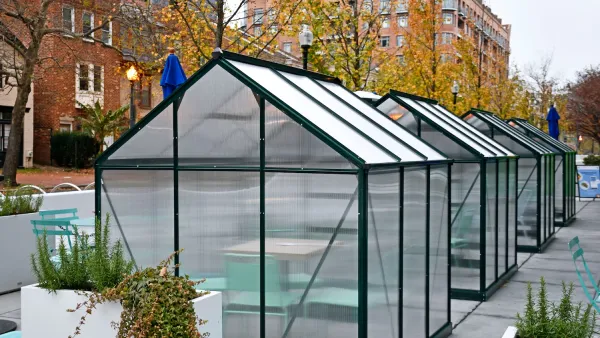
From hastily erected pop-up tents and vinyl bubbles designed to minimize airborne contamination to elaborately constructed patio structures, restaurants found unique ways to accommodate diners in a safer, socially distanced way. For the most part, cities approved a variety of designs, as long as they didn’t impede passage and provided the appropriate 6-foot buffer.
The question is: did the transformation really last?
Mmmm… sort of
New York City offers an example illustrative of the wins and challenges experienced by outdoor dining in a major U.S. city with a strong pedestrian culture and robust transit system, but where curbside space — or any space — comes at a premium.
In early 2020, NYC leaders began toying with the idea of expanded outdoor dining areas, including those that would replace curb parking, to stimulate the pandemic-struck economy and support local restaurants. Another pandemic phenomenon, the lightning-fast adoption of open streets projects, created a unique opportunity for al fresco dining, opening up public right-of-way to more uses. In September 2020, the city made its temporary program permanent after lobbying from restaurant industry groups who wanted to see al fresco continue after indoor dining returned. By November of that same year, tensions started to rise, and the program remained controversial.
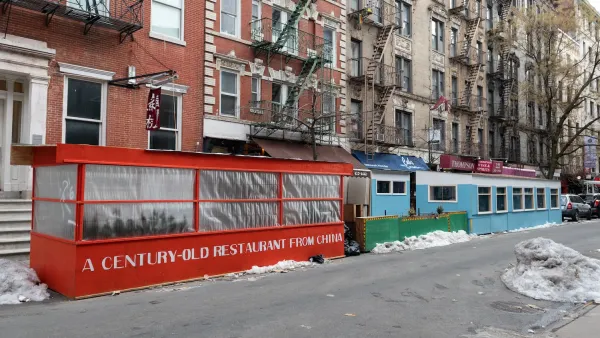
In August 2023, the city revised its regulations once again, requiring restaurants to take down outdoor dining setups between November 30 and March 31, a move that many restauranteurs say makes the process too expensive and difficult. In an attempt to ease the burden on business owners, the city issued a set of pre-approved designs restaurants can use to ensure compliance with city rules.
In 2024, the city updated its rules once more, but the current cost of permitting and equipment remains prohibitively high for many restaurants. The new regulations and fees, along with an administrative snafu that is delaying the approval of liquor licenses for months, are forcing many restaurants to shut down their al fresco dining operations. On April 1, 2025, the city announced that restaurants will be allowed to keep using sidewalk dining setups year-round, but will still have to remove roadway seating in the winter season, creating added labor and storage costs.
What have we learned?
While New York City is undoubtedly unique in many ways, its experience with outdoor dining mirrors that of other cities around the country. In New York, Baltimore, and Minneapolis, making the program seasonal meant restaurants had to spend more on annual disassembly and storage. Other cities, such as Seattle, developed multiple permit types, some of which allowed restaurants to keep outdoor dining up year round. To reduce costs, Chicago created a permit category that allows multiple restaurants to apply for a group permit, in some cases allowing them to close off entire blocks for dining.
At first, the enthusiasm for outdoor dining seemed boundless, and cities let restaurants use parking lots, curbside parking spaces, and sidewalk space to set up various types of dining areas. Eventually, as traffic returned and cities reviewed their more lenient pandemic-era policies, some cities began pulling back on outdoor dining programs, while others have transitioned their temporary programs to permanent regulations more successfully. While most pandemic-era ‘al fresco’ dining programs came at little or no administrative cost to the businesses, new regulations being enacted by some cities include hefty costs that many restaurants say they are unable to pay. And while the permissive atmosphere of the early pandemic allowed for ad-hoc, quick-build designs, many revised regulations tighten restrictions on aesthetics and safety considerations.
Outdoor dining is most successful in places where transit is readily available or where parking can still be accommodated if needed, and where city infrastructure supports safe sidewalks and streets where people can feel comfortable sitting. Cities can support businesses by improving transit access and creating consolidated parking areas away from street-facing spaces, as well as facilitating collaboration between restaurants such as shared dining spaces. In their efforts to standardize regulations, planning officials can also ensure that new requirements are not overly complicated or expensive. For example, allowing outdoor dining year round, where possible, reduces cost, eliminating the need to utilize equipment that can be disassembled and stored each year.
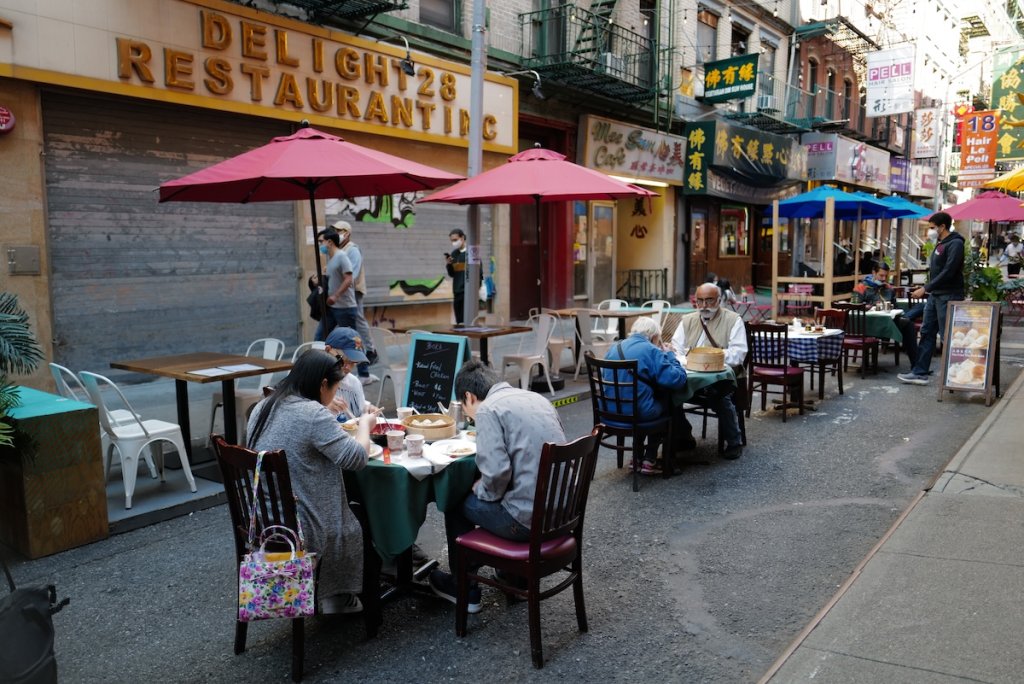
When local businesses needed support, cities rallied to fast-track a solution, inadvertently showing how flexible we can truly be with urban space — when we want to be. Tens of thousands of curbside parking spots and even entire blocks or alleys were converted to vibrant, social, community spaces that stimulated economic growth for local businesses. The relative ease with which cities reorganized their public space to accommodate outdoor dining belies the bureaucratic systems that could be permanently reformed. But with the return to “normalcy” came a return to more onerous restrictions that forced a rollback of some pandemic-era programs. In some cities, outdoor dining was one of these casualties. Other cities found ways to accommodate outdoor dining and support businesses by reducing their administrative costs.
However, costly and cumbersome regulations can stifle outdoor dining and force restaurants to abandon it, despite its benefits. It doesn’t have to be that way. While safety is paramount, city leaders can act thoughtfully to reduce cost and logistical barriers and support a streetscape that supports local businesses and reimagines what curb space can be.

DC Extends Application Window for Outdoor Dining Permits
District restaurants will have until the end of November to apply, but businesses with permits in rush hour parking lanes must end operations on July 31.
NYC Outdoor Dining Could Get a Re-Do
The city council is considering making the al fresco dining program year-round to address cost concerns from small businesses.
NYC Outdoor Dining Won’t Include Booze — For Now
Hundreds of restaurants will be unable to serve alcohol in their outdoor dining areas this summer due to a delay in permitting.

The state-sanctioned urbicide of Austin
People don’t kill cities. Freeways do.

US to reduce Colorado River water deliveries to Mexico
A new Colorado Treaty amendment reduces Mexico’s Colorado River water allocation by 250,000 acre feet.

New Jersey’s second-largest city bans standalone data centers
Jersey City will continue to allow co-location facilities, such as those meant for research institutions that store their own data.

Amtrak not solely to blame for New Jersey commuter rail's unreliability, report finds
A new study from the Garden State Initiative found that NJ Transit’s budget grew 20% across a 4 year period, but reliability declined significantly over the same period.

EPA erases limits on planet-warming pollution from power plants
Under Monday’s plan, power plants would still have some limits on how much mercury, arsenic and other contaminants they can emit.

Phoenix announces new on-demand transit service, more frequent RAPID buses
Both new services will launch in October, and are part of Phoenix's Project Effective Access Solutions for Easing Congestion.

FREE Course: Walkable City 1: Why Walkability?
After describing his path towards focusing on walkability as the essence of good planning, Jeff Speck marches through his five principal reasons for making more walkable places.
Reinventing Malls: Planning Alchemy—Turning Gray Fields Into Gold
The course focuses on the opportunities and imperatives that shape reinvention of mall sites.

Eagle County Government
Harvard University Graduate School of Design
Nashville Planning Department
The Architects Foundation
University of Cincinnati Online
The Pocatello Development Authority
The Urban Renewal Agency of the City of Pocatello
Journal of the American Planning Association


.jpg)
.jpg)
.jpg)