The city council is considering making the al fresco dining program year-round to address cost concerns from small businesses.


New York City’s beleaguered outdoor dining program could expand to year-round operations as part of an effort to make it economically feasible for business owners.
As Kevin Duggan explains in Streetsblog NYC, the seasonal program “decimated” the city’s streeteries. After the new rules were implemented, participation in the outdoor dining program dropped from around 6,000 to 8,000 participating businesses to less than 3,000 applications. Today, “Only 77 outdoor dining setups have made their way through the full new application process, but DOT gave 726 roadway cafés a conditional approval to set up if they cleared a public hearing phase.” Restaurants also face months-long delays in getting permits for alcohol service.
Multiple city council members said while they previously voted in support of the 2023 law that created the seasonal program, they now support year-round outdoor dining. According to Council Member Lincoln Restler (D-Brooklyn), “We need an outdoor dining program that is year-round, that is accessible and convenient for businesses to be able to participate in, and we’re going to do our best to introduce legislation in the very near future and get that over the finish line.”
FULL STORY: Year-Round Roadway Dining Could Come Back Under ‘Do-Over’ Bill

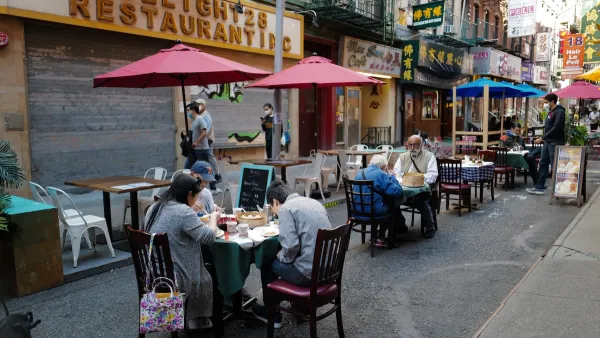
NYC Losing Many Outdoor Dining Areas Due to Expensive New Regulations
Restaurant owners say the city’s new outdoor dining program makes it too difficult and expensive to operate al fresco setups.
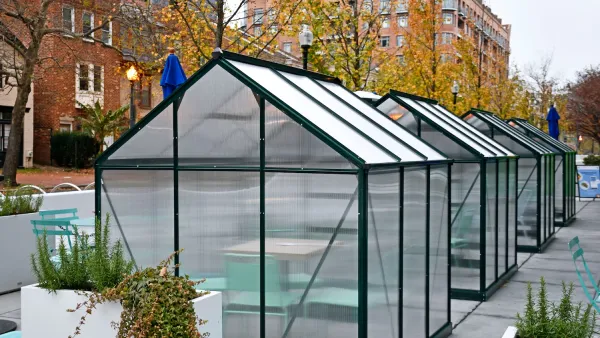
DC Extends Application Window for Outdoor Dining Permits
District restaurants will have until the end of November to apply, but businesses with permits in rush hour parking lanes must end operations on July 31.

NYC Outdoor Dining Won’t Include Booze — For Now
Hundreds of restaurants will be unable to serve alcohol in their outdoor dining areas this summer due to a delay in permitting.

The state-sanctioned urbicide of Austin
People don’t kill cities. Freeways do.

US to reduce Colorado River water deliveries to Mexico
A new Colorado Treaty amendment reduces Mexico’s Colorado River water allocation by 250,000 acre feet.

New Jersey’s second-largest city bans standalone data centers
Jersey City will continue to allow co-location facilities, such as those meant for research institutions that store their own data.

Amtrak not solely to blame for New Jersey commuter rail's unreliability, report finds
A new study from the Garden State Initiative found that NJ Transit’s budget grew 20% across a 4 year period, but reliability declined significantly over the same period.

EPA erases limits on planet-warming pollution from power plants
Under Monday’s plan, power plants would still have some limits on how much mercury, arsenic and other contaminants they can emit.

Phoenix announces new on-demand transit service, more frequent RAPID buses
Both new services will launch in October, and are part of Phoenix's Project Effective Access Solutions for Easing Congestion.

FREE Course: Walkable City 1: Why Walkability?
After describing his path towards focusing on walkability as the essence of good planning, Jeff Speck marches through his five principal reasons for making more walkable places.
Reinventing Malls: Planning Alchemy—Turning Gray Fields Into Gold
The course focuses on the opportunities and imperatives that shape reinvention of mall sites.

Eagle County Government
Harvard University Graduate School of Design
Nashville Planning Department
The Architects Foundation
University of Cincinnati Online
The Pocatello Development Authority
The Urban Renewal Agency of the City of Pocatello
Journal of the American Planning Association