A new state law significantly limits the power of CEQA, an environmental review law that served as a powerful tool for blocking new development.


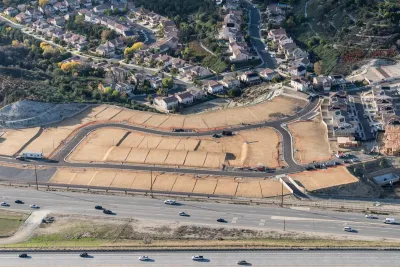
A new California state law could upend a key environmental review law that some critics have blamed for exacerbating the housing crisis and blocking or delaying much-needed housing construction.
The California Environmental Quality Act (CEQA) has, historically, been one of the most powerful tools for environmentalists, historical preservationists, and others (including NIMBY activists) who oppose new development, explains Ben Christopher in CalMatters.
The law has been a double-edged sword, protecting important ecosystems and limiting sprawl, but also hindering housing development in a state where affordable housing is sorely needed. “That’s because the law allows any individual or group to sue if they argue that a required environmental study isn’t accurate, expansive or detailed enough. Such lawsuits — and even the mere threat of them —add a degree of delay, cost and uncertainty that make it impossible for the state to build its way to affordability, CEQA’s critics argue.”
Now, most new apartment buildings “will no longer face the open threat of environmental litigation” if located in already developed areas. The bill includes certain density requirements, precluding single-family development, and is limited to projects under 20 acres.
Although CEQA was, for years, a lynchpin of progressive environmental policy, the discourse has shifted as the state’s housing crisis has deepened and energy efficiency and climate issues have taken a more central role in public policy. “That infill focus has made it easier for the Democratic-controlled Legislature to swallow such a significant scaling back of California’s signature environmental law. Promoting denser urban development generally means using less land, constructing new housing that uses less energy and setting up new residents to do a lot less driving.”
FULL STORY: One of the biggest obstacles to building new CA housing has now vanished

California Governor Suspends CEQA Reviews for Utilities in Fire Areas
Utility restoration efforts in areas affected by the January wildfires in Los Angeles will be exempt from environmental regulations to speed up the rebuilding of essential infrastructure.

Misuse of Environmental Laws Betrays Their Intent
How laws written to protect natural resources and biodiversity are being reinterpreted by NIMBY groups to block development.

New California Law Alters CEQA in Favor of Student Housing
Following a heated legal battle over new student housing in Berkeley, Governor Newsom signed a new law removing ‘social noise’ as an environmental impact.

Planetizen Federal Action Tracker
A weekly monitor of how Trump’s orders and actions are impacting planners and planning in America.

The state-sanctioned urbicide of Austin
People don’t kill cities. Freeways do.

US to reduce Colorado River water deliveries to Mexico
A new Colorado Treaty amendment reduces Mexico’s Colorado River water allocation by 250,000 acre feet.

5 New England states march closer to 800 megawatt wind energy project
Securing federal approval for the project may be complicated under the Trump administration, which has historically been hostile towards domestic wind power.

Baltimore to break ground on $50 million Transit Priority Project
The project will bring faster bus trips, safer streets and better bike connections to Baltimore.

Airbnb launches $250 million 'last-dollar financing' housing accelerator, makes first investment in Austin
The company will put $6.4 million towards affordable housing development in Texas’ capital.

FREE Course: Walkable City 1: Why Walkability?
After describing his path towards focusing on walkability as the essence of good planning, Jeff Speck marches through his five principal reasons for making more walkable places.
Reinventing Malls: Planning Alchemy—Turning Gray Fields Into Gold
The course focuses on the opportunities and imperatives that shape reinvention of mall sites.

Eagle County Government
Harvard University Graduate School of Design
Nashville Planning Department
The Architects Foundation
University of Cincinnati Online
The Pocatello Development Authority
The Urban Renewal Agency of the City of Pocatello
Journal of the American Planning Association