The oil industry was predicting motorist outrage and an increase in gas prices of around 70-cents due to the carbon charge effective in the state on January 1. Some prices increased 10-cents, but went largely unnoticed.


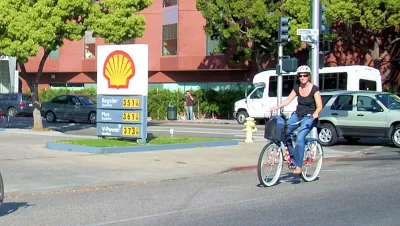
The so-called ''hidden gas tax," a term concocted by the oil industry and others opposed to transportation fuels entering the nation's most far-reaching cap-and-trade market, is, in fact, a wholesale charge paid by fuel suppliers required to purchase carbon allowances from the California Air Resources Board (CARB). Oil refineries, power plants, and other large carbon emitters have been under cap-and-trade since compliance began in 2013.
"Last year, as retail prices hit $4.30 a gallon, oil-industry trade groups warned the [carbon] fee was a 'hidden tax' that could add 70 cents a gallon or more," writes Dan McSwain, business columnist for U-T San Diego. "However, this week the fee added just 10 cents a gallon to wholesale costs, based on November auction prices in the state’s 'cap-and-trade' market that sets the fee." That's exactly what University of California, Berkeley energy economist, Severin Borenstein, predicted here in August.
All things considered, it’s clearly not going be a fuel apocalypse,” said Tom Kloza, global head of energy analysis for Oil Price Information Service, which is based in Gaithersburg, Md.
In fact, according to the "(n)ational gas price tracker GasBuddy.com, the average retail price of gas in California on (Jan. 02) was $2.64 a gallon, up 2 cents from New Year’s Day," writes Marks Glover of The Sacramento Bee.
Unlike the state excise tax which funds the Highway Users Account (per Article 19, 1970), carbon charges, along with other cap-and-trade auction proceeds, will be applied to projects that reduce greenhouse gas (GHG) emissions. According to CARB:
The Legislature and Governor appropriate proceeds from the sale of State-owned allowances for projects that support the goals of AB 32. Strategic investment of these proceeds furthers the goals of AB 32 by reducing GHG emissions, providing net GHG sequestration, and supporting the long-term, transformative efforts needed to improve public and environmental health and develop a clean energy economy.
See "Calif. Governor Signs Game-Changing Budget for HSR, Transit, and Affordable Housing," for information on how these funds will be spent. Consequently, "the deferred maintenance on our roads" that Gov. Jerry Brown referenced in his Jan. 05 Inaugural Address will see no improvement despite the expected 10-cents additional charge to gas prices.
Read the full story: Cheap oil hides global-warming fee, for now

Future of California's Climate Agenda in Peril
Legislation to reauthorize the California Global Warming Solutions Act of 2006 is in peril due to 'a powerful bloc of business-friendly Democrats' who are uneasy about its impact on businesses, particularly Big Oil, due to higher energy costs.
SB 32 to Pick Up Where AB 32 Leaves Off
California's landmark climate legislation, AB 32, ends in five years; i.e., the target year for emissions reduction is 2020, after which there will be no comparable legislation targeting a future year. SB 32 sets emission reduction goals for 2050.

Massachusetts Legislators Fear Hidden Gas Tax in Transportation and Climate Initiative
Gov. Charlie Baker (R) supports a multi-state proposal to mitigate tailpipe emissions that would increase gas prices and pay for transit projects in an $18 billion transportation bond. A bill has been introduced to ensure that doesn't happen.

Planetizen Federal Action Tracker
A weekly monitor of how Trump’s orders and actions are impacting planners and planning in America.

Amtrak, CN end decades-long dispute with eight-year agreement
The new operating agreement establishes an updated framework for the companies to work together, including processes to resolve disputes.

Northwest rail fans eager for Sept. 30 debut of Amtrak’s Airo fleet
Get ready for that new train smell and more seats. But they won’t go faster or run more frequently on the Cascades route in Washington and Oregon.

Atlanta City Council unanimously backs $3.5 billion Beltline light rail project
The resolution was drafted after Atlanta Mayor Andre Dickens pulled support for the Atlanta Streetcar extension last year.

SEPTA to bring nearby frequent transit to over 1 million new riders as part of decade-long plan
The agency's Accelerate plan will also bring frequent transit to twice the amount of jobs that are currently located near it.

NYC plants over 18,000 trees, the most new foliage in a decade
Many of the trees were planted in communities vulnerable to extreme heat.

FREE Course: Walkable City 1: Why Walkability?
After describing his path towards focusing on walkability as the essence of good planning, Jeff Speck marches through his five principal reasons for making more walkable places.
Reinventing Malls: Planning Alchemy—Turning Gray Fields Into Gold
The course focuses on the opportunities and imperatives that shape reinvention of mall sites.

City of Thousand Oaks
City of Wisconsin Rapids
Harvard University Graduate School of Design
The Architects Foundation
University of Cincinnati Online
The Pocatello Development Authority
The Urban Renewal Agency of the City of Pocatello