The TRB has eliminated more than half of its committees including those focused on climate, equity, and cities.


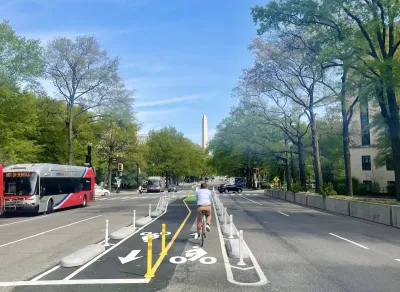
The transportation division of the National Academy of Sciences, the Transportation Research Board (TRB), is restructuring to avoid scrutiny from the Trump administration, announcing it will dissolve committees related to climate, sustainability, equity, and cities. David Meyer reports on the changes for Streetsblog USA.
According to an email sent to committee members by TRB Executive Director Victoria Sheehan and Technical Activities Division Director Ann Brach, “In recent months, additional direction from the federal government has further impacted how TRB administers its work. We are streamlining and strengthening our committee structure to better reflect national priorities.” The TRB website now lists less than half the number of committees it previously had.
TRB was formed to help develop new transportation-related technologies in the early days of the automobile. “Today, it serves as a coordinating body for states and municipalities to come together to fund shared research interests, which range from topics as obscure as moose crashes to ones as high-profile as the safety benefits of new automobile technology.”
The changes are likely to have a chilling effect on transportation and road safety research as a whole. According to David Zipper, a senior fellow at the MIT Mobility Initiative, “If TRB no longer provides space for a given topic to be showcased — like, for example, gender-based research or bike lanes or climate — that's a massive disincentive for a 27-year-old PhD student to consider investigating that issue in their dissertation or in their research.”
FULL STORY: Trump Priorities Spark Sudden Reorganization of Key Transportation Research Body

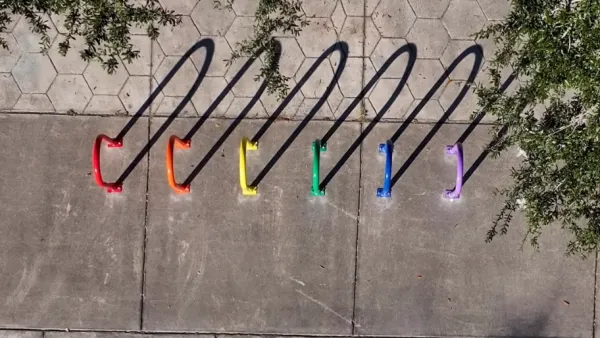
The cities resisting rainbow bans
When the Trump administration went after colorful crosswalk treatments, some cities found creative ways to fight back.

How the ‘Big Beautiful Bill’ Impacts Transportation
Five ways the bill negatively impacts U.S. transportation policy.

April Must-Reads: Top 10 Articles From Last Month
A key federal housing assistance program is in peril, Maui tries to balance housing affordability with its tourism-based economy, and a landmark Virginia law could set a new standard for road safety.

Planetizen Federal Action Tracker
A weekly monitor of how Trump’s orders and actions are impacting planners and planning in America.

The state-sanctioned urbicide of Austin
People don’t kill cities. Freeways do.

US to reduce Colorado River water deliveries to Mexico
A new Colorado Treaty amendment reduces Mexico’s Colorado River water allocation by 250,000 acre feet.

5 New England states march closer to 800 megawatt wind energy project
Securing federal approval for the project may be complicated under the Trump administration, which has historically been hostile towards domestic wind power.

Baltimore to break ground on $50 million Transit Priority Project
The project will bring faster bus trips, safer streets and better bike connections to Baltimore.

Airbnb launches $250 million 'last-dollar financing' housing accelerator, makes first investment in Austin
The company will put $6.4 million towards affordable housing development in Texas’ capital.

FREE Course: Walkable City 1: Why Walkability?
After describing his path towards focusing on walkability as the essence of good planning, Jeff Speck marches through his five principal reasons for making more walkable places.
Reinventing Malls: Planning Alchemy—Turning Gray Fields Into Gold
The course focuses on the opportunities and imperatives that shape reinvention of mall sites.

Eagle County Government
Harvard University Graduate School of Design
Nashville Planning Department
The Architects Foundation
University of Cincinnati Online
The Pocatello Development Authority
The Urban Renewal Agency of the City of Pocatello
Journal of the American Planning Association