While state legislatures and governors are struggling whether to raise state gas, sales, or income taxes or user fees to fund transportation projects, an arcane state board of five elected members voted 3-2 to increase CA's gas tax by 3.5 cents.


Add California to the short list of states that have chosen to ask drivers - rather than the general public or Prius or Leaf drivers, to pay a small increase in the gas tax to fund transportation programs.
As small as it may be, it may be enough to give the state the highest 'total' state gas tax when sales taxes are considered come July 1, according to the Associated Press. [See the Tax Foundation's State Gasoline Tax Rates effective Jan. 1, 2013. New York is #1 at $.506; CA at $.487]
While Virginia Governor Bob McDonnell is expected to make history this month by making his state the first to have no state gas excise (per-gallon) tax, opting to increase the general sales tax, charge a 3.5 percent wholesale tax on motor fuels and "double the registration fee on electric cars to $100 and applying it to alternative fuel and hybrid vehicles", some states are sticking to the traditional user fee known as the gas tax.
While it may be difficult to top the 10-cent gas tax increase signed by Wyoming Gov. Matt Mead on Feb. 15 - effective July 1, others may settle for smaller increases - like the 3.5-cent increase approved in California on March 1, also effective July 1.
But unlike Wyoming or Virginia, this gas tax increase did not go through a lengthy legislative process involving state lawmakers and the governor, potentially subject to supermajority thresholds as is the case in California, with elected leaders possibly concerned about the Taxpayer Protection Pledge (by Grover Norquist) they may have signed. Ron D. White explains.
Because of a complicated 2010 law, the (five-member California Board of Equalization) is required to make up for the (6)% in statewide sales tax revenue that was exempted when that law went into effect.
White is referring to what Kathleen Pender of the San Francisco Chronicle calls "a convoluted system for setting gasoline taxes in 2010 as a way to help fill a hole in the general fund that year." Pender writes:
The legislation lowered the sales tax rate on gasoline to 2.25 from 8.25 percent and raised the excise tax rate to 35.3 cents from 18 cents per gallon starting July 1, 2010. It required this so-called fuel tax swap to be revenue neutral, meaning the tax revenue generated by the two taxes combined should not change as a result of the swap. The legislation required the board to adjust the excise tax by March 1 each year to achieve revenue neutrality, with the change taking effect July 1.
White writes that the "five-member California Board of Equalization is an elected body whose members serve four-year terms. They are rarely in the news. The board voted 3 to 2 (March 1 as required by state law) for the excise tax rise. It could have chosen a smaller amount."
Bottom line: When the legislature in 2010 assigned fuel taxes to be adjusted in this manner, convoluted as it may be, it allowed a rather unknown, though elected statewide board to make these critical decisions.
While business reporters White and Pender picked up on the increase as did the Sacramento Bee and editorial board of The Desert Sun, the moderate tax increase was not subject to the media attention on a protracted legislative battle with heated debate would undoubtedly have received, similar to what happened in Virginia, Wyoming, Wisconsin and other states that are considering increasing transportation revenue.
Of course - that is not a fail-safe method for adjusting the gas tax, as was shown in Wisconsin when the legislature in 2006 voted to end the annual indexing (PDF) of the gas tax to the Consumer Price Index that had been done since 1985.
Read the full story: Get ready for likely gas price increase when California taxes go up

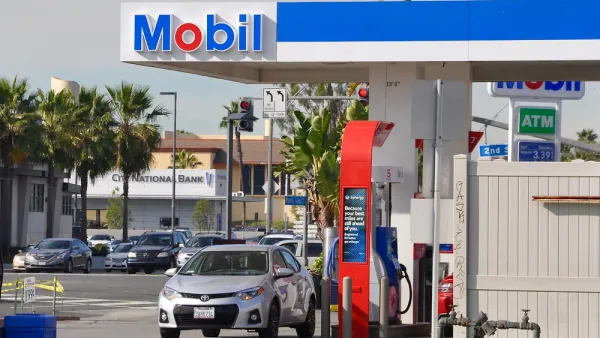
Democrats Balk at Gov. Newsom's Gas Tax Holiday
Saving motorists 3 cents a gallon may be a slam dunk for Republican leaders in the California legislature who opposed hiking the gas tax in the first place, but Democratic leaders are reluctant to tamper with a hard-fought legislative and ballot win.
ICYMI: 12 States Hiked Gas Taxes on Monday
On July 1, Illinois and Ohio increased gas taxes by double digits: 19 cents per gallon and 10.5 CPG, respectively, followed by California at 5.6 CPG, all due to legislation passed this year or in 2017. Diesel tax hikes were even higher.
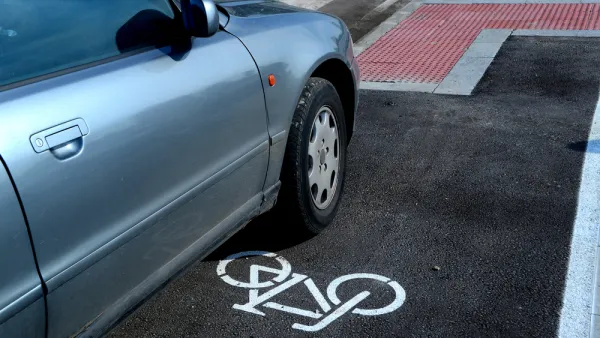
Using Gas Tax Revenue to Remove Traffic Lanes Adds to Road Diet Debate
Reducing the number of traffic lanes to improve bike and pedestrian safety can be inherently controversial when auto travel times are increased, and it can upset motorists further when they learn gas taxes are funding those safety improvements.

Planetizen Federal Action Tracker
A weekly monitor of how Trump’s orders and actions are impacting planners and planning in America.

Amtrak, CN end decades-long dispute with eight-year agreement
The new operating agreement establishes an updated framework for the companies to work together, including processes to resolve disputes.

Judges permit Denver to divert 77,000 acre feet from the Colorado River for reservoir expansion
Overuse and climate change have caused the Colorado River’s water levels to plummet.

NYC DOT wants faster, more permanent street upgrades
The city is examining ways to build more concrete infrastructure without getting entangled in 'decades-long' projects.

'Something we’ve never seen before:' rising utility rates could strain city finances nationwide
Data centers, climate change and other factors have caused utility rates in the United States to increase by 38% since 2020.

Trump to overrule local leaders, lease millions of acres of America’s Pacific Island territories’ seafloors to mining companies
International law says that the Indigenous people of America’s territories have a right to prior and informed consent regarding projects that impact their countries.

FREE Course: Walkable City 1: Why Walkability?
After describing his path towards focusing on walkability as the essence of good planning, Jeff Speck marches through his five principal reasons for making more walkable places.
Reinventing Malls: Planning Alchemy—Turning Gray Fields Into Gold
The course focuses on the opportunities and imperatives that shape reinvention of mall sites.

Harvard University Graduate School of Design
KFH Group Inc.
Greater Baltimore Committee
The Architects Foundation
University of Cincinnati Online
The Pocatello Development Authority
The Urban Renewal Agency of the City of Pocatello