It could have been a multiple-vehicle fatal car crash—a driver fell asleep at the wheel driving 70 mph—but the outcome was two DUI charges.


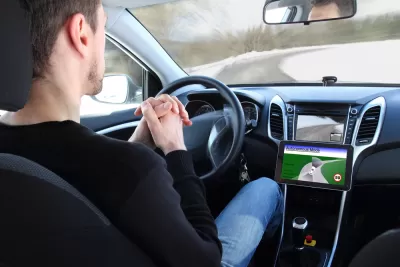
Two driver fatalities associated with the use of Tesla's Autopilot advanced driver assistance system gathered much media attention:
- A May 7, 2016 crash in Williston, Fla. where the Autopilot failed to see a turning tractor-trailer
- A March 23, 2018 crash in Mountain View, Caif. where Autopilot didn't prevent the vehicle from hitting a guardrail at high speed, causing the Model X to catch fire.
Tesla likes to cite a National Highway Traffic Safety Administration (NHTSA) finding that Autopilot has reduced crash rates by 40 percent, though according to Wired's transportation reporter, Aarian Marshall, "NHTSA indicated that Tesla has been misconstruing the key statistic it uses to defend its technology."
However, it appears that member of the Los Altos, Calif. planning commission has to credit Autopilot and sharp-thinking California Highway Patrol officers for not crashing on Highway 101 on the San Francisco Peninsula just over a month ago. Bay City News reporter, Supriya Yelimeli, explains.
California Highway Patrol officers tried to stop Alexander Samek's Tesla Model S traveling at 70 mph on southbound Highway 101 at Whipple Avenue [Redwood City] to conduct a DUI check shortly before 4 a.m. on Nov. 30.
They noticed Samek was asleep at the wheel and drove in front of the car at a close distance to activate the vehicle’s automatic stopping system.
The Tesla came to a complete stop at 4:04 a.m. on southbound Highway 101 north of Embarcadero Road [Palo Alto] after tailing the CHP vehicle for about 7 miles.
"CHP public information officer Art Montiel told the LA Times that “there was no training for the situation the officers encountered and attributed the outcome to their ‘quick thinking," wrote Dami Lee for The Verge on Dec. 3.
On Jan. 2, Samek, 45, a Los Altos planning commissioner, pleaded not guilty to "two misdemeanors, DUI and DUI with a blood alcohol level of 0.08 percent or higher," reports Bay City's Yelimeli.
John Woolfolk reported Dec. 3 for The Mercury News on the "lively social media debate over technology-assisted driving" sparked by the incident, and notes that the CHP arrested a Tesla driver for DUI on Jan. 19 on the Bay Bridge. However, in that case, the Tesla had already stopped, and the driver was found sleeping.
Woolfolk reminds his readers that "Autopilot technology is rated Level 2 by the Society of Automotive Engineers [now SAE International] on a scale in which 5 is a fully autonomous self-driving car without a human driver."
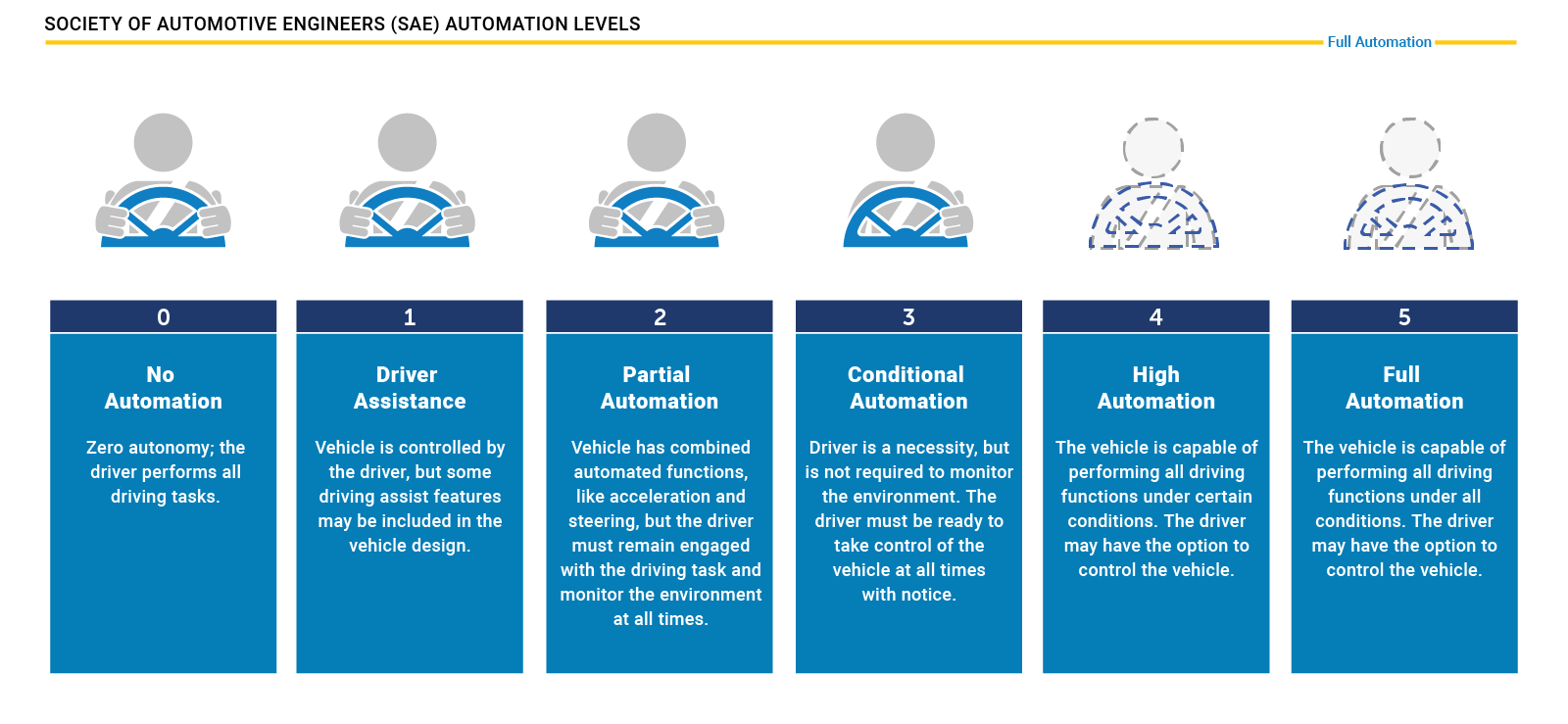
Credit: NHTSA –Automated Vehicles for Safety
Zachary Shahan reports on Jan. 5 for Clean Technica that "Tesla Autopilot miles have been soaring as the company has scored insane sales growth in recent quarters." All Tesla models are equipped with the advanced driver assistance technology.
FULL STORY: Los Altos commissioner pleads not guilty to DUI


Planetizen Federal Action Tracker
A weekly monitor of how Trump’s orders and actions are impacting planners and planning in America.

The state-sanctioned urbicide of Austin
People don’t kill cities. Freeways do.

US to reduce Colorado River water deliveries to Mexico
A new Colorado Treaty amendment reduces Mexico’s Colorado River water allocation by 250,000 acre feet.

Baltimore to break ground on $50 million Transit Priority Project
The project will bring faster bus trips, safer streets and better bike connections to Baltimore.

Airbnb launches $250 million 'last-dollar financing' housing accelerator, makes first investment in Austin
The company will put $6.4 million towards affordable housing development in Texas’ capital.

Guerilla urbanists are building DIY bus stop benches in Chicago
A before-and-after of one of the bus stops with a new bench. The new benches are not officially sanctioned or permitted, but the residents who placed them hope they will be the start of a network of DIY benches across the city.

FREE Course: Walkable City 1: Why Walkability?
After describing his path towards focusing on walkability as the essence of good planning, Jeff Speck marches through his five principal reasons for making more walkable places.
Reinventing Malls: Planning Alchemy—Turning Gray Fields Into Gold
The course focuses on the opportunities and imperatives that shape reinvention of mall sites.

Eagle County Government
Harvard University Graduate School of Design
Nashville Planning Department
The Architects Foundation
University of Cincinnati Online
The Pocatello Development Authority
The Urban Renewal Agency of the City of Pocatello
Journal of the American Planning Association