Law Enforcement
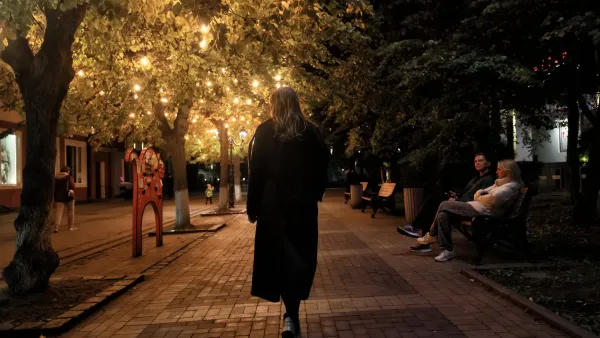
How urban design can deter crime
Well-designed public spaces and good lighting can prevent crime and make residents feel safer.
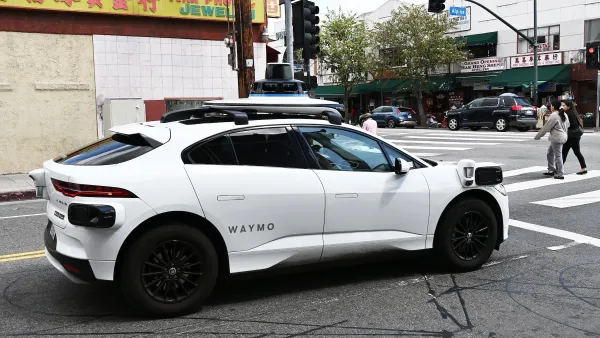
California cops will start ticketing robotaxis
The California DMV issued new guidance that allows law enforcement to give autonomous cars a "notice of noncompliance" when they break traffic laws.
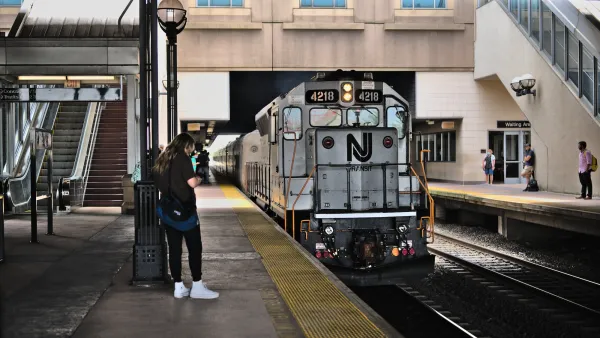
New Jersey AG Says Governor Can’t Bar ICE From Transit
An executive order prohibits ICE from using state-owned property, but the AG says it doesn’t apply to public spaces like train stations.
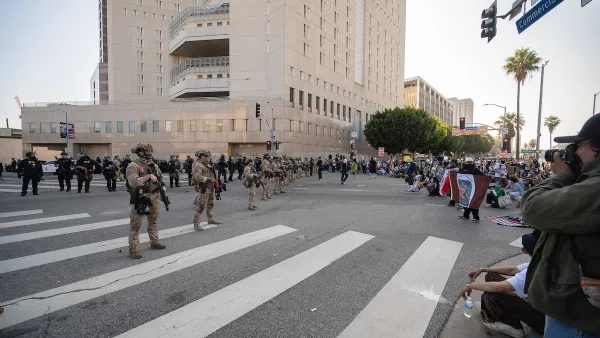
Opinion: Far From Cauldrons of Violence, Cities are Anti-Crime Innovators
Rather than funding the performative militarization of law enforcement, the federal government could instead support programs that prevent poverty and crime before it happens.
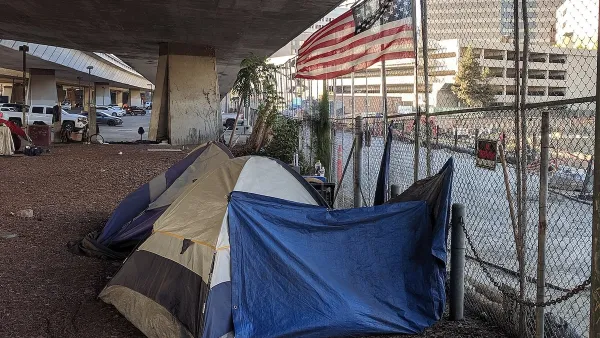
San Jose Mayor Takes Dual Approach to Unsheltered Homeless Population
In a commentary published in The Mercury News, Mayor Matt Mahan describes a shelter and law enforcement approach to ending targeted homeless encampments within Northern California's largest city.
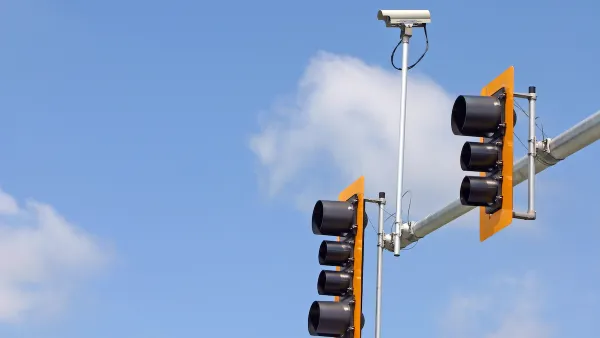
Study Assesses Attitudes on Traffic Cameras in Boston’s Black Communities
Residents are wary of the new technology’s potential for surveillance, but support boosting enforcement while reducing interaction with police.

‘Arrested Mobility’: How Transportation-Related Laws Impact Black Americans
A far-reaching new study highlights the disproportionate effect of biking and walking laws on the mobility of Black Americans.
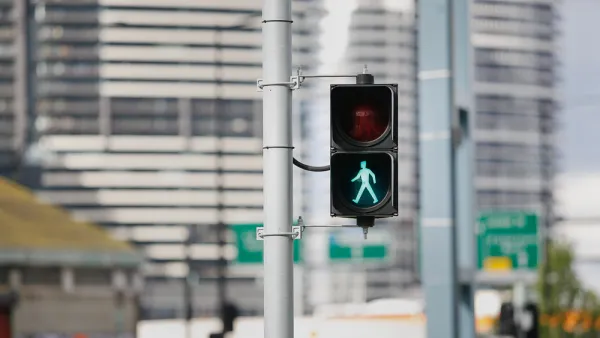
Opinion: California Jaywalking Law a Step in Right Direction
A new law doesn’t fully decriminalize jaywalking, but bars law enforcement from issuing citations to pedestrians when crossings aren’t ‘truly dangerous.’
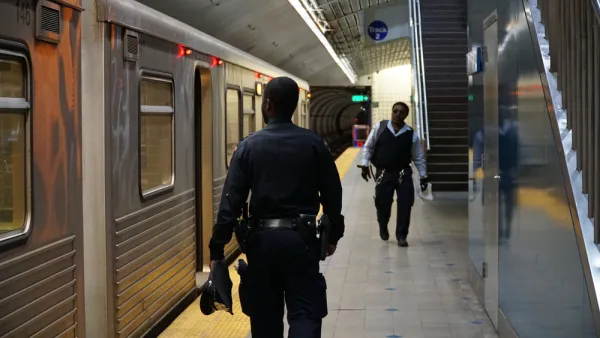
Transit Systems Begin To Shift Away From Police Enforcement
Some transit agencies are launching ‘ambassador’ programs that use unarmed personnel to respond to safety concerns and reduce interactions with armed law enforcement.
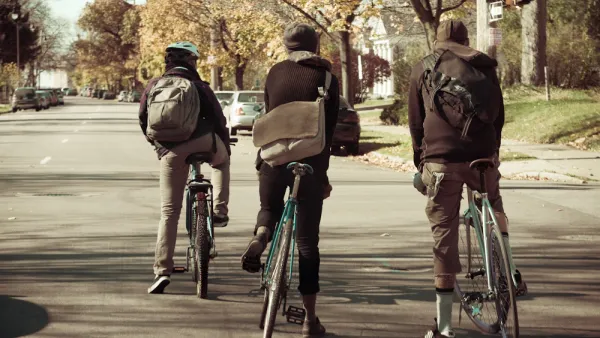
Race, Infrastructure, and Police in Cycling
Recent research suggests that cyclists of color are more likely to receive citations, but enforcement has little correlation with improved safety.
Google Maps for iPhone Now Reports DUI Checkpoints, Speed Traps
Navigation app Waze has long allowed users the ability to report various "inconveniences" on the road, like speed traps, checkpoints, and crashes. Now Google Maps users on iPhone can do the same.
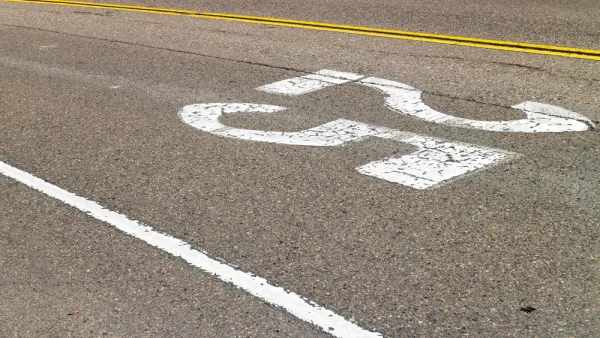
After Lowering Speed Limits for Pedestrian Safety, Town Writes 1,000% More Speeding Tickets
Police are enforcing speed limits in the name of public safety in North Haledon, New jersey. Drivers are being urged to respect the speed limit.
Did Uber Just Get Away With Manslaughter?
Remember Elaine Herzberg, the 49-year-old woman who became the first pedestrian fatality due to an autonomous vehicle when she was hit last March by an Uber with a safety driver in Tempe, Ariz.? Prosecutors found no criminal liability.

The Netherlands Seeks Less Confrontational Strategies to Stop Fare Evasion
Rather than simply being punitive, the Dutch rail carrier is trying to find cost effective ways to collect fares and make riders feel welcome.
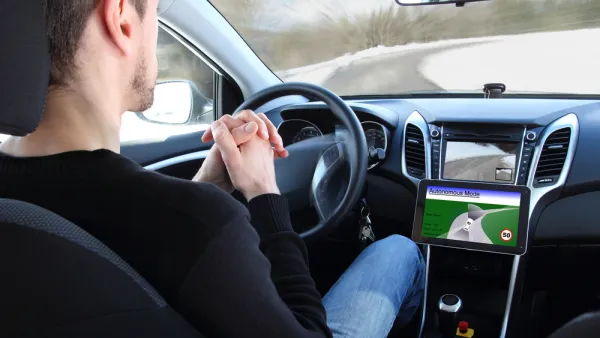
Autonomous Driving Technology Might Have Saved Lives
It could have been a multiple-vehicle fatal car crash—a driver fell asleep at the wheel driving 70 mph—but the outcome was two DUI charges.
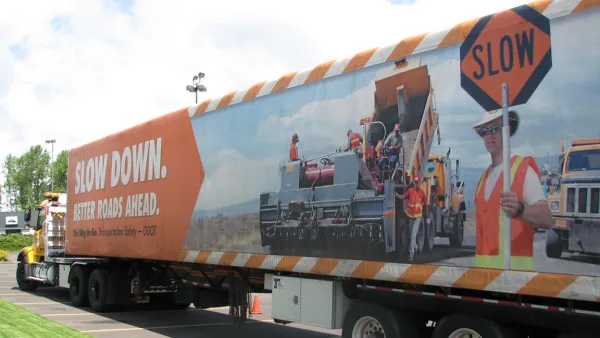
Traffic Safety Solution: Design, Not Enforcement
Alon Levy argues that the best path to traffic safety is through design rather than traffic law enforcement.
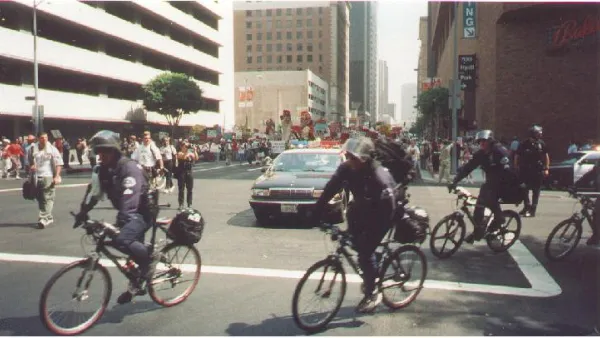
Seattle Police Department Demonstrates the Versatile Uses of the Bicycle
A May Day march on Sunday that turned violent provided the opportunity for the Seattle Police Department to deploy its bike squad for crowd control, and in more ways than you might think.
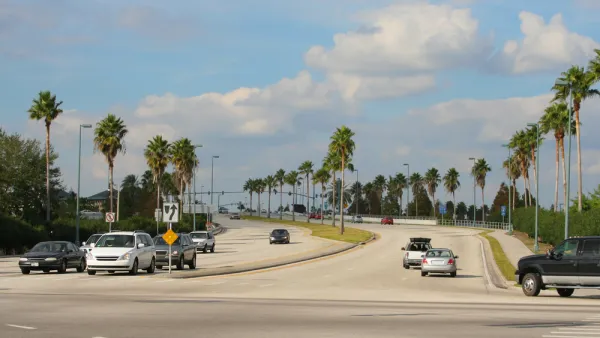
Nation's Most Dangerous City for Pedestrians Becoming Safer
A Smart Growth America report put the spotlight on Orlando and the entire state of Florida as leading the nation in pedestrian deaths per capita. NPR investigate what is being done to lose the infamous title.
Will Driverless Cars Spell Doom for Law Enforcement Budgets?
What happens to law-enforcement budget (and, for that matter, municipal budgets) in a future of law-abiding driverless cars?
In D.C., Crime Prevention Starts at the Drafting Table
What's a better way to ensure lower crime than to involve police directly in the planning process? One development in Washington, D.C. will do just that.

FREE Course: Walkable City 1: Why Walkability?
After describing his path towards focusing on walkability as the essence of good planning, Jeff Speck marches through his five principal reasons for making more walkable places.
Reinventing Malls: Planning Alchemy—Turning Gray Fields Into Gold
The course focuses on the opportunities and imperatives that shape reinvention of mall sites.

City of Wisconsin Rapids
Harvard University Graduate School of Design
KFH Group Inc.
The Architects Foundation
University of Cincinnati Online
The Pocatello Development Authority
The Urban Renewal Agency of the City of Pocatello