Alan Mallach is a senior fellow with the Center for Community Progress in Washington, DC, who has worked in, studied and written about cities in the United States and elsewhere for over fifty years. He has taught at Pratt Institute, Rutgers University and elsewhere, lectured widely in the United States, Europe, Israel and Japan, worked for the Brookings Institution and the Federal Reserve Bank of Philadelphia, and held a number of government positions, including serving as Director of Housing & Economic Development in Trenton, New Jersey. His most recent books include The Changing American Neighborhood: The Meaning of Place in the 21st Century (with Todd Swanstrom) and Smaller Cities in a Shrinking World, which focuses on future economic strategies for smaller cities in a world of slow growth and rapid climate change, as well as many other books including The Divided City: Poverty and Prosperity in Urban America, and many articles on cities, affordable housing and neighborhood change. He is an accomplished pianist, and has also published two books about Italian opera. He holds a B.A. degree from Yale College, and lives in Roosevelt, New Jersey.

Trump’s Totalitarian Vision for the Future of Gaza
The Trump Administration has put forth its plan for the reconstruction of the Gaza Strip. It is a totalitarian nightmare.
To Sprawl or Not to Sprawl: But Is That the Question?
As a debate rages in mainstream media about whether or not America should sprawl, a housing researcher says that's the wrong question. We need to do both.
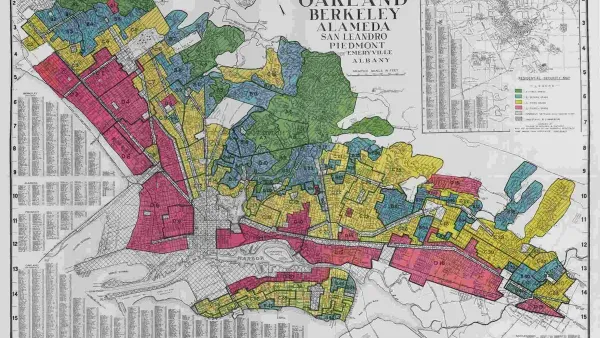
Rethinking Redlining
For decades we have blamed 100-year-old maps for the patterns of spatial racial inequity that persist in American cities today. An esteemed researcher says: we’ve got it all wrong.

Stuck, Part II: Why Do People Move (Or Not Move)?
Yes, Americans are moving a lot less, but why? In this part of my post, I drill down to try to unearth some of the reasons. It turns out they're complicated.

Americans May Be Stuck — But Why?
Americans are moving a lot less than they once did, and that is a problem. While Yoni Applebaum, in his highly-publicized article Stuck, gets the reasons badly wrong, it's still important to ask: why are we moving so much less than before?