A great sigh of relief from transit planners in the Pacific Northwest (and probably the rest of the country as well).


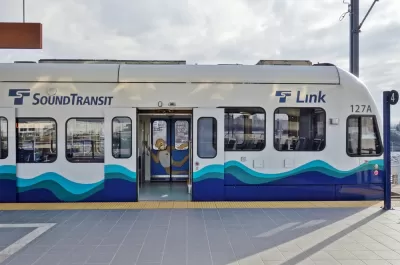
"Sound Transit has secured a long sought-after agreement with the Trump administration for $1.2 billion in federal money for the planned 8.5-mile Northgate-to-Lynnwood light-rail line," reports David Gutman.
"Along with the $1.2 billion grant, the FTA also approved more than $650 million in low-interest, deferred-payment federal loans for Sound Transit to complete the Lynnwood line," according to Gutman. In total, the federal government is funding 40 percent of the total project cost.
The article also notes that the funding for the project has been on shaky ground since the Trump administration took office. The Lynwood Link project was one of many transit projects around the country to be left in limbo by the Trump administration since Congress approved its funding earlier this year.
"Several months ago, the FTA told Sound Transit that it wasn’t processing any new transit grants, even though Congress had approved the money," according to Gutman. "And in May, the U.S. Government Accountability Office faulted the FTA for dragging its feet on disbursing grants, noting that the Trump administration had wanted to end the grant program and the FTA 'runs the risk of violating federal law' if it doesn’t make changes."
The planned line is expected to serve 68,500 daily riders and travel from Lynwood to the University of Washington in 20 minutes.
FULL STORY: Feds agree to $1.2 billion in funding for Sound Transit’s Lynnwood light-rail line

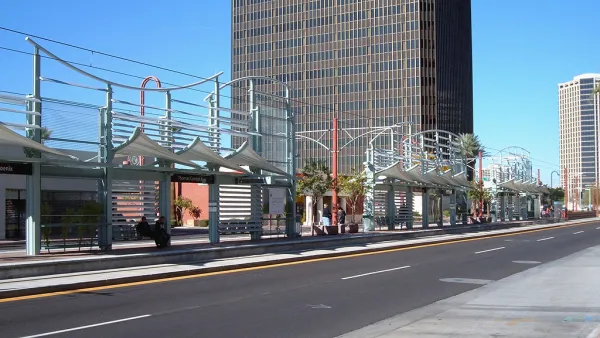
$544 Million in Transit Capital Investment Funding Announced
The latest round of funding for the Federal Transit Administration's Capital Investment Grant funding program was announced this week.
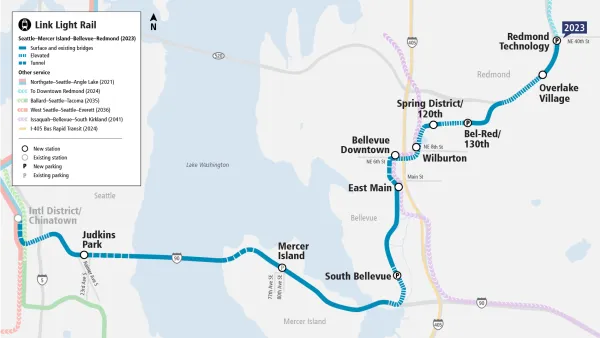
Sooner Rather Than Later: Support Builds for Eastside-Only Light Rail in Seattle
The Eastside Link light rail route, now known as Line 2, is delayed. A Sound Transit board officials is suggesting that some of the route can open soon, while the rest of the route is prepped to open later.
$158 Million in American Rescue Plan Funding Going to Seattle-Area Light Rail Projects
New Capital Investment Grant funding was announced earlier this month.

Planetizen Federal Action Tracker
A weekly monitor of how Trump’s orders and actions are impacting planners and planning in America.

The state-sanctioned urbicide of Austin
People don’t kill cities. Freeways do.

US to reduce Colorado River water deliveries to Mexico
A new Colorado Treaty amendment reduces Mexico’s Colorado River water allocation by 250,000 acre feet.

Baltimore to break ground on $50 million Transit Priority Project
The project will bring faster bus trips, safer streets and better bike connections to Baltimore.

Airbnb launches $250 million 'last-dollar financing' housing accelerator, makes first investment in Austin
The company will put $6.4 million towards affordable housing development in Texas’ capital.

Guerilla urbanists are building DIY bus stop benches in Chicago
A before-and-after of one of the bus stops with a new bench. The new benches are not officially sanctioned or permitted, but the residents who placed them hope they will be the start of a network of DIY benches across the city.

FREE Course: Walkable City 1: Why Walkability?
After describing his path towards focusing on walkability as the essence of good planning, Jeff Speck marches through his five principal reasons for making more walkable places.
Reinventing Malls: Planning Alchemy—Turning Gray Fields Into Gold
The course focuses on the opportunities and imperatives that shape reinvention of mall sites.

Eagle County Government
Harvard University Graduate School of Design
Nashville Planning Department
The Architects Foundation
University of Cincinnati Online
The Pocatello Development Authority
The Urban Renewal Agency of the City of Pocatello
Journal of the American Planning Association