A $4 million city fund is incentivizing developers to breathe new life into derelict midcentury motels.


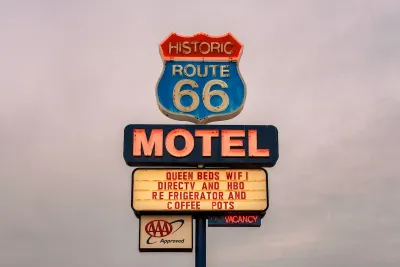
Albuquerque developers are transforming some of the city’s vacant motels and homes into affordable housing. As Jack Herrera explains in High Country News, the city needs up to 30,000 new units to meet demand. “Meanwhile, plywood covers the windows of unused buildings, many of them one-story faux-adobe Pueblo Revival structures. In 2018, a municipal task force estimated that 1,200 to 1,300 homes were either vacant, abandoned or generally substandard.”
Rehabilitating older housing solves two problems: It revitalizes an economy that boomed in some neighborhoods and left others blighted. And it’s a rallying cry against scarcity, where the remnants of a past collapse become symbols of new life: boarded-up buildings transformed into new homes for those on the margins.
While rents in some U.S. cities have fallen from their pandemic-era peaks, Albuquerque rents remain nearly 50 percent higher than in 2019. Last year, the city launched a $4 million program aimed at supporting adaptive reuse projects. Local developer Karina Chavez is now converting four former Route 66 motels into new housing and a food hall to ensure access to fresh foods and produce for nearby residents.
FULL STORY: In Albuquerque, developers are turning old motels into affordable housing

Naples Motel Could Become 110 Housing Units
A proposal to convert a Super 8 motel to housing was unanimously supported by the city’s planning commission.
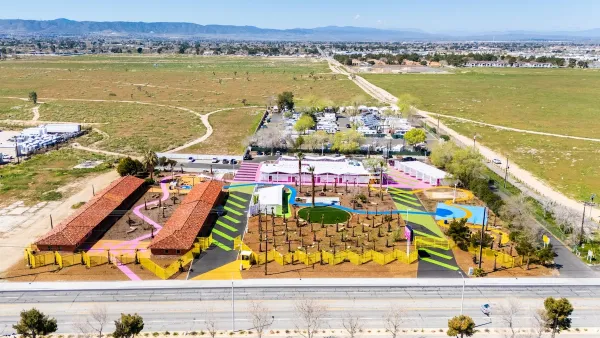
Two California Motels Transformed into Transitional Housing
Unlike most transitional housing, which is aimed at individuals, a project in the Southern California desert caters to families.
Northwoods Motels Revived as Housing
As more vacationers opt for private lake homes or rental cabins, developers in northern Wisconsin are converting motels into badly needed worker housing.

Planetizen Federal Action Tracker
A weekly monitor of how Trump’s orders and actions are impacting planners and planning in America.

The state-sanctioned urbicide of Austin
People don’t kill cities. Freeways do.

US to reduce Colorado River water deliveries to Mexico
A new Colorado Treaty amendment reduces Mexico’s Colorado River water allocation by 250,000 acre feet.

5 New England states march closer to 800 megawatt wind energy project
Securing federal approval for the project may be complicated under the Trump administration, which has historically been hostile towards domestic wind power.

Baltimore to break ground on $50 million Transit Priority Project
The project will bring faster bus trips, safer streets and better bike connections to Baltimore.

Airbnb launches $250 million 'last-dollar financing' housing accelerator, makes first investment in Austin
The company will put $6.4 million towards affordable housing development in Texas’ capital.

FREE Course: Walkable City 1: Why Walkability?
After describing his path towards focusing on walkability as the essence of good planning, Jeff Speck marches through his five principal reasons for making more walkable places.
Reinventing Malls: Planning Alchemy—Turning Gray Fields Into Gold
The course focuses on the opportunities and imperatives that shape reinvention of mall sites.

Eagle County Government
Harvard University Graduate School of Design
Nashville Planning Department
The Architects Foundation
University of Cincinnati Online
The Pocatello Development Authority
The Urban Renewal Agency of the City of Pocatello
Journal of the American Planning Association