Gov. Jerry Brown signed 12 bills on Oct. 10 to facilitate the transition from oil-powered light and heavy duty vehicles to electric power in California, and thus meet his goal of putting 1.5 million zero-emission vehicles on the road by 2025.


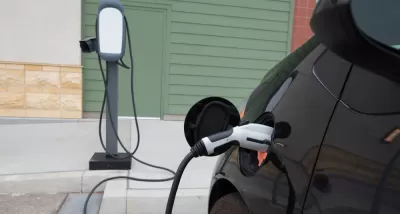
As a result of Tuesday's bill-signings, electric vehicles (EVs) will continue to drive in carpool lanes and may soon be able to charge their vehicles at state parks and beaches as part of a pilot program. EVs could also charge on city streets should a city decide to authorize curbside chargers.
Whether the new laws will stem the increase in greenhouse gas emissions from the transportation sector, blamed in part not so much to fleet composition but the increase in vehicle-miles-traveled, may have to wait till the new greenhouse gas inventory report issued by the California Air Resources Board.
Joseph Bebon describes the remaining eight bills (six listed below) signed by Gov. Brown for NGT News, an online news site covering alternative fuel vehicles.
- Brown signed A.B.739, which requires at least 15% of specified heavy-duty vehicles newly purchased by state agencies to be zero-emission vehicle (ZEVs) beginning in 2025 and at least 30% of those vehicles to be ZEVs beginning in 2030. The bill was authored by State Assemblymember Ed Chau, D-Monterey Park.
- S.B.498, authored by Sen. Nancy Skinner (D-Berkeley) and sponsored by NextGen America, a nonprofit headed by California businessman and philanthropist Tom Steyer, strengthens and codifies the light-duty vehicle fleet purchase requirements currently included in Brown's 2012 executive order setting targets for zero-emission vehicles.
- A.B.615 by Assemblymember Jim Cooper, D-Elk Grove: Extends the income caps for the Clean Vehicle Rebate Project to continue providing air quality and GHG reduction benefits through programs that encourage the purchase of ZEVs.
- A.B.1073 by Assemblymember Eduardo Garcia, D-Coachella: Extends the [20 percent] requirement for funding of early deployment of [zero and near-zero emissions] heavy-duty trucks as part of California’s Clean Truck, Bus and Off-Road Vehicle program
Not all bills specifically promote electric vehicles. Some target older, more polluting vehicles, and ensure they are replaced with cleaner ones:
- A.B.188 "requires the California Air Resources Board (ARB) to make older, high-polluting pickup trucks eligible for replacement under the state vehicle retirement and replacement program," according to author Assemblymember Rudy Salas Jr., D-Bakersfield.
- A.B.630 by Assemblymember Jim Cooper, D-Elk Grove: Codifies a clean-car program that benefits low-income residents by helping them replace high-polluting vehicles with cleaner and more efficient vehicles.
The ultimate legislation, to simply "ban the sale of new cars powered by internal-combustion engines after 2040" is under consideration by Assemblyman Phil Ting (D-San Francisco), reports Alexei Koseff on Sept. 29 for The Sacramento Bee. Gov. Brown has expressed interest in enacting such a ban.
Hat tip to AASHTO Daily Transportation Update.
FULL STORY: California Gov. Signs Bundle of Clean Transportation Bills into Law

Gov. Jerry Brown Signs 16 Bills to Spur Sales of New and Used Electric Vehicles
On the second day of the Global Climate Action Summit, co-host Gov. Jerry Brown signed 16 bills onboard a new plug-in hybrid electric ferry in San Francisco Bay to spur sales of zero-emission vehicles and reduce greenhouse gas emissions.
How Much Is Too Much for a State Electric Vehicle Rebate?
Battery electric vehicles (without gas tanks) are eligible for a $2,500 California rebate, on top of the federal $7,500 tax credit. A bill before the state Senate would quadruple it.
California Climate Program Offers Up to $9,500 Toward Purchase of Used EVs
Lawmakers want to ensure that electric vehicles are accessible to all Californians, particularly lower-income motorists in disadvantaged communities. Unlike other incentive programs, participants must also scrap an older, polluting vehicle.

The state-sanctioned urbicide of Austin
People don’t kill cities. Freeways do.

US to reduce Colorado River water deliveries to Mexico
A new Colorado Treaty amendment reduces Mexico’s Colorado River water allocation by 250,000 acre feet.

New Jersey’s second-largest city bans standalone data centers
Jersey City will continue to allow co-location facilities, such as those meant for research institutions that store their own data.

Amtrak not solely to blame for New Jersey commuter rail's unreliability, report finds
A new study from the Garden State Initiative found that NJ Transit’s budget grew 20% across a 4 year period, but reliability declined significantly over the same period.

EPA erases limits on planet-warming pollution from power plants
Under Monday’s plan, power plants would still have some limits on how much mercury, arsenic and other contaminants they can emit.

Phoenix announces new on-demand transit service, more frequent RAPID buses
Both new services will launch in October, and are part of Phoenix's Project Effective Access Solutions for Easing Congestion.

FREE Course: Walkable City 1: Why Walkability?
After describing his path towards focusing on walkability as the essence of good planning, Jeff Speck marches through his five principal reasons for making more walkable places.
Reinventing Malls: Planning Alchemy—Turning Gray Fields Into Gold
The course focuses on the opportunities and imperatives that shape reinvention of mall sites.

Eagle County Government
Harvard University Graduate School of Design
Nashville Planning Department
The Architects Foundation
University of Cincinnati Online
The Pocatello Development Authority
The Urban Renewal Agency of the City of Pocatello
Journal of the American Planning Association