Advocates have been waiting for the other shoe to drop as transit agencies deal with cratered revenues during the pandemic without support from Congress.


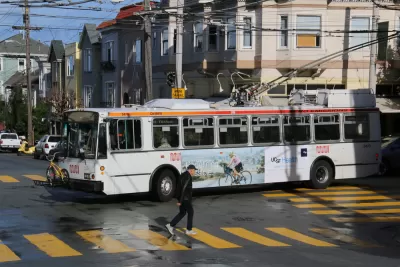
Carly Graf reports from San Francisco, where San Francisco Municipal Transportation Authority (SFMTA) officials recently released figures forecasting layoffs for as many as 1,226 full-time employees.
The layoffs would require SFMTA to reduce operations below the system's current 30 percent reduction in service during the pandemic.
Graf provides details on just how complete the fiscal crisis has become: "With farebox revenue still down by roughly 93 percent, parking revenue plateauing at roughly 50 percent of pre-pandemic levels and reductions to the agency’s General Fund contribution and sales tax revenues, funding through the traditional channels is unlikely to move the needle enough to close the gap."
SFMTA Director of Transportation Jeffrey Tumlin is quoted in the article issuing dire warnings and a bit of perspective, saying that the fiscal crisis is now far worse than the worst-case scenarios imagined at the beginning of the pandemic.
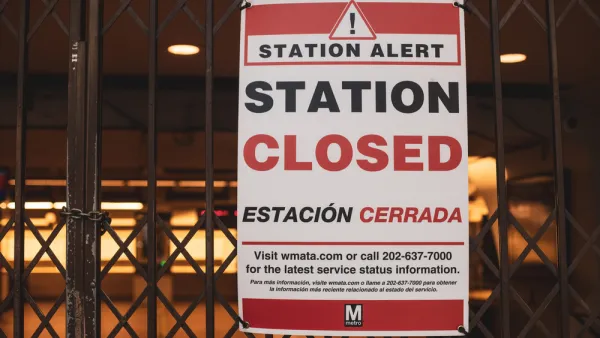
In Washington, D.C., Washington Metropolitan Area Transit Authority (WMATA) officials are detailing similar deep cuts to employment and service, piling on to news that first broke earlier in November. Jordan Pascale reports that the WMATA is now proposing that weekend service be eliminated entirely as that agency struggles to close a $500 million gap. "The plan also calls for trains to run every 30 minutes, shuttering 19 stations, further slashing bus service to a fraction of pre-pandemic levels and closing the system at 9 p.m," according Pascale.
New York City announced similarly massive layoffs and service reductions—a 40 percent reduction in weekday subway service and 9,000 layoffs—midway through November. Denver announced similar plans in September, as did the Maryland Department of Transportation.
News broke today about a potential $908 billion stimulus plan advancing in the U.S. Senate, though early reporting by Seung Min Kim, Jeff Stein, and Mike DeBonis on the news lacks details about how much of the package will be spent to rescue the nation's public transit agencies. The Riders Alliance, however, took to Twitter to oppose the bill as inadequate to the scale of the fiscal crisis facing transit in the United States. Jeff Stein also Tweeted a breakdown of spending included in the bill, with a document that identifies $45 billion for transportation, a figure that include airports, airlines, private bus companies, and Amtrak in its total, in addition to public transit.
FULL STORY: SFMTA prepares for massive potential layoffs as budget crisis continues to build

What's in the New Economic Stimulus Package for U.S. Transit Agencies
A new economic stimulus package that appears headed for approval as of this writing will give $15 billion to public transit, far less than transit advocates had hoped, but far better than nothing.
D.C. Metro Seeks Public Input on Proposed Service Cuts
D.C. Metro Seeks Public Input on Proposed Service Cuts
The Realities of Pandemic Public Transit Service
Recent analysis by TransitCenter quantifies the effects of the pandemic for the 150 largest U.S. transit systems.

The state-sanctioned urbicide of Austin
People don’t kill cities. Freeways do.

US to reduce Colorado River water deliveries to Mexico
A new Colorado Treaty amendment reduces Mexico’s Colorado River water allocation by 250,000 acre feet.

New Jersey’s second-largest city bans standalone data centers
Jersey City will continue to allow co-location facilities, such as those meant for research institutions that store their own data.

Amtrak not solely to blame for New Jersey commuter rail's unreliability, report finds
A new study from the Garden State Initiative found that NJ Transit’s budget grew 20% across a 4 year period, but reliability declined significantly over the same period.

EPA erases limits on planet-warming pollution from power plants
Under Monday’s plan, power plants would still have some limits on how much mercury, arsenic and other contaminants they can emit.

Phoenix announces new on-demand transit service, more frequent RAPID buses
Both new services will launch in October, and are part of Phoenix's Project Effective Access Solutions for Easing Congestion.

FREE Course: Walkable City 1: Why Walkability?
After describing his path towards focusing on walkability as the essence of good planning, Jeff Speck marches through his five principal reasons for making more walkable places.
Reinventing Malls: Planning Alchemy—Turning Gray Fields Into Gold
The course focuses on the opportunities and imperatives that shape reinvention of mall sites.

Eagle County Government
Harvard University Graduate School of Design
Nashville Planning Department
The Architects Foundation
University of Cincinnati Online
The Pocatello Development Authority
The Urban Renewal Agency of the City of Pocatello
Journal of the American Planning Association