What's the best way to ensure that electric vehicle drivers pay to maintain the roads they drive on, considering they don't pay fuel taxes? A new report from the UC Davis Institute of Transportation Studies was sent to the California legislature.


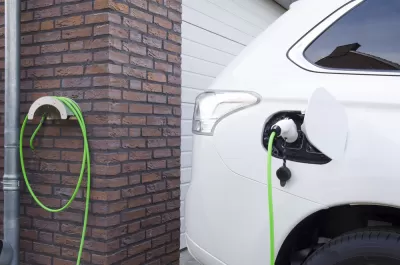
With the rejection of Proposition 6 in California last November, a new "Road Improvement Fee" for zero-emission motor vehicle model year 2020 and later will take effect July 1, 2020. The $100 annual registration fee, to be adjusted for inflation, will apply to any "motor vehicle that is able to operate on any fuel other than gasoline or diesel fuel," per the Road Repair and Accountability Act of 2017 (aka Senate Bill 1).
Revenues will be deposited into the Road Maintenance and Rehabilitation Account, thus ensuring that drivers who pay little or no fuel taxes will be paying to maintain the roads and bridges they drive on. But is that the best way to ensure electric vehicles pay "their fair share" of road maintenance?
Alan Jenn, a UC Davis research scientist with the Plug-In Hybrid & Electric Vehicle Research Center, doesn't think so, calling it neither effective nor sustainable in a new report requested by the California Legislature, writes Stephen Kulieke.
“The California zero-emissions vehicle registration fee doesn’t support the long-run funding of transportation infrastructure, nor is it equitable for drivers of electric and hydrogen vehicles,” said Jenn.
“California now has the opportunity to support alternative funding mechanisms,” Jenn said. “Our study finds that a per-mile road charge, designed specifically for zero-emission vehicles [ZEVs], is a relatively low-cost and sustainable solution to funding our roads.”
In March 2017, the California State Transportation Agency completed a 9-month pilot program of a road usage charge, similar to the Oregon program in operation since July 2015. However, Jenn is proposing that the California road charge apply only to ZEVs. Gasoline and diesel-powered vehicles would continue to pay 55.53 cents-per-gallon and 87.35 cents-per-gallon taxes, respectively, per API, now adjusted for inflation thanks to SB 1.
"Electric and hydrogen vehicles should be the only ones subject to the charge, Jenn said, since they come with advanced diagnostic software already built in, meaning a mileage-tracker can more easily log miles and send that information to whoever charges the tax," reports David Iaconangelo for E&E News (subscription).
The issue transcends the Golden State. According to the National Conference of State Legislatures, as of last summer, 19 states have enacted electric vehicle registration fees to ensure these vehicles pay for road upkeep, with many applying the fee to conventional hybrid vehicles as well.
Hat tip to Streetsblog California.
FULL STORY: How to Fund Roads and Ensure Electric Vehicles Pay Their Share

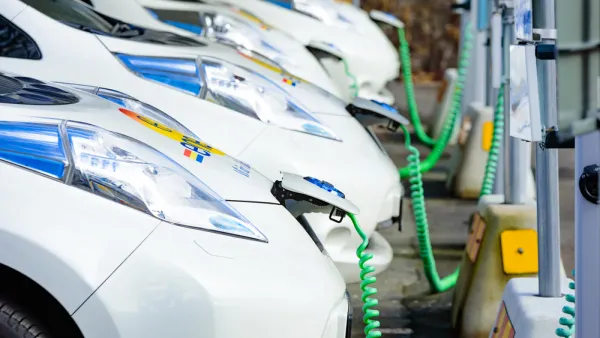
Consumer Group Accuses States of 'Punishing' Electric Vehicle Drivers
The advocacy division of Consumer Reports published a study to highlight the practice of what could soon be a majority of state governments: charging electric vehicle owners an additional registration fee to compensate for forgone fuel tax revenue.
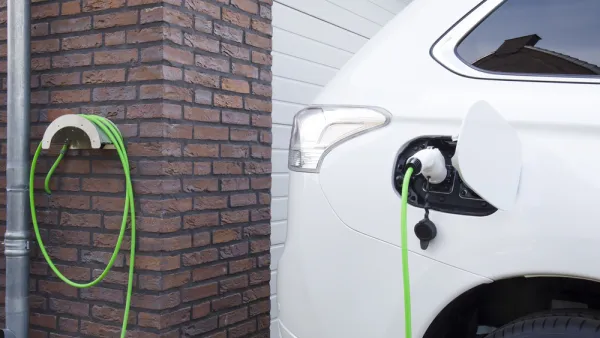
The High, Regressive Costs Imposed by Electric Vehicles
Two UC Berkeley economists evaluated whether to charge electric vehicles a mileage fee since they pay no fuel taxes. A study from the Mineta Institute evaluated the impact of new EV registration fees and increased fuel taxes in California.
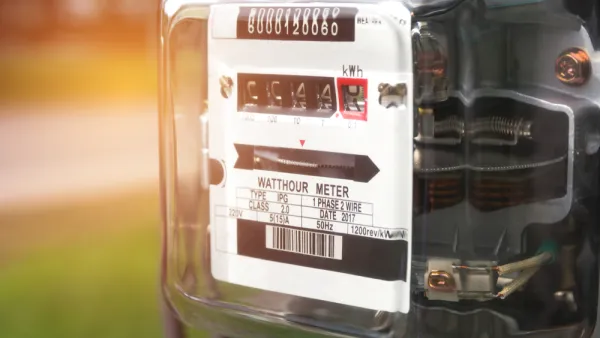
How Much Should Electric Vehicles Be Charged in Lieu of Gas Tax?
Currently, electric vehicles pay a $17.50 annual registration fee in Illinois. A bill to double the 19 cents per gallon gas tax, unchanged in almost 30 years, would also increase the EV fee over 57-fold to $1,000.

Planetizen Federal Action Tracker
A weekly monitor of how Trump’s orders and actions are impacting planners and planning in America.

The state-sanctioned urbicide of Austin
People don’t kill cities. Freeways do.

US to reduce Colorado River water deliveries to Mexico
A new Colorado Treaty amendment reduces Mexico’s Colorado River water allocation by 250,000 acre feet.

Mamdani overhauls NYC's Vision Zero plan with 100 new policy goals
The overhaul aims to reduce traffic deaths and make streets safer for pedestrians, cyclists and drivers through lower speed limits, new safety infrastructure and more.

Amtrak not solely to blame for New Jersey commuter rail's unreliability, report finds
A new study from the Garden State Initiative found that NJ Transit’s budget grew 20% across a 4 year period, but reliability declined significantly over the same period.

EPA erases limits on planet-warming pollution from power plants
Under Monday’s plan, power plants would still have some limits on how much mercury, arsenic and other contaminants they can emit.

FREE Course: Walkable City 1: Why Walkability?
After describing his path towards focusing on walkability as the essence of good planning, Jeff Speck marches through his five principal reasons for making more walkable places.
Reinventing Malls: Planning Alchemy—Turning Gray Fields Into Gold
The course focuses on the opportunities and imperatives that shape reinvention of mall sites.

Eagle County Government
Harvard University Graduate School of Design
Nashville Planning Department
The Architects Foundation
University of Cincinnati Online
The Pocatello Development Authority
The Urban Renewal Agency of the City of Pocatello
Journal of the American Planning Association