Northern San Joaquin Valley transit officials are eying a $100 billion Bay Area transportation measure to potentially fund a $1 billion rail tunnel for two commuter railroads to bring workers to the East Bay and Silicon Valley.


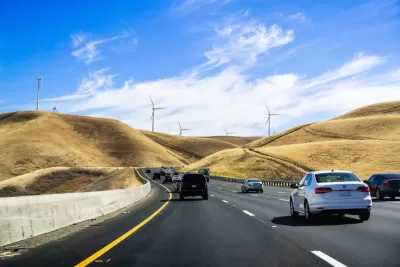
"Rail planners are seeking funding for a 3.5-mile tunnel at the pass and other upgrades that would reduce travel times to Bay Area jobs," reports John Holland of The Modesto Bee.
- The improvements would benefit the Altamont Corridor Express [ACE], which runs four round trips each weekday between Stockton [San Joaquin County] and San Jose.
- The tunnel also would serve the proposed Valley Link rail system between the Dublin BART station [Alameda County] and Stockton.
- Passenger rail service could increase 10-fold over Altamont Pass – enticing news for people who drive it daily from the Modesto area [Stanislaus County].
- The cost estimate is $1.1 billion for the Altamont tunnel and 5.1 miles of new track that ACE and Valley Link would share along the pass.
Faster Bay Area
Officials with both rail systems have approached Bay Area organizations that are proposing a $100 billion transportation ballot measure, initially dubbed Faster Bay Area, for the Nov. 3, 2020 election. Three Bay Area nonprofits, Transform, Urban Habitat, and Silicon Valley Community Foundation, held a forum on the mega-measure in Oakland on Aug. 27 to hear from speakers from Los Angeles and Seattle, which held successful mega transportation ballots of their own on Nov. 6, 2020.
“Now we have $120 billion for fifty major projects and we have got so much borrowing power,” Gloria Ohland of Move LA told the audience of some eighty advocates and city and regional officials, reported Roger Rudick for Streetsblog.
But that success comes with a warning for the Bay Area: LA can access lots of matching funds from Washington D.C. “We’re going to beat you guys and get all the money from the feds. Unless you step up, we’re going to take it all,” said Ohland.
The measure, which would appear on the ballots on the nine Bay Area counties, will need to have legislation written, passed, and signed by Gov. Newsom before voters have the opportunity to decide whether to fund it, which presumably would be by a one-cent sales tax. In the meantime, there will be plenty of projects that confine themselves to the 9-county San Francisco Bay Area that will be considered for inclusion in the measure.
Northern California Megaregion
Worth noting on the Valley Link proposed project is the inclusion of a term, Northern California Megaregion, that was developed by the Bay Area Council Economic Institute, the think tank operated by the Bay Area Council, one of the main sponsors of the mega measure.
This approximately 12-mile, abandoned right-of-way, deeded to Alameda County by Southern Pacific in 1984, provides an unprecedented opportunity to deliver a fast and efficient inter-regional rail service - connecting people, housing and jobs in the Northern California Megaregion and providing much-needed congestion relief in one of the Bay Areas most congested corridors.
"ACE and Valley Link aim to lure a good portion of the 80,000-plus people who drive to Bay Area jobs from the Northern San Joaquin Valley, notes Holland of The Modesto Bee.
These projects are key first steps in a grand vision for the next decade or two, said Dan Leavitt, manager of regional initiatives for ACE. The goal is a double-tracked system entirely separate from freight trains, with much fewer curves and less interference from road traffic.
Limits to sales tax
Scott Morris of Bay City News Service reported on a presentation by the three primary backers of the mega measure, the Bay Area Council, the San Francisco Bay Area Planning and Urban Research Association [SPUR], and the Silicon Valley Leadership Group, before the BART Board of Directors on Aug. 22.
Director Rebecca Saltzman, who represents portions of Alameda and Contra Costa counties, agreed, and pointed out that the sales tax may require passage of statewide legislation first. California caps sales tax at 10.25% and Saltzman said some cities have already reached that maximum.
Furthermore, Saltzman argued that a mix of revenue streams would be better than a sales tax, which can be volatile in the event of a recession. Big projects could be forced to be put on hold when revenue plummets.
That's the approach that Sound Transit took with their successful mega measure in the three-county Seattle region in November 2016 [see Sound Transit 3 tag]. In addition to a half-cent sales tax was a property tax and what Washington calls a 'car tab,' known in California as a value license fee as it's based on the assessed value of the registered motor vehicle fee.
However, that measure passed with 54 percent of the vote, far short of the two-thirds requirement needed in California for these types of tax ballot measures. On the other hand, Measure M, the Los Angeles $120 billion measure consisting of two half-cent sales taxes, passed with 71 percent of the vote on Election Day that year.
Additional reading:
- Streetsblog SF Editorial: For a Mega Measure to Work, the Rider Must Come First, Sep 3, 2019
Related in Planetizen:
-
'Valley Link' Planned to Relieve Bay Area Super Commuters, August 12, 2018
-
Seattle's HUGE Transit Victory on Election Day, November 21, 2016
Hat tip to David McCoard.
FULL STORY: Forty trains a day through Altamont at up to 125 mph? It could happen, weary drivers

Tech Buses: Not Just for Techies, and Not Just for San Francisco
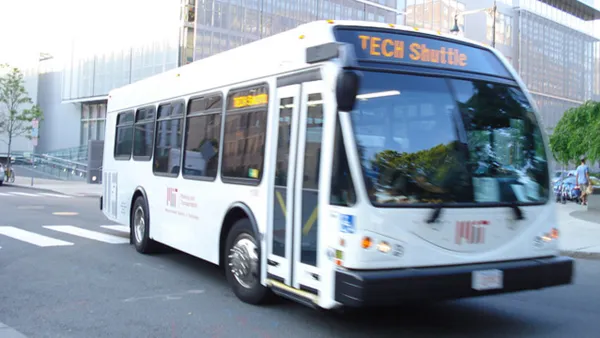
What began as Google buses, transporting highly paid engineers from San Francisco to Silicon Valley, has transformed into multi-company fleets serving white- and blue-collar workers in the 3,000-square-mile Northern California megaregion.
Competing Funding Strategies Promoted for Bay Area Transit Mega-Measure
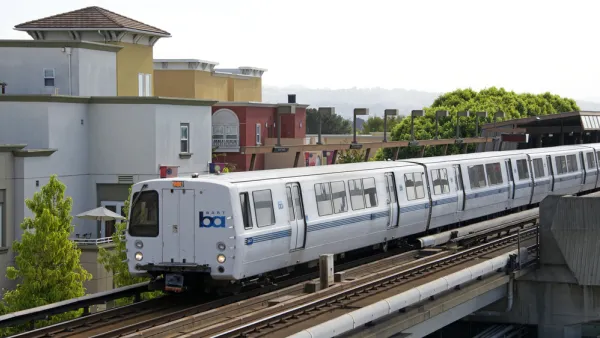
Two Bay Area transportation sales tax measures affecting three Bay Area counties performed poorly on Super Tuesday, but it hasn't deterred the groups backing a nine-county mega-measure. Progressive groups are proposing non-sales tax alternatives.
Local Revenue Funding More Bay Area Road Maintenance
The greater Bay Area is enjoying a substantial increase in road maintenance funding from local measures, like bonds, city and county sales taxes, and development fees, part of a growing trend in compensating for a shortage of state gas tax funds.

Planetizen Federal Action Tracker
A weekly monitor of how Trump’s orders and actions are impacting planners and planning in America.

The state-sanctioned urbicide of Austin
People don’t kill cities. Freeways do.

US to reduce Colorado River water deliveries to Mexico
A new Colorado Treaty amendment reduces Mexico’s Colorado River water allocation by 250,000 acre feet.

5 New England states march closer to 800 megawatt wind energy project
Securing federal approval for the project may be complicated under the Trump administration, which has historically been hostile towards domestic wind power.

Baltimore to break ground on $50 million Transit Priority Project
The project will bring faster bus trips, safer streets and better bike connections to Baltimore.

Airbnb launches $250 million 'last-dollar financing' housing accelerator, makes first investment in Austin
The company will put $6.4 million towards affordable housing development in Texas’ capital.

FREE Course: Walkable City 1: Why Walkability?
After describing his path towards focusing on walkability as the essence of good planning, Jeff Speck marches through his five principal reasons for making more walkable places.
Reinventing Malls: Planning Alchemy—Turning Gray Fields Into Gold
The course focuses on the opportunities and imperatives that shape reinvention of mall sites.

Eagle County Government
Harvard University Graduate School of Design
Nashville Planning Department
The Architects Foundation
University of Cincinnati Online
The Pocatello Development Authority
The Urban Renewal Agency of the City of Pocatello
Journal of the American Planning Association