A modest toll increase, $3 over six years, took a major step forward with the approval of a key Bay Area Toll Authority committee. With the exception of the Bay Bridge, the round-trip toll on each of the region's seven state-owned bridges is $5.


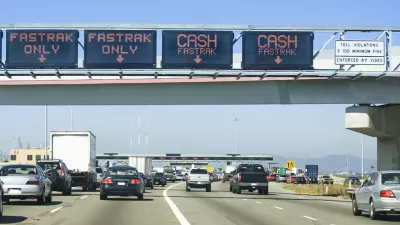
The July 2010 photo of the toll on the Bay Bridge between San Francisco and Oakland appearing in the San Francisco Chronicle article says it all: motorists crossing the seven, state-owned toll bridges in the Bay Area (does not include Golden Gate Bridge) pay the same toll today that they paid over seven years ago, unlike transit patrons that may see their fares raised annually or biennially.
If approved by a majority of voters in the region's nine counties (unlike transportation sales tax measures which require a two-thirds majority), the $5 toll on six of the bridges would increase by $1 next year, with subsequent $1 hikes in 2022 and 2025, reports Lizzie Johnson on Jan. 10. The $6 peak-hour toll, and $4 off-peak toll, on the Bay Bridge would increase by the same increment at the same intervals.
But to get before voters, the [Bay Area Toll Authority Oversight Committee's] recommendation will need approval from the full Bay Area Toll Authority which usually follows the committee’s lead. A vote is expected Jan. 24.
If the authority gives the measure the go-ahead, the Board of Supervisors in each of the nine affected counties will make the final vote to place it on each county’s ballot for June 5 as Regional Measure 3.
The toll increase would raise about $4.5 billion over 30 years to pay for a wide range of projects, writes Johnson. According to an email by Rebecca Long, manager of government relations for the Metropolitan Transportation Commission, the parent agency of the toll authority, "[w]hen operating funds are included over 25 years, the final mode split is 69% transit, 25% highway (interchange improvements, express lanes and some safety projects), 3% multimodal (Goods movement/Mitigation) & 3% bike/ped."
The three most costly projects are BART expansion cars ($500 million), BART to San Jose phase 2 ($375 million), and Caltrain downtown San Francisco extension, $325 million.
Regional Measure 3 is based on legislation, SB 595 by Sen. Jim Beall (D-San Jose), signed by Gov. Jerry Brown last October. It be the first time that all nine counties would vote to hike tolls. Regional Measure 1 in 1988, which hiked tolls to $1 for all seven bridges, and Regional Measure 2 in 2004, a $1 toll increase, appeared on ballots in seven counties, with Napa and Sonoma not participating. Tolls were also raised legislatively by $1 on three occasions for seismic retrofit purposes.
FULL STORY: Proposal for $9 tolls on Bay Bridge, $8 on other bridges gets big boost

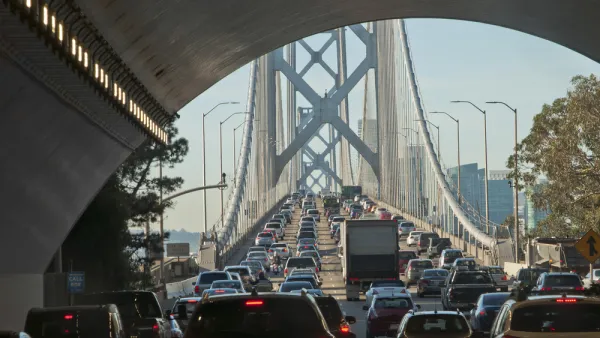
Increased Tolls for Bay Area Bridges Headed for a Vote
It is now up to the Bay Area's transportation planning agency to determine when to ask voters to hike tolls on seven Bay Area bridges, by how much, and whether to phase the increase. A bill to allow voters to fund Caltrain was also signed.
Taxpayer Group's Lawsuit Could Repeal Toll Hike on Bay Area Bridges
A California taxpayers association has challenged the June passage of a regional ballot measure because it didn't receive two-thirds support from voters, although two prior voter-approved bridge toll increases also fell short of a super-majority.
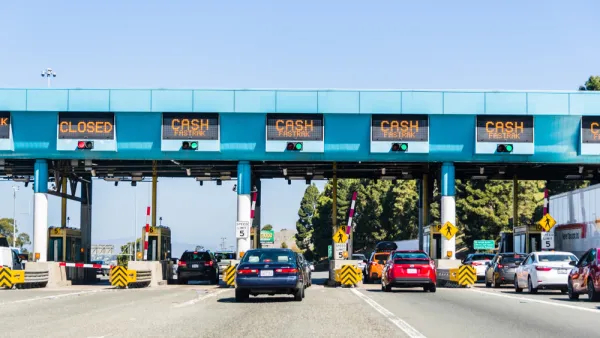
Winners and Losers of the California Primary
With national media focused on individual candidates, propositions that dealt with park and water bonds, transportation spending, cap-and-trade, and rainwater may have been overlooked. Plus, a measure to increase bridge tolls in the Bay Area.

Planetizen Federal Action Tracker
A weekly monitor of how Trump’s orders and actions are impacting planners and planning in America.

The state-sanctioned urbicide of Austin
People don’t kill cities. Freeways do.

US to reduce Colorado River water deliveries to Mexico
A new Colorado Treaty amendment reduces Mexico’s Colorado River water allocation by 250,000 acre feet.

Mamdani overhauls NYC's Vision Zero plan with 100 new policy goals
The overhaul aims to reduce traffic deaths and make streets safer for pedestrians, cyclists and drivers through lower speed limits, new safety infrastructure and more.

Amtrak not solely to blame for New Jersey commuter rail's unreliability, report finds
A new study from the Garden State Initiative found that NJ Transit’s budget grew 20% across a 4 year period, but reliability declined significantly over the same period.

EPA erases limits on planet-warming pollution from power plants
Under Monday’s plan, power plants would still have some limits on how much mercury, arsenic and other contaminants they can emit.

FREE Course: Walkable City 1: Why Walkability?
After describing his path towards focusing on walkability as the essence of good planning, Jeff Speck marches through his five principal reasons for making more walkable places.
Reinventing Malls: Planning Alchemy—Turning Gray Fields Into Gold
The course focuses on the opportunities and imperatives that shape reinvention of mall sites.

Eagle County Government
Harvard University Graduate School of Design
Nashville Planning Department
The Architects Foundation
University of Cincinnati Online
The Pocatello Development Authority
The Urban Renewal Agency of the City of Pocatello
Journal of the American Planning Association