David Yager, an oil industry consultant, writes that recent reports predicting electric vehicles will eventually outsell those with internal combustion engines are vastly exaggerated, notwithstanding national bans on future sales of such cars.


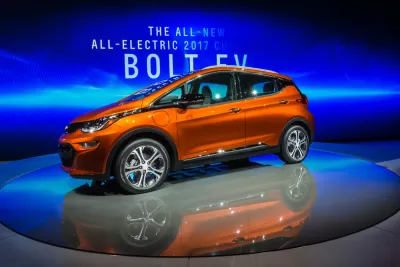
"Hardly a day goes by without another media report about the impending demise of the Internal Combustion Engine (ICE) as petroleum powered cars," writes David Yager for Business Insider.
He refutes claims that an increase in electric vehicle (EV) sales will lead to "the decline of petroleum production and consumption."
Your writer read dozens of articles and attended a conference on the future of EVs. The evidence overwhelming proves they pose no threat to oil prices anytime soon.
It is true that more nations now are agreeing to bans of oil-powered cars at some future date, most recently Great Britain and France setting the date at 2040; India at 2030; and Norway and The Netherlands at 2025. "Austria, China, Denmark, Germany, Ireland, Japan, the Netherlands, Portugal, Korea and Spain have set official targets for electric car sales," according to a July 26 report in CNN Money.
In response to the first two bans, Yager writes, "But however gloomy that may sound for the oil industry today, that is enough time for 6 elections in both countries which could change everything, the development of new technologies to make ICEs even cleaner and more efficient, and is sufficiently distant to be meaningless for all crude producers except the supermajors."
Yager also points to the dependence on perks to sell electric vehicles, and what happens when they are removed, illustrated by the 90 percent drop in EV registrations in the Atlanta region after Georgia ended the $5,000 rebate in 2015.
It will be interesting to see what effect the potential reduction, and then elimination of the $7,500 federal credit will have on sales of the popular, modestly priced Tesla Model 3 which began deliveries last week. "About 500,000 people have put down $1,000 deposits since last year to reserve delivery of Model 3s when they are available," reported Bill Vlasic for The New York Times on July 29.
"Model 3 buyers who receive their cars in the quarter when Tesla delivers its 200,000th U.S. vehicle will receive the full $7,500 federal tax credit," wrote Kyle of Teslarati.com on May 18. "The tax credit will drop by 50% two quarters after the 200,000th car is sold, and another 50% two quarters beyond that, before the tax credit is fully gone sometime around April 2019."
Yager is not alone in questioning the inevitability of the EV era.
"The real story being missed is just how pathetic things look right now for electric cars," opined the Financial Post's editorial writer, Kevin Libin, on July 11. "Gasoline prices in the U.S. turned historically cheap in 2015 and stayed cheap, icing demand for gasless cars."
Low gasoline prices are causing a drop in sales of fuel efficient cars as well as posing a threat to EV sales, resulting in an increase in greenhouse gas emissions. Take California, for example, which just released a glowing news release on its new greenhouse gas inventory. However, the real credit goes reductions in electricity generation. Emissions from passenger vehicles have been increasing since 2013 [pdf].
Nawar Alsaadi, an energy consultant who writes for Oil Price.com as does Yager, wrote in March about the "EV myth" in terms of their effect on oil demand. His conclusion:
In a nutshell. EVs are a red herring. By far the most important variable on passenger cars oil demand is changes in fuel efficiency standards. In this area, the United States is a clear laggard.
Should the Trump administration relax fuel efficiency standards, it would not be good for EV sales.
Read the full story: Electric cars won't bring down oil prices anytime soon

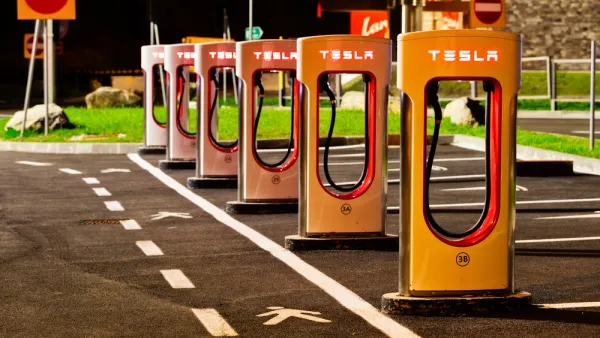
The Era of the Electric Vehicle is Approaching
A new report from Bloomberg New Energy Finance predicts that due to a plunge in battery prices and improvement in battery technology, electric vehicles will be cost-competitive with gasoline vehicles in eight years. By 2040, they will outsell them.
Climate Concerns Largely Absent in Auto Showrooms
A consumer survey found that less than a third of respondents considered carbon emissions or the environment when they last purchased a motor vehicle, yet three-quarters of Americans consider climate change a major problem or crisis.
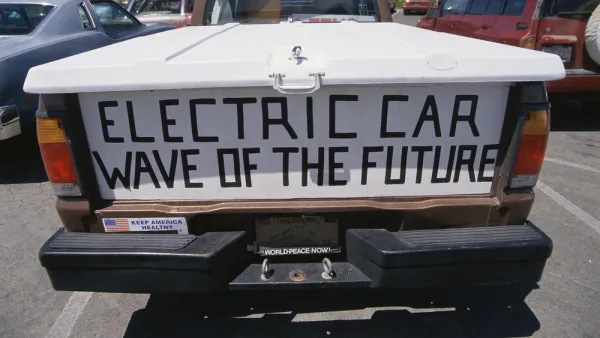
California Lawmaker Wants to Triple Electric Vehicle Rebates
Assemblyman Phil Ting seeks to dramatically increase the state electric vehicle sales rebate of $2,500, motivated in part by the phasing-out of the federal EV tax credit of $7,500. The bill rules out significant revenue sources.

‘Going backwards:’ Baltimore mayor, students rally against state's transit funding plan
Maryland's proposed six-year plan provides no funding for Baltimore’s BMORE bus program and reduces its road maintenance funding.

Detroit to transform waterfront with $2.2 billion investment
Developers will convert about 18 acres of unused parking lot space into civic spaces.

Mamdani sent nearly 6,000 pied-à-terre tax warnings to homes that didn’t qualify
A judge has ordered the administration to cancel thousands of pied-à-terre tax notices after it sent 35% of them erroneously.

25 states, cities sue the EPA over erased power plant emissions limits
The coalition also intends to sue the EPA for not regulating emissions from gas-fired power plants.

Newsom vetoes giving CA tribes greater voice in water projects
In his veto letter, Newsom said the bill would add ‘uncertainty’ to the state’s fight to secure Californians’ water supplies.

Michigan Senate votes to revise 'lax' dam safety laws
A Bridge Michigan investigation found more than 100,000 Michigan residents live in the floodpath of a high or significant-hazard dam.

FREE Course: Walkable City 1: Why Walkability?
After describing his path towards focusing on walkability as the essence of good planning, Jeff Speck marches through his five principal reasons for making more walkable places.
Reinventing Malls: Planning Alchemy—Turning Gray Fields Into Gold
The course focuses on the opportunities and imperatives that shape reinvention of mall sites.

City of Thousand Oaks
City of Wisconsin Rapids
Harvard University Graduate School of Design
The Architects Foundation
University of Cincinnati Online
Northern Illinois Transit Authority (NITA)
The Pocatello Development Authority
The Urban Renewal Agency of the City of Pocatello