Maryland's proposed six-year plan provides no funding for Baltimore’s BMORE bus program and reduces its road maintenance funding.


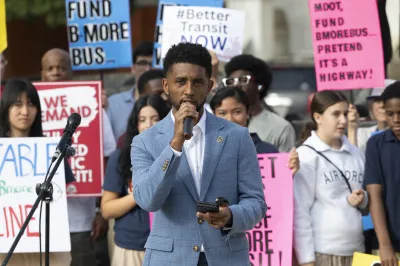
Baltimore Mayor Brandon Scott, state officials and students rallied for more transportation funding on Sept. 30 after the state’s proposed six-year plan provided no dedicated funding for the city’s BMORE bus plan, minimal funding for the city's Red Line and a reduced allocation of the state’s funding for road maintenance, Chevall Pryce writes for the Baltimore Sun.
The Maryland Department of Transportation allocated $96 million for the red line in its proposed plan, which would “keep the project in the planning phase rather than move it toward construction,” the Baltimore Sun reports. MDOT also dropped Baltimore’s share of Maryland's Highway User Revenue, which is used for road maintenance and improvements, from 12.2% to 9.5% in fiscal year 2028.
The Baltimore Sun reports:
“Over the last decade, Baltimore has spent $131 million on state roads,” Scott said, citing city budget data. “We’ve been able to spend $14 million on local roads. This is not sustainable, and it cannot continue. Going backwards to 9.5% will absolutely make things worse.”
Read the full story: MDOT plan includes $96M for Red Line, no dedicated BMORE Bus funding
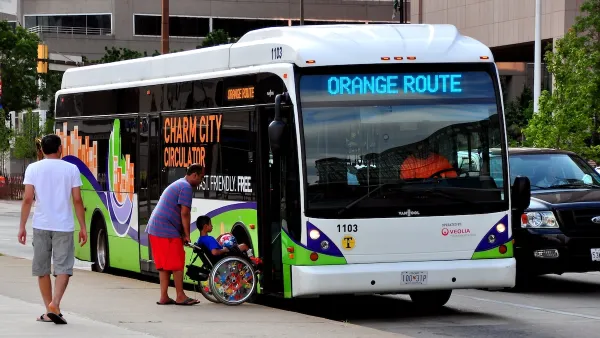
Baltimore to break ground on $50 million Transit Priority Project
The project will bring faster bus trips, safer streets and better bike connections to Baltimore.
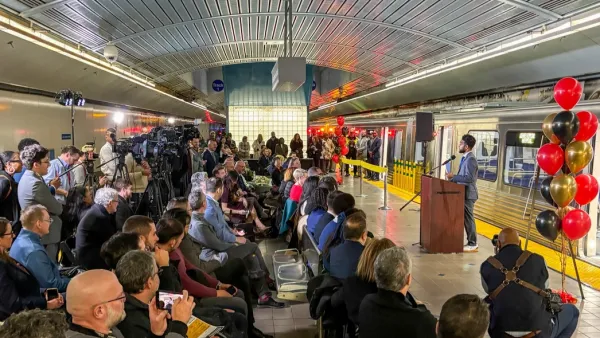
Baltimore Metro Receives First of 78 Japanese Bullet Train Cars
The first six cars are part of the system’s first major equipment overhaul since 1983.
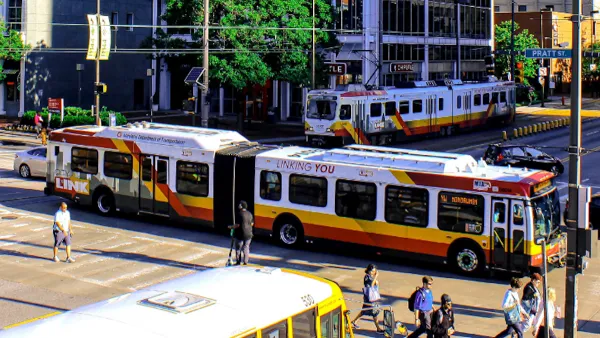
Maryland Could Cut Transit Funding, Citing Budget Gap
The governor says the state remains committed to its major transit projects, but may need to reduce service to meet a growing financial shortfall.

Planetizen Federal Action Tracker
A weekly monitor of how Trump’s orders and actions are impacting planners and planning in America.

Eastern Nebraska is running out of electricity
Data centers and electrification are straining eastern Nebraska’s grid, throttling economic development.

Study reveals best places in the U.S. for cycling, walking
New research from Streetlight Data examines bicycle and pedestrian miles per capita in the 100 largest U.S. cities by population.

Next-generation nuclear reactors are coming to Texas
The reactors will not require towering containment structures thanks to new safety features.

California distributes $1.3 billion to prevent transit service cuts, bolster projects
Twenty-eight projects across California received a portion of the funding.

Pennsylvania Democrats have 15 affordability, clean energy bills for flipped state Senate
Bills in consideration include a bill supporting geothermal energy and a bill supporting solar on warehouses.

FREE Course: Walkable City 1: Why Walkability?
After describing his path towards focusing on walkability as the essence of good planning, Jeff Speck marches through his five principal reasons for making more walkable places.
Reinventing Malls: Planning Alchemy—Turning Gray Fields Into Gold
The course focuses on the opportunities and imperatives that shape reinvention of mall sites.

City of Charlotte
City of Rosemead
Rutgers University, Edward J. Bloustein School of Planning and Public Policy
University of Michigan School for Environment and Sustainability (SEAS)
Hunter College, City University of New York (CUNY)
The Architects Foundation
City of Cambridge
The Pocatello Development Authority
The Urban Renewal Agency of the City of Pocatello