Data centers and electrification are straining eastern Nebraska’s grid, throttling economic development.


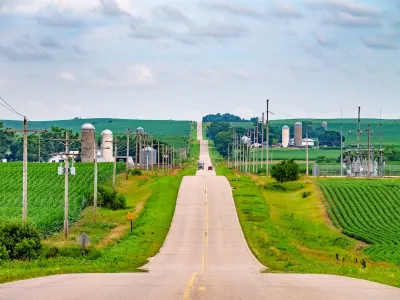
Data centers and electrification are sapping energy from eastern Nebraska's Omaha Public Power District, resulting in a bottleneck that threatens the region’s economic growth. OPPD currently estimates it has less than 100 megawatts of available power capacity to service new or expanding companies over the next few years — manufacturing facilities can range from needing a few megawatts, to over 100.
According to OPPD president and CEO Javier Fernandez, any new project that needs two megawatts or more may have to wait to receive electricity. “Economic development leaders are concerned that if power capacity in Nebraska’s largest metropolitan area remains limited, the Omaha area and the state as a whole will be put at a competitive disadvantage for growth opportunities like new businesses, jobs, and increased tax revenue. This comes as the state is projected to face a $208 million deficit next year,” Anila Yoganathan writes for Grist.
Companies projected to use over 2,000 megawatts of energy are already planning to set up shop in eastern Nebraska. OPPD is now trying to decide how much to expand its energy portfolio: build too small, and the company risks suffocating economic development. Overestimate how much energy new developments will need, and OPPD’s ratepayers will be on the hook financially.
Read the full story: As Nebraska seeks to grow, Omaha’s energy capacity is a major hurdle
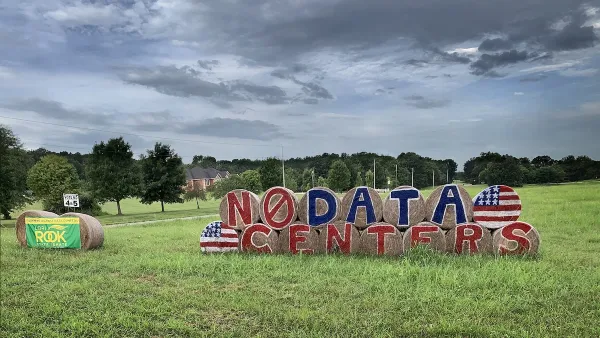
Voters across the country reject data centers
Dozens of communities voted on measures to restrict the buildout of data centers.

Post election, Texas is no longer Musk’s 'AI oasis'
Elon Musk dolled out $446 million on the 2026 midterms, the most ever spent by a non-canidate.
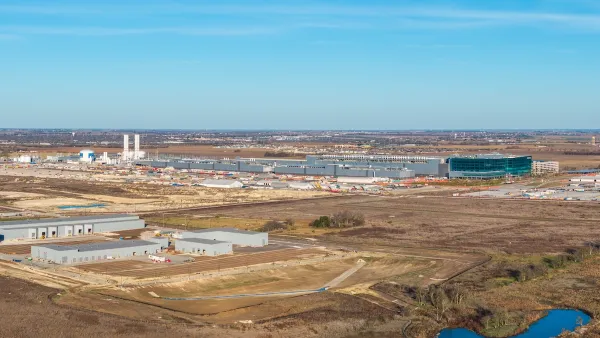
In Texas, data centers are swallowing promised parkland
Residents who moved to Taylor, Texas for a rural community now have to contend with three data centers in their backyard.

Planetizen Federal Action Tracker
A weekly monitor of how Trump’s orders and actions are impacting planners and planning in America.

California plans to bury El Niño’s downpour
If the state plays its cards right, it may be able to store a billion acre-feet of El Niño’s water in aquifers.

Desperate measures: Advocates weigh draining Lake Powell to fill Colorado River
Draining the reservoir could reduce evaporation losses by a couple hundred thousand acre-feet.

Mamdani’s pied-à-terre tax survives legal challenge
A panel of judges found that the plaintiffs failed to demonstrate injury as a result of New York City's implementation of the tax.

Eastern Nebraska is running out of electricity
Data centers and electrification are straining eastern Nebraska’s grid, throttling economic development.

Seattle passes record-breaking transit services expansion
Proposition 1 will double the city’s transit tax to add 95,000 more bus trips and preserve 180,000 bus trips annually.

FREE Course: Walkable City 1: Why Walkability?
After describing his path towards focusing on walkability as the essence of good planning, Jeff Speck marches through his five principal reasons for making more walkable places.
Reinventing Malls: Planning Alchemy—Turning Gray Fields Into Gold
The course focuses on the opportunities and imperatives that shape reinvention of mall sites.

City of Rosemead
Rutgers University, Edward J. Bloustein School of Planning and Public Policy
One Hundred Miles
Hunter College, City University of New York (CUNY)
The Architects Foundation
University of Cincinnati Online
City of Cambridge
Montrose County
The Pocatello Development Authority