Residents who moved to Taylor, Texas for a rural community now have to contend with three data centers in their backyard.


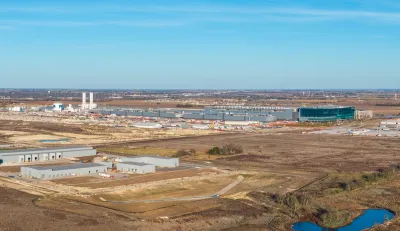
Taylor, Texas is a rural community filled with farmers, mom-and-pop shops — and data center development. Residents who were promised an “idyllic,” historic town now must contend with the development of three data centers and a 1,200-acre semiconductor facility, the latter of which clogs roads with concrete mixers and creates construction noise audible in Taylor High School and in the houses built just over a mile away.
Inside Climate News reports:
“We moved for a small-town feel, for a tighter-knit community, for the ability to afford some land and do some agricultural stuff, and to have space for our kids to run around,” Medina said. “We did not move here to be closer to any kind of tech. It’s not part of the appeal.”
Even land intended to maintain the small-town feel isn’t safe from the data center rush. Descendants of one late town resident, Howard Bland, Sr., sold his 87-acre property to the Williamson County Park Foundation to be used for parkland. The property then bounced to Taylor’s Economic Development Corporation who sold it to NCP Travis TPP Project, LLC for $10 million. NCP Travis TPP Project plans to build a 135,000-square-foot data center on the land.
Read the full story: Rural Charms Drew Residents to Taylor, Texas. Then Came the Data Centers.

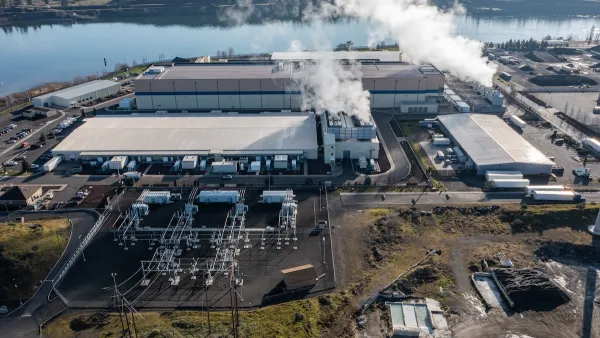
To power data centers, Google seeks autonomous control of thousands of homes’ electricity
The tech company has signed a deal to indirectly pay Mid-Atlantic residents to reduce their power demand when the grid is strained.

Ratepayers Could Be on the Hook for Data Centers’ Energy Use
Without regulatory changes, data centers’ high demand for energy would be subsidized by taxpayers, according to a new study.
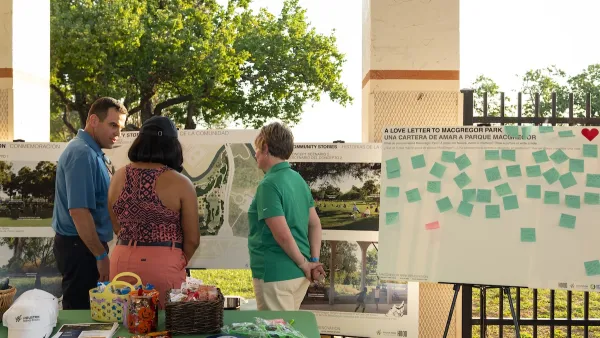
Public and Private Collaboration Advances Park Development in Houston
Houston may be known to some as a concrete jungle, but its greenspaces continue to expand thanks to combined support from the public, private, and philanthropic sectors.

Planetizen Federal Action Tracker
A weekly monitor of how Trump’s orders and actions are impacting planners and planning in America.

California plans to bury El Niño’s downpour
If the state plays its cards right, it may be able to store a billion acre-feet of El Niño’s water in aquifers.

Desperate measures: Advocates weigh draining Lake Powell to fill Colorado River
Draining the reservoir could reduce evaporation losses by a couple hundred thousand acre-feet.

In Texas, data centers are swallowing promised parkland
Residents who moved to Taylor, Texas for a rural community now have to contend with three data centers in their backyard.

How a Chicago-sized wind farm beat the odds and powered on
The project spanned five presidential administrations and a standoff with a U.S. military base.

MTA gives itself 30 days to transform pit into basketball court
The site has been under construction since 2022; the city originally estimated it would finish the court in 2024.

FREE Course: Walkable City 1: Why Walkability?
After describing his path towards focusing on walkability as the essence of good planning, Jeff Speck marches through his five principal reasons for making more walkable places.
Reinventing Malls: Planning Alchemy—Turning Gray Fields Into Gold
The course focuses on the opportunities and imperatives that shape reinvention of mall sites.

City of Rosemead
Rutgers University, Edward J. Bloustein School of Planning and Public Policy
One Hundred Miles
Hunter College, City University of New York (CUNY)
The Architects Foundation
University of Cincinnati Online
City of Cambridge
Montrose County
The Pocatello Development Authority