The tech company has signed a deal to indirectly pay Mid-Atlantic residents to reduce their power demand when the grid is strained.


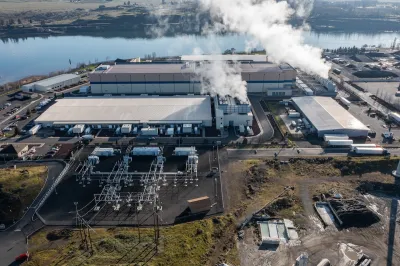
Google will indirectly pay Mid-Atlantic residents to reduce their power use when the grid is strained as a way to ensure enough energy remains available for the tech company's data centers. On Oct. 22, Google announced that Voltus, a virtual power plant company, agreed to provide Google with up to 1,070 megawatts of electric capacity as necessary for its data centers. To get that power, Voltus will give homes and businesses financial incentives to reduce their power demand when the grid is strained — or, to let Voltus reduce it for them.
“Many of these reductions could occur automatically, such as through smart thermostats that dial back air-conditioning during peak summer hours or batteries that can provide temporary on-site power,” Brad Plumer writes for the New York Times.
Voltus says that if thousands of businesses and homes agree, within a few years it can reliably provide Google with plenty of extra electricity when needed. While tech companies will likely need to continue investing in traditional power plants for their data centers, virtual power plants may offer a faster and more environmentally-friendly approach for the time being.
Read the full story: To Make Way for Data Centers, Google Will Pay Others to Use Less Power


Ratepayers Could Be on the Hook for Data Centers’ Energy Use
Without regulatory changes, data centers’ high demand for energy would be subsidized by taxpayers, according to a new study.
Google Inks Nuclear Power Deal
Tech giants are seeking out renewable energy to fuel power-hungry data centers and AI applications.

Musk ‘Supercomputer’ Raises Water, Power, and Pollution Concerns in Memphis
The facility, which was completed in just 122 days, was rushed through so quickly, it is still missing environmental permits and infrastructure needed to ensure it doesn’t put stress on the grid or local water supply.

Planetizen Federal Action Tracker
A weekly monitor of how Trump’s orders and actions are impacting planners and planning in America.

Chicago breaks ground on $3 billion megadevelopment
The new neighborhood, titled Foundry Park, will one day host 3,700 residences.

This MA town is drowning in its own sewage — and residents like it that way
Susan Murcott, a waste water expert, said if Carlisle didn't address their leaking sewage, the problem could turn “deadly.”

To power data centers, Google seeks autonomous control of thousands of homes’ electricity
The tech company has signed a deal to indirectly pay Mid-Atlantic residents to reduce their power demand when the grid is strained.

From robotaxis to robotrains: LA, DC weigh driverless transit
If approved, the projects will take years to implement and face financial and technical hurdles.

Dallas suburbs are turning their downtowns into small towns
Four Texas towns are embracing walkability and density in their downtowns.

FREE Course: Walkable City 1: Why Walkability?
After describing his path towards focusing on walkability as the essence of good planning, Jeff Speck marches through his five principal reasons for making more walkable places.
Reinventing Malls: Planning Alchemy—Turning Gray Fields Into Gold
The course focuses on the opportunities and imperatives that shape reinvention of mall sites.

City of Rosemead
Rutgers University, Edward J. Bloustein School of Planning and Public Policy
One Hundred Miles
The Architects Foundation
University of Cincinnati Online
Montrose County
The Pocatello Development Authority
The Urban Renewal Agency of the City of Pocatello