The city of Seattle has finally been compelled to maintain pedestrian infrastructure in keeping with the Americans with Disabilities Act.


Ryan Packer reports that the city of Seattle settled a class action lawsuit in U.S. District court alleging that the city is violating the Americans with Disabilities Act, "based on the current number of intersections that are lacking proper curb ramps and the fact that many intersections have curb cuts that are substandard."
"Under the settlement, the Seattle Department of Transportation (SDOT) will be required to build 1,250 curb ramps every single year, adding up to a commitment to install 22,500 over the next 18 years," reports Packer. That pace will double the city's total number of curb cuts by the year 2035.
The article digs much deeper into the subject of curb cuts, their costs, and the lack of political will to construct the important feature of complete streets infrastructure (shown to benefit broad cross sections of the public). The court decision will also impact the spending allotments made from the Move Seattle levy, as approved by voters in November 2015 and planned in the draft Pedestrian Master Plan released in March 2017.
FULL STORY: Disability Rights Victory Means Curb Cut Deluge Coming

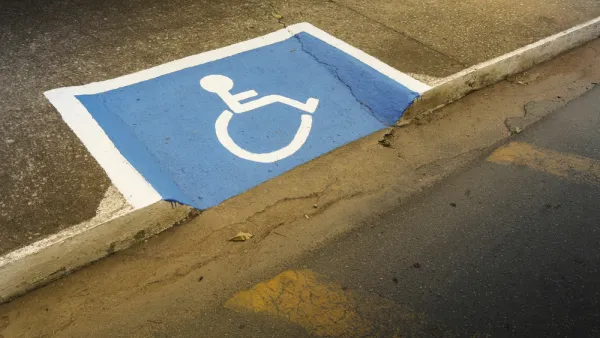
Why Accessible Sidewalks Fall by the Wayside
Despite the passage of the Americans with Disabilities Act more than 30 years ago, most U.S. cities delay making accessibility improvements to sidewalks until activists bring them to court.
'Project Sidewalk' Crowdsources ADA Compliance
A crowdsourcing app allows citizens to hold the public realm to higher standards of access and mobility.
Commentary: LA’s ‘Large Asphalt Repair’ Policy Privileges Drivers, Endangers Others
A new policy to perform spot repairs rather than resurfacing entire streets lets the city skirt requirements to install accessibility and pedestrian infrastructure.

Planetizen Federal Action Tracker
A weekly monitor of how Trump’s orders and actions are impacting planners and planning in America.

The state-sanctioned urbicide of Austin
People don’t kill cities. Freeways do.

US to reduce Colorado River water deliveries to Mexico
A new Colorado Treaty amendment reduces Mexico’s Colorado River water allocation by 250,000 acre feet.

Mamdani overhauls NYC's Vision Zero plan with 100 new policy goals
The overhaul aims to reduce traffic deaths and make streets safer for pedestrians, cyclists and drivers through lower speed limits, new safety infrastructure and more.

Amtrak not solely to blame for New Jersey commuter rail's unreliability, report finds
A new study from the Garden State Initiative found that NJ Transit’s budget grew 20% across a 4 year period, but reliability declined significantly over the same period.

EPA erases limits on planet-warming pollution from power plants
Under Monday’s plan, power plants would still have some limits on how much mercury, arsenic and other contaminants they can emit.

FREE Course: Walkable City 1: Why Walkability?
After describing his path towards focusing on walkability as the essence of good planning, Jeff Speck marches through his five principal reasons for making more walkable places.
Reinventing Malls: Planning Alchemy—Turning Gray Fields Into Gold
The course focuses on the opportunities and imperatives that shape reinvention of mall sites.

Eagle County Government
Harvard University Graduate School of Design
Nashville Planning Department
The Architects Foundation
University of Cincinnati Online
The Pocatello Development Authority
The Urban Renewal Agency of the City of Pocatello
Journal of the American Planning Association