A crowdsourcing app allows citizens to hold the public realm to higher standards of access and mobility.


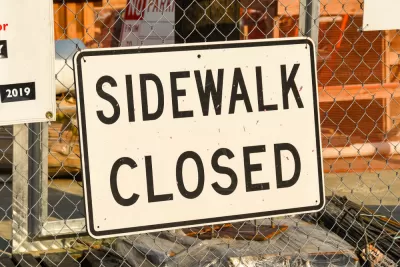
Josh Cohen reports that Project Sidewalk, a data gathering mobile app project led by University of Washington faculty and students, has launched in Seattle in the hopes of improving sidewalk conditions.
"First piloted in Washington, D.C., in 2016, Project Sidewalk launched the Seattle version in mid-April," according to Cohen. "The app relies on data generated by users reviewing the city’s sidewalks via Google Street View, an attempt to speed up city audits usually conducted by teams of city workers walking the streets with clipboard in hand."
Leading the University of Washington effort is Computer Science Professor Jon Froehlich, who tells Cohen that desired outcomes for Project Sidewalk include a better educated citizenry and political accountability in maintaining ADA compliant access in the public realm.
FULL STORY: Seattle's got terrible sidewalks. You can help fix them.

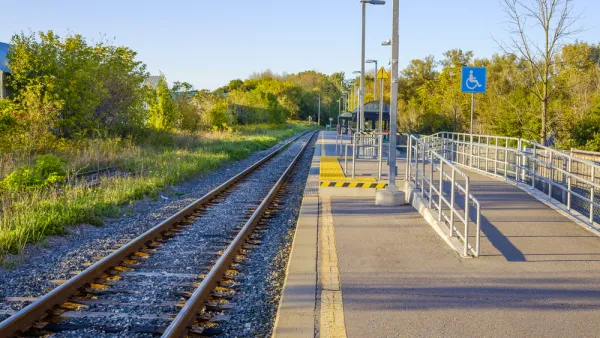
ADA Compliance Slowly Makes Headway
Decades of advocacy are paying off, but it often takes legal action to force cities to make accessibility improvements mandated by the Americans with Disabilities Act over thirty years ago.

An App to Map the City's Most Accessible Routes
Google Maps is built for able-bodied people, but the AccessMap Seattle app is for everyone.
Court Decision Forces Seattle to Improve Sidewalk Infrastructure
The city of Seattle has finally been compelled to maintain pedestrian infrastructure in keeping with the Americans with Disabilities Act.

The state-sanctioned urbicide of Austin
People don’t kill cities. Freeways do.

US to reduce Colorado River water deliveries to Mexico
A new Colorado Treaty amendment reduces Mexico’s Colorado River water allocation by 250,000 acre feet.

New Jersey’s second-largest city bans standalone data centers
Jersey City will continue to allow co-location facilities, such as those meant for research institutions that store their own data.

Amtrak not solely to blame for New Jersey commuter rail's unreliability, report finds
A new study from the Garden State Initiative found that NJ Transit’s budget grew 20% across a 4 year period, but reliability declined significantly over the same period.

EPA erases limits on planet-warming pollution from power plants
Under Monday’s plan, power plants would still have some limits on how much mercury, arsenic and other contaminants they can emit.

Phoenix announces new on-demand transit service, more frequent RAPID buses
Both new services will launch in October, and are part of Phoenix's Project Effective Access Solutions for Easing Congestion.

FREE Course: Walkable City 1: Why Walkability?
After describing his path towards focusing on walkability as the essence of good planning, Jeff Speck marches through his five principal reasons for making more walkable places.
Reinventing Malls: Planning Alchemy—Turning Gray Fields Into Gold
The course focuses on the opportunities and imperatives that shape reinvention of mall sites.

Eagle County Government
Harvard University Graduate School of Design
Nashville Planning Department
The Architects Foundation
University of Cincinnati Online
The Pocatello Development Authority
The Urban Renewal Agency of the City of Pocatello
Journal of the American Planning Association