The city is one of many to face lawsuits for failing to comply with the Americans with Disabilities Act.


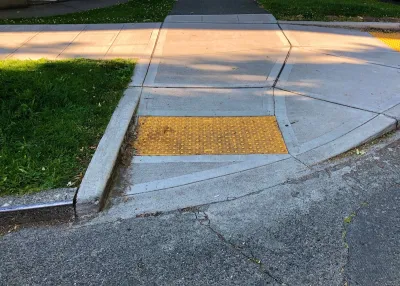
A court ordered the city of Baltimore to spend at least $44 million over the next four years on accessibility upgrades for the city’s sidewalks. The decree stems from a 2021 lawsuit.
As Danielle McLean explains in Smart Cities Dive, the agreement requires the city to “ implement new programs to make its public rights of way comply with the Americans with Disabilities Act, including a plan to alleviate sidewalk obstructions and improvements to the city’s 311 system allowing reports about inaccessible intersections and sidewalks.
In addition to building thousands of curb cuts and improving sidewalk conditions, the city os ordered to inspect its pedestrian walkways every 10 years, keep walkways clear of vegetation and overgrowth, prune obstructive trees, and other actions.
According to McLean, “The court-enforced agreement is considered a partial consent decree because the two sides will still negotiate a longer-term plan to bring the remaining sidewalks and curb ramps into ADA compliance.”
FULL STORY: Court orders Baltimore to spend $44M on sidewalk upgrades for ADA compliance

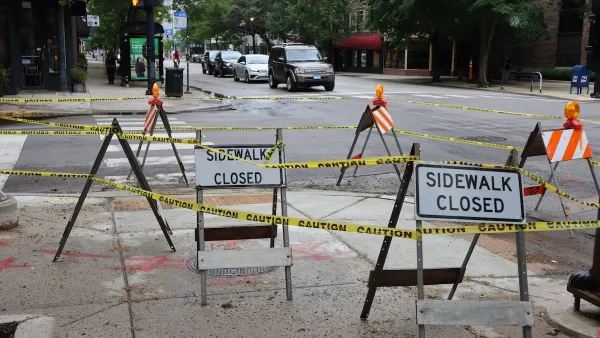
Chicago Residents Sue City Over Inaccessible Sidewalks
The suit alleges the city has failed to create a “coordinated, proactive system” for complying with ADA and ensuring accessibility on the city’s sidewalks and crosswalks.
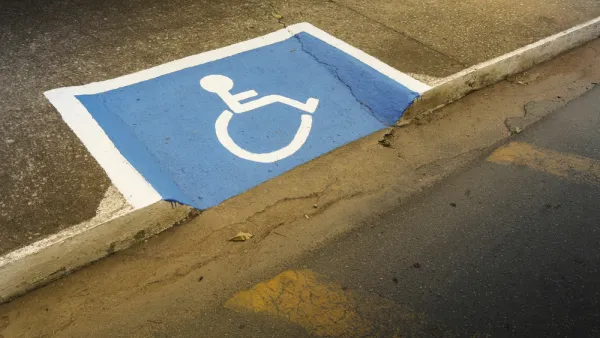
Why Accessible Sidewalks Fall by the Wayside
Despite the passage of the Americans with Disabilities Act more than 30 years ago, most U.S. cities delay making accessibility improvements to sidewalks until activists bring them to court.

For Advice on Accessibility, Look to Iceland
Cities around the country installed over 1,700 wheelchair ramps in the last five years, thanks in part to one man’s initiative.

Planetizen Federal Action Tracker
A weekly monitor of how Trump’s orders and actions are impacting planners and planning in America.

The state-sanctioned urbicide of Austin
People don’t kill cities. Freeways do.

US to reduce Colorado River water deliveries to Mexico
A new Colorado Treaty amendment reduces Mexico’s Colorado River water allocation by 250,000 acre feet.

5 New England states march closer to 800 megawatt wind energy project
Securing federal approval for the project may be complicated under the Trump administration, which has historically been hostile towards domestic wind power.

Baltimore to break ground on $50 million Transit Priority Project
The project will bring faster bus trips, safer streets and better bike connections to Baltimore.

Airbnb launches $250 million 'last-dollar financing' housing accelerator, makes first investment in Austin
The company will put $6.4 million towards affordable housing development in Texas’ capital.

FREE Course: Walkable City 1: Why Walkability?
After describing his path towards focusing on walkability as the essence of good planning, Jeff Speck marches through his five principal reasons for making more walkable places.
Reinventing Malls: Planning Alchemy—Turning Gray Fields Into Gold
The course focuses on the opportunities and imperatives that shape reinvention of mall sites.

Eagle County Government
Harvard University Graduate School of Design
Nashville Planning Department
The Architects Foundation
University of Cincinnati Online
The Pocatello Development Authority
The Urban Renewal Agency of the City of Pocatello
Journal of the American Planning Association