President Trump’s most recent transportation budget is projected to cut transportation spending by 13 percent, potentially undercutting many of Los Angeles' ambitious projects to continue the build-out of a full public transportation system.


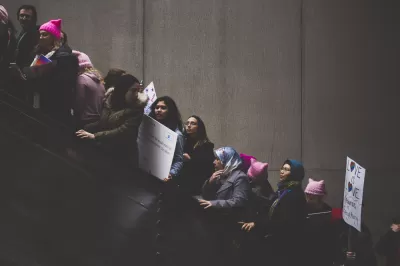
Residents of Los Angeles went to bat and passed Measure M last November to assure up to $120 billion in funding for Los Angeles County transportation upgrades and new projects in coming years. But local investment in transportation infrastructure necessarily relies on federal support, and President Trump's proposed budget is projected to cut transportation spending by 13 percent. Many regional public transit projects already promised federal funding are at risk now of being unfunded. To assess the state of Los Angeles County Metropolitan Transportation Authority's system transformation, The Planning Report spoke with CEO Phil Washington, who did not hold back on criticizing the news out of Washington, D.C.
In an exclusive interview, Washington addresses Metro’s 2017-18 budget priorities, the significance of the Metro Board’s formally killing the controversial 710 freeway tunnel project, and opines on how innovations will continue to reimagine the current LA public transportation system.
Washington, who has been very vocal about the role of the federal government in building this infrastructure, explained that he was "very surprised to see three cities in particular—Denver, Los Angeles, and Seattle—called out in President Trump's budget as not meriting federal funding," because they had already raised local money. To him, "the idea that regions that have gone out and raised money on their own—like [Los Angeles] did with Measure R and Measure M—should be penalized by losing federal funds is disastrous."
"The Trump administration’s recent budget proposal was totally incongruent with its pledge to commit $1 trillion to infrastructure. We hope that Congress will do the right thing and disagree with the budget that has been put forward." - Phil Washington, CEO, LA Metro
In addition to discussing the impacts of the federal budget, Washington spoke about the decision to formally kill the funding for a freeway connection tunnel. The decision now frees up about $700 million from Measure R (L.A.'s 2008 public transportation funding measure) to do projects that significantly alleviate traffic in those specific northeast Los Angeles communities. Metro also announced their intentions to have an all-electric fleet by 2030.
Read more in The Planning Report.
Read the full story: Metro's Phil Washington: Update on LA's 21st Century Transportation Build-Out

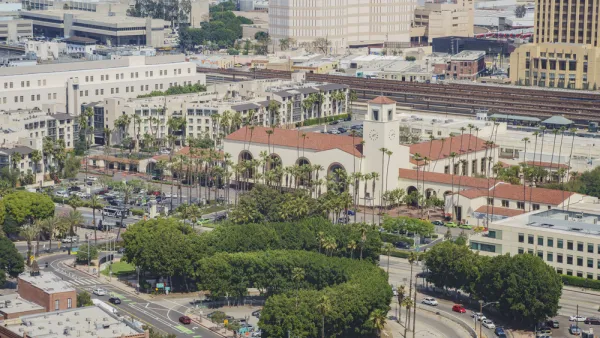
Los Angeles Union Station Plan Creates Multimodal Access to Downtown L.A.
When it comes to trains, trams, and buses, L.A.'s Union Station is "the most transit-accessible location in Southern California." Soon, it will finally connect to its own neighborhood.
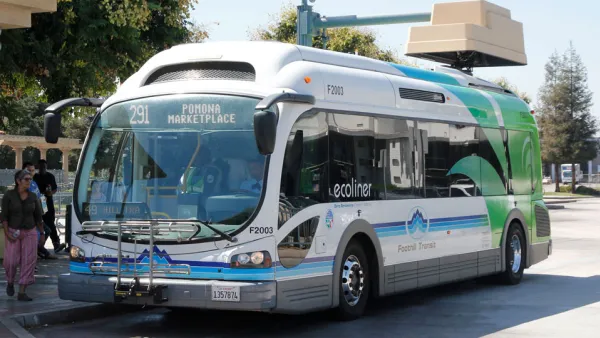
Electric Transit Becoming the New Norm in California
Electrification is at a tipping point in California, expanding into the heavy-duty sector with the buy-in of transit agencies across the state.
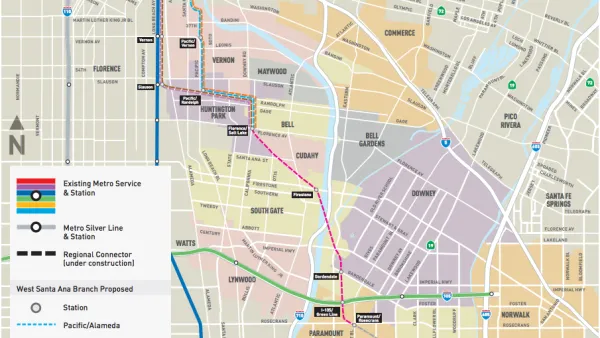
The L.A. Metro 'Megaproject' Connecting Downtown and Southeast L.A. County
The West Santa Ana Branch light rail would offer new infrastructure and economic activity to a transit-dependent part of the county.

Planetizen Federal Action Tracker
A weekly monitor of how Trump’s orders and actions are impacting planners and planning in America.

Colorado’s Largest Data Center Could Rise Next to Homes — Without a Public Hearing
The proposed campus would consume 11 times the power of Denver International Airport; as it has across the country, opposition mounts.

US to reduce Colorado River water deliveries to Mexico
A new Colorado Treaty amendment reduces Mexico’s Colorado River water allocation by 250,000 acre feet.

Judges permit Denver to divert 77,000 acre feet from the Colorado River for reservoir expansion
Overuse and climate change have caused the Colorado River’s water levels to plummet.
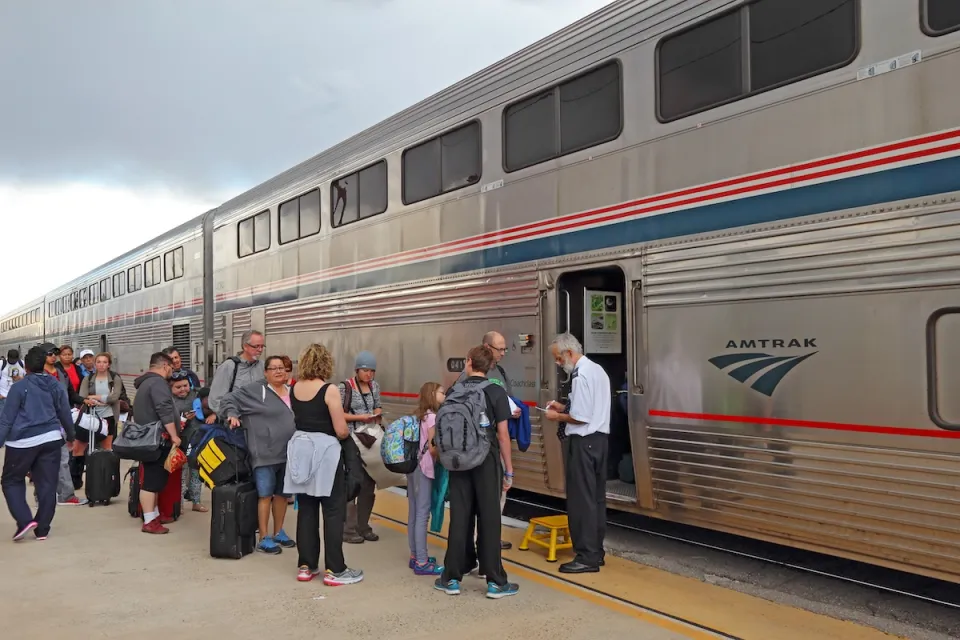
Amtrak, CN end decades-long dispute with eight-year agreement
The new operating agreement establishes an updated framework for the companies to work together, including processes to resolve disputes.
Raised interest rates may kill financially vulnerable construction projects
The chief economist at ConstructConnect warns that if construction project owners are negatively impacted by the raised rates, it could result in delayed payments to contractors.

FREE Course: Walkable City 1: Why Walkability?
After describing his path towards focusing on walkability as the essence of good planning, Jeff Speck marches through his five principal reasons for making more walkable places.
Reinventing Malls: Planning Alchemy—Turning Gray Fields Into Gold
The course focuses on the opportunities and imperatives that shape reinvention of mall sites.

KFH Group Inc.
Greater Baltimore Committee
Eagle County Government
The Architects Foundation
University of Cincinnati Online
The Pocatello Development Authority
The Urban Renewal Agency of the City of Pocatello