The showman captured America's attention with a promise to "make America great again" with a $1 trillion infrastructure plan. Receiving scant attention are the infrastructure grant programs he'll cut in order to fund massive defense spending.


Expect massive cuts to the TIGER grant program, if not elimination, reports Melanie Zanona for The Hill, because "[t]he administration is proposing to increase defense spending by $54 billion and cut non-defense spending by the same amount."
“It’s very inconsistent,” Rep. John Delaney (D-Md.) told The Hill. “The real question is, with the cuts he’s proposing to pay for this defense increase, how do we pay for the infrastructure plan?”
Zanona suggests that the Transportation Investment Generating Economic Recovery (TIGER) grant program, "set up by the Obama administration’s 2009 economic stimulus package, could be on the chopping block."
Since then, the competitive program has distributed $5.1 billion to more than 400 projects across the country, according to the latest estimate from the Department of Transportation (DOT). [See tag: Tiger Grants].
“Since the loss of earmarks, this is one of the only programs that allows local and country governments to directly access federal funds,” Beth Osborne, senior policy adviser for Transportation for America, said at a Senate hearing on Wednesday.
Another is the Fostering Advancements in Shipping and Transportation for the Long-term Achievement of National Efficiencies (FASTLANE) grants. "The FASTLANE program was established in the Fixing America’s Surface Transportation (FAST) Act to fund critical freight and highway projects across the country," according to D.O.T.
Where's Transportation Secretary Chao?
Chao expressed support for TIGER grants and the Transportation Infrastructure Finance and Innovation Act (TIFIA) loan program during her confirmation hearing.
But if Trump’s budget hews closely to a blueprint published by the conservative Heritage Foundation, as The Hill reported last month, it could entirely eliminate the annual $510 million TIGER program.
Also dependent on Trump's budget is the fate of the Caltrain commuter rail electrification project after Chao deferred approving a $647 grant, the topic of a March 13 New York Times editorial.
The alternative to elimination of the TIGER program, also pessimistic, is that it would be "slashed," stated Sen. Susan Collins (R-Maine) at a March 8 meeting of the Senate Appropriations Subcommittee on Transportation, Housing and Urban Development, which she chairs.
“If they cut TIGER grants, I don’t know where that gets them,” said Rep. Peter DeFazio (D-Ore.), ranking member on the House Transportation and Infrastructure Committee. “It would seem to be contradictory” to the administration's infrastructure pledge.
Hat tip to Transportation for America.
Read the full story: Infrastructure grants could be on chopping block in Trump budget

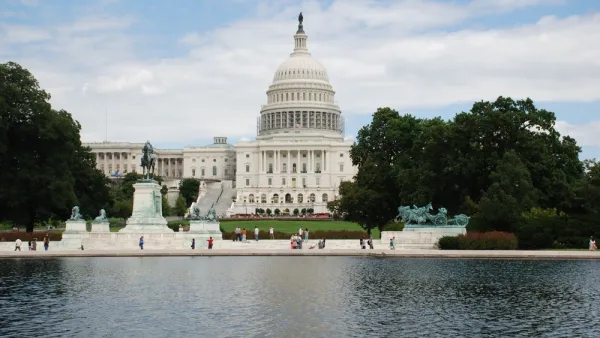
Senate Appropriations Committee Restores TIGER Grant Program
Unlike the House Appropriations Committee's DOT budget that reduces spending by almost 4 percent from current levels and eliminates the TIGER grant program, its Senate counterpart increased transportation spending, including the TIGER grant budget.
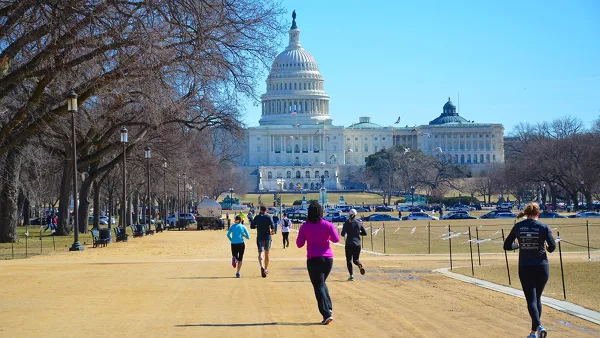
2018 Congressional Transportation Budget Begins to Take Shape
While reduced from current levels, the House Appropriations Committee budgeted far more than what President Trump had proposed, but they agreed with him to eliminate the TIGER grant program and reduce transit investments, though by a lesser amount.
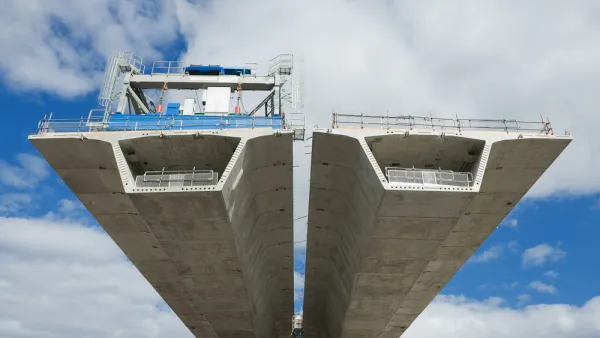
The Two Faces of Trump's Infrastructure Plan
The president spent Infrastructure Week touting a $1 trillion infrastructure investment plan that has yet to materialize, unlike the elimination of an essential grant program in his 2018 budget that will be detrimental to over 50 transit projects.

Planetizen Federal Action Tracker
A weekly monitor of how Trump’s orders and actions are impacting planners and planning in America.

Amtrak, CN end decades-long dispute with eight-year agreement
The new operating agreement establishes an updated framework for the companies to work together, including processes to resolve disputes.

Judges permit Denver to divert 77,000 acre feet from the Colorado River for reservoir expansion
Overuse and climate change have caused the Colorado River’s water levels to plummet.

Atlanta City Council unanimously backs $3.5 billion Beltline light rail project
The resolution was drafted after Atlanta Mayor Andre Dickens pulled support for the Atlanta Streetcar extension last year.

SEPTA to bring nearby frequent transit to over 1 million new riders as part of decade-long plan
The agency's Accelerate plan will also bring frequent transit to twice the amount of jobs that are currently located near it.

NYC plants over 18,000 trees, the most new foliage in a decade
Many of the trees were planted in communities vulnerable to extreme heat.

FREE Course: Walkable City 1: Why Walkability?
After describing his path towards focusing on walkability as the essence of good planning, Jeff Speck marches through his five principal reasons for making more walkable places.
Reinventing Malls: Planning Alchemy—Turning Gray Fields Into Gold
The course focuses on the opportunities and imperatives that shape reinvention of mall sites.

City of Thousand Oaks
City of Wisconsin Rapids
Harvard University Graduate School of Design
The Architects Foundation
University of Cincinnati Online
The Pocatello Development Authority
The Urban Renewal Agency of the City of Pocatello