A draft regional transportation plan for the Puget Sound region does not go far enough to significantly reduce emissions and meet climate goals.


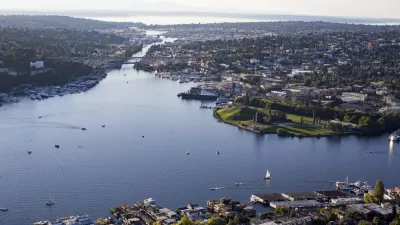
As the Puget Sound Regional Council prepares to release its draft Regional Transportation Plan, Ryan Packer of The Urbanist argues that the plan "unfortunately does not appear to be a climate-focused document."
According to Packer, the plan falls short of meeting the emissions reductions goals set by Washington state and actually projects longer commute times and increased congestion due to population growth. The plan estimates that vehicle miles traveled (VMT) on the region's roads will increase by 15 percent by 2050. Even when factoring in the agency's "Four Part Greenhouse Strategy," the model only shows a 50 percent reduction in greenhouse gases, far less than the state's proposed 95 percent reduction. A PSRC official told The Urbanist that the projection took a "fairly conservative" approach, and that a proposed road usage charge could have an impact on roadway demand and VMT.
Local officials urged the agency to deliver a plan that achieves higher reductions, even if its implementation might be unrealistic in the short term. Packer quotes Burien Councilmember Nancy Tosta as saying, "PSRC has to provide the leadership that contributes to us being able to accomplish some of these climate action goals that we’re laying out in our local jurisdictions."
FULL STORY: Draft Regional Transportation Plan Could Fall Far Short on Climate Goals

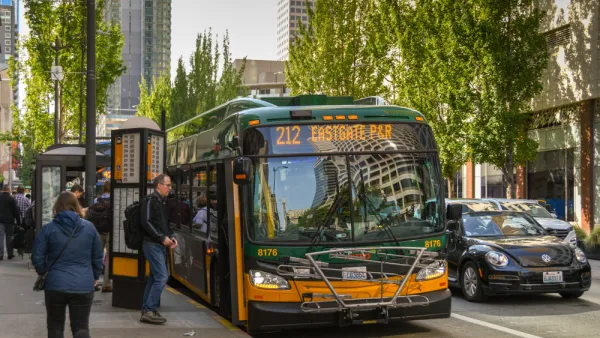
Puget Sound Transportation Plan Fails to Meet Climate Targets
Agency staff says the Puget Sound regional long-range plan won’t achieve 2030 sustainability goals set by the state.

Study: EV Adoption Isn't Enough. Car-Centric Culture Needs To Change.
The focus on electrifying personal vehicles misses the opportunity to transform urban transportation systems, reduce congestion, and make cities more affordable.

California Environmental Leaders Call on State Agencies to Prioritize Multimodal Transportation
Even before President Trump took office, California was not meeting its emissions reduction goals.

Planetizen Federal Action Tracker
A weekly monitor of how Trump’s orders and actions are impacting planners and planning in America.

The state-sanctioned urbicide of Austin
People don’t kill cities. Freeways do.

US to reduce Colorado River water deliveries to Mexico
A new Colorado Treaty amendment reduces Mexico’s Colorado River water allocation by 250,000 acre feet.

5 New England states march closer to 800 megawatt wind energy project
Securing federal approval for the project may be complicated under the Trump administration, which has historically been hostile towards domestic wind power.

Baltimore to break ground on $50 million Transit Priority Project
The project will bring faster bus trips, safer streets and better bike connections to Baltimore.

Airbnb launches $250 million 'last-dollar financing' housing accelerator, makes first investment in Austin
The company will put $6.4 million towards affordable housing development in Texas’ capital.

FREE Course: Walkable City 1: Why Walkability?
After describing his path towards focusing on walkability as the essence of good planning, Jeff Speck marches through his five principal reasons for making more walkable places.
Reinventing Malls: Planning Alchemy—Turning Gray Fields Into Gold
The course focuses on the opportunities and imperatives that shape reinvention of mall sites.

Eagle County Government
Harvard University Graduate School of Design
Nashville Planning Department
The Architects Foundation
University of Cincinnati Online
The Pocatello Development Authority
The Urban Renewal Agency of the City of Pocatello
Journal of the American Planning Association