A developer is reimagining a strip mall property as a mixed-use complex with housing and retail.


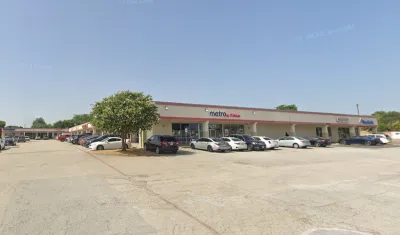
A strip mall redevelopment project in a small Texas town shows how excess parking can be repurposed to create new housing.
According to a piece by Tiffany Owens Reed for the Parking Reform Network, the adaptive reuse project is a partnership between an incremental real estate developer and Habitat for Humanity, which will build 16 affordable townhouse units on the site. “The properties will provide not just an opportunity to own a home for residents, but also a chance to save money on car ownership by locating them in a more central part of the city with better access to shops, amenities and jobs.”
Explaining his approach to incremental development, developer Monte Anderson offers a few pointers: work in your own backyard; embrace the value of small projects; and embrace partnerships.
A proposed Texas state bill, Senate Bill 840, could make it easier to do this type of development by allowing property owners “ to build mixed-use and multifamily housing by-right on land they own in commercial and retail districts.” For now, according to Anderson, “Coordinating with other property owners adjacent to the parking lot and securing the necessary platting, infrastructure, financing and approvals are tasks for only the most persistent. But with the right partnerships and with city leadership willing to collaborate and see the adaptive reuse as a long-term investment in its own financial future, it just might be possible.”
FULL STORY: Redeveloping Excess Parking: An Incremental Approach in a Texas Suburb

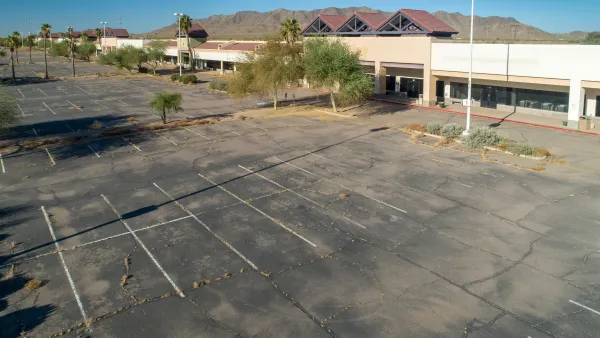
Opinion: Strip Malls Are a Huge Untapped Source for Housing
Redeveloping just the best-suited 10 percent of America’s strip malls could result in 700,000 new affordable homes nationwide.
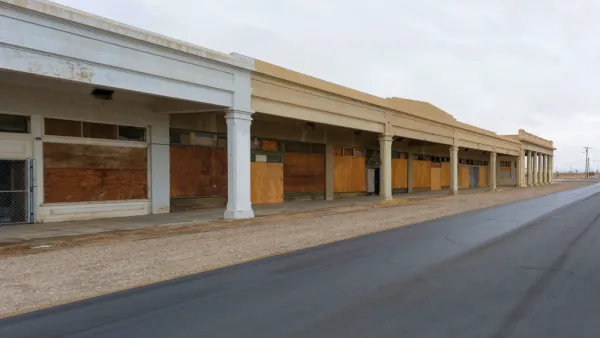
Strip Malls as a Housing Solution
The American strip mall may be a dying breed of commercial development, but could the buildings serve a new use as sustainable housing?
Madison approves hundreds of affordable apartments as deadline for federal funding looms
A recently approved project will bring 163 affordable units to the north side.

The state-sanctioned urbicide of Austin
People don’t kill cities. Freeways do.

US to reduce Colorado River water deliveries to Mexico
A new Colorado Treaty amendment reduces Mexico’s Colorado River water allocation by 250,000 acre feet.

New Jersey’s second-largest city bans standalone data centers
Jersey City will continue to allow co-location facilities, such as those meant for research institutions that store their own data.

Amtrak not solely to blame for New Jersey commuter rail's unreliability, report finds
A new study from the Garden State Initiative found that NJ Transit’s budget grew 20% across a 4 year period, but reliability declined significantly over the same period.

EPA erases limits on planet-warming pollution from power plants
Under Monday’s plan, power plants would still have some limits on how much mercury, arsenic and other contaminants they can emit.

Phoenix announces new on-demand transit service, more frequent RAPID buses
Both new services will launch in October, and are part of Phoenix's Project Effective Access Solutions for Easing Congestion.

FREE Course: Walkable City 1: Why Walkability?
After describing his path towards focusing on walkability as the essence of good planning, Jeff Speck marches through his five principal reasons for making more walkable places.
Reinventing Malls: Planning Alchemy—Turning Gray Fields Into Gold
The course focuses on the opportunities and imperatives that shape reinvention of mall sites.

Eagle County Government
Harvard University Graduate School of Design
Nashville Planning Department
The Architects Foundation
University of Cincinnati Online
The Pocatello Development Authority
The Urban Renewal Agency of the City of Pocatello
Journal of the American Planning Association