The city's new transportation plan focuses on eliminating carbon emissions in its transportation sector, reducing congestion, and boosting public transit.



With its new Clean Transportation Electrification Blueprint, Seattle is embarking on an ambitious plan to electrify its transportation system and decrease congestion by boosting its EV charging network, encouraging more walking, biking, and transit ridership, and restricting private cars in parts of the city. But "these aspirations hinge on politically aligned values at all levels of government and cooperation with companies that have been hostile to regulations from the city," writes Michelle Baruchman in the Seattle Times.
Building on "Seattle's Green New Deal, which seeks to eliminate the city’s climate pollution by 2030, address environmental inequities and create thousands of green, unionized jobs," the plan requires "aggressive" efforts and collaboration across sectors. According to the plan, by 2030, "all ride-hailing trips would be electric and emissions free; almost one-third of deliveries would be made with vehicles that don’t emit carbon; a 'major area' of Seattle would be restricted to most cars; and charging stations would be reliable and readily available throughout the city."
The plan, which also includes congestion pricing for downtown Seattle, joins other efforts in Washington to reduce carbon emissions and improve public transit. "Washington State Ferries plans to convert its Wenatchee vessel from running solely on diesel fuel to using hybrid/electric power later this year," and "King County Metro has pledged to make its 1,500-bus fleet carbon free by 2040."
Read the full story: ‘Major area’ of Seattle could forbid most cars under city’s new, greener transportation plan

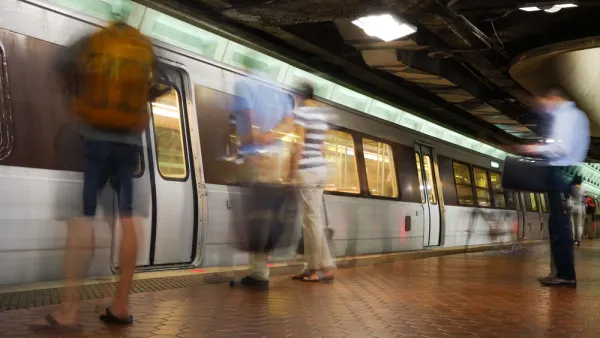
Study: D.C. Region Must Take Aggressive Steps To Reach Climate Goal
To achieve its stated emissions reduction goal, the Greater Washington area must sharply reduce driving and speed up the adoption of electric vehicles.
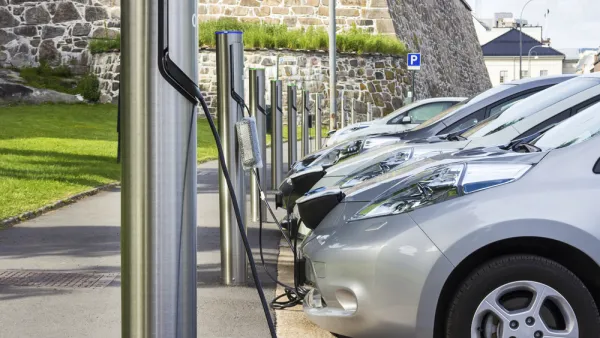
Study: EV Adoption Isn't Enough. Car-Centric Culture Needs To Change.
The focus on electrifying personal vehicles misses the opportunity to transform urban transportation systems, reduce congestion, and make cities more affordable.
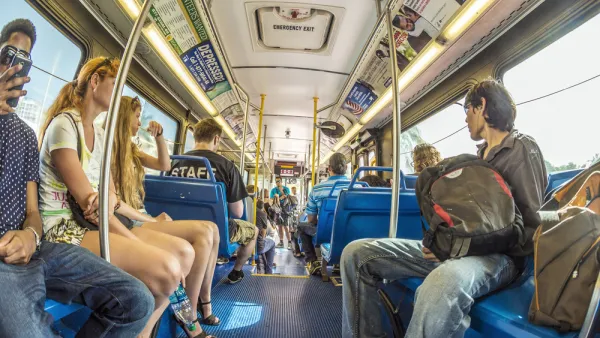
To Fight Climate Change, Support Public Transit
Electric cars may garner a lot of attention these days, but significantly reducing carbon emissions and urban congestion means investing in high-quality mass transit.

Planetizen Federal Action Tracker
A weekly monitor of how Trump’s orders and actions are impacting planners and planning in America.

Northwest rail fans eager for Sept. 30 debut of Amtrak’s Airo fleet
Get ready for that new train smell and more seats. But they won’t go faster or run more frequently on the Cascades route in Washington and Oregon.

Record-breaking wildlife overpass in Colorado brings 91% reduction in animal collisions
Prior to the overpass, vehicles were hitting one deer per day on Colorado’s Interstate 25.

See the 12 communities on New York City’s affordable housing naughty list
The Upper East and West Sides, Elmhurst, and Bayside are among the communities that have built little affordable housing over the past five years, and now will see certain projects fast-tracked under new city rules.

Downtown Chicago opens the doors of first office-to-housing project
Chicago aims to eventually turn empty office space into 1,765 mixed-income housing units.

Novel study finds extreme state-by-state disparity in housing construction timelines
The first comprehensive working paper on U.S. construction timelines also found that the permitting process for multi-family projects has slowed nationwide.

FREE Course: Walkable City 1: Why Walkability?
After describing his path towards focusing on walkability as the essence of good planning, Jeff Speck marches through his five principal reasons for making more walkable places.
Reinventing Malls: Planning Alchemy—Turning Gray Fields Into Gold
The course focuses on the opportunities and imperatives that shape reinvention of mall sites.

City of Thousand Oaks
City of Wisconsin Rapids
Harvard University Graduate School of Design
The Architects Foundation
University of Cincinnati Online
Northern Illinois Transit Authority (NITA)
The Pocatello Development Authority
The Urban Renewal Agency of the City of Pocatello