A legal battle is being waged between the coal-exporting states of Utah, Wyoming, and Montana and coastal cities in California, Oregon, and Washington that pits the power of local land-use authority against the protection of interstate commerce.


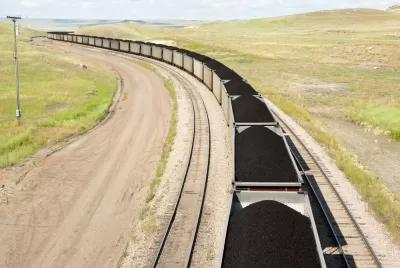
Coastal cities in the three West Coast states have taken a stand to fight global climate change and protect local public health by barring the export of coal, the dirtiest of fossil fuels, which is being resisted in the courts by Mountain States where coal mining is central to their economy.
Anna M. Phillips reports on Feb. 26 for the Los Angeles Times on the legal conflicts between the Western mining states and the West Coast port cities.
If all had gone according to the coal industry’s plan, as many as seven ports in California, Oregon and Washington might have become gateways to energy-hungry Japan, China and India — and a lifeline for coal producers in landlocked Western states.
However, many West Coast state and city leaders have resisted their plan. Five were canceled due in part to market uncertainty and "two have been challenged in courts in California and Washington," according to Reuters on Jan. 21.
"Lawmakers in Oakland and Washington state blocked plans for coal-export terminals, citing health concerns and pollution risks," adds Phillips. And on January 14, another Bay Area city sent shock waves to Utah's coal mining industry.
Just last month the Richmond City Council gave the California city’s port three years to phase out coal exports. Nearly all coal mined in Utah is exported to Japan through Richmond, an arrangement that would end under the new ordinance [pdf].
Coal companies and coal-state lawmakers quickly condemned the decisions as ideologically motivated and discriminatory, and acted.
Utah lawmakers, who previously agreed to spend $53 million to guarantee coal exports out of Oakland, are now weighing whether to set aside $500,000 to sue Richmond over its ban on coal handling and storage.
Local land-use authority vs. interstate commerce
The port cities justify their actions on the public health impacts of coal, joined by environmental groups that want to reduce the burning of fossil fuels to fight climate change. The coal industry and the port facility at the center of the Richmond controversy view it differently.
“We believe that these coastal states are using their local authorities for land-use planning to essentially block interstate commerce,” said Utah Mining Assn. President Brian Somers. “If California produce or other commodities come through on a train, we don’t have the authority to stop them at the border. That’s what’s happening to our coal.”
Christopher Locke, an attorney for Levin-Richmond Terminal Corp. (LRTC) told the Richmond City Council on Jan. 14 "that the ordinance would violate ‘taking’ protections under the California Constitution and the United States Constitution, the Commerce Clause of the United States Constitution, the Due Process and Equal Protection Clauses of the United States and California Constitutions," reported Chris Dupin for Freighwaves.
Attorneys for the Sierra Club, however, said the ordinance was “an entirely lawful exercise of the police power that does not run afoul of constitutional or statutory requirements,” and Christiana Tiedemann, the former chief counsel for the California Environmental Protection Agency, wrote to the council saying that a threat of litigation because the city was unlawfully terminating the existing coal storage and handling land use in Richmond “has no merit.”
On March 5, Levin Enterprises, which operates the terminal and an affiliated shortline railroad, filed suit, according to Law360, a paid subscription service. Also filing suit was Wolverine Fuels LLC, which ships coal from Utah to the Levin facility. Both cases will be heard in Federal District Court – Northern District of California.
"Should the states lose their lawsuits, it could embolden left-leaning coastal states to use permitting decisions and zoning laws to fight global warming by preventing the export of fossil fuels," adds Phillips in the source article. "Alternatively, if the coal states win, they and other energy-producing states could try to force the West Coast to accept not only coal but also liquefied natural gas."
Additional reading:
- "Big setback for Utah mines as Bay Area port city bans coal," The Salt Lake Tribune, January 16, 2020
Related in Planetizen:
-
Federal Judge Strikes Down Oakland's Ban on Coal Exports, May 18, 2018
Hat tip to Ara Marderosian.
FULL STORY: Coal states sue California cities and Washington state to force ports to ship exports

A Win for ‘Keep it in the Ground’
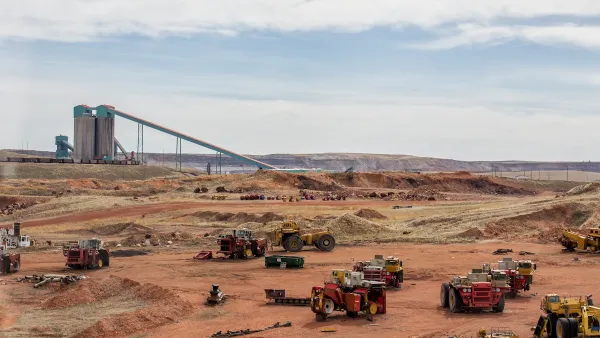
Coal mining in Wyoming will take a major hit as a result of a U.S. Department of Interior plan to cease future leasing of coal mines in the nation's most productive coal mining basin. The decision casts a spotlight on the presidential election.
Judge Halts Sales of New Coal Mining Leases on Federal Lands
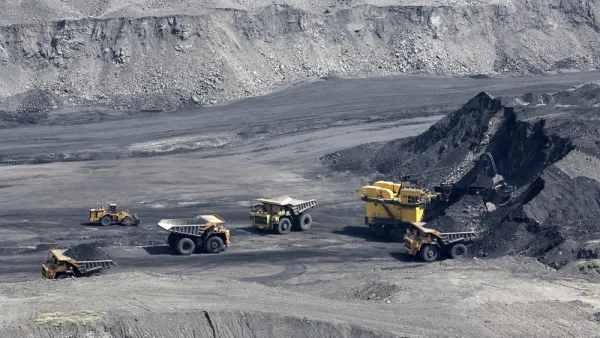
Once again, the president's efforts to undo his predecessor's environmental legacy were thwarted by a court ruling. In this case, the Interior Department's failure to conduct an environmental review of a Trump executive order ran afoul of NEPA.
Federal Judge Strikes Down Oakland's Ban on Coal Exports
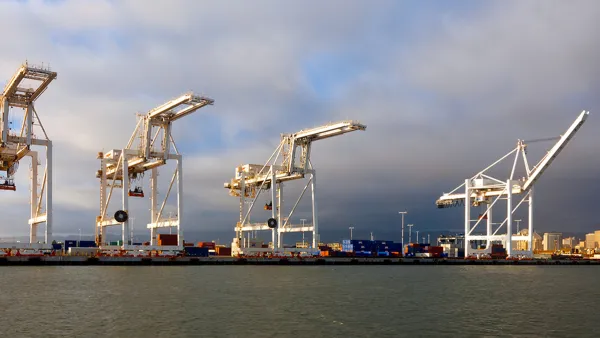
Shipping coal from Utah to export to Asia through a new cargo facility in Oakland, California took a significant step forward on May 15 with a strongly worded ruling condemning the adequacy of the city of Oakland's environmental analysis.

The state-sanctioned urbicide of Austin
People don’t kill cities. Freeways do.

US to reduce Colorado River water deliveries to Mexico
A new Colorado Treaty amendment reduces Mexico’s Colorado River water allocation by 250,000 acre feet.

New Jersey’s second-largest city bans standalone data centers
Jersey City will continue to allow co-location facilities, such as those meant for research institutions that store their own data.

Amtrak not solely to blame for New Jersey commuter rail's unreliability, report finds
A new study from the Garden State Initiative found that NJ Transit’s budget grew 20% across a 4 year period, but reliability declined significantly over the same period.

EPA erases limits on planet-warming pollution from power plants
Under Monday’s plan, power plants would still have some limits on how much mercury, arsenic and other contaminants they can emit.

Phoenix announces new on-demand transit service, more frequent RAPID buses
Both new services will launch in October, and are part of Phoenix's Project Effective Access Solutions for Easing Congestion.

FREE Course: Walkable City 1: Why Walkability?
After describing his path towards focusing on walkability as the essence of good planning, Jeff Speck marches through his five principal reasons for making more walkable places.
Reinventing Malls: Planning Alchemy—Turning Gray Fields Into Gold
The course focuses on the opportunities and imperatives that shape reinvention of mall sites.

Eagle County Government
Harvard University Graduate School of Design
Nashville Planning Department
The Architects Foundation
University of Cincinnati Online
The Pocatello Development Authority
The Urban Renewal Agency of the City of Pocatello
Journal of the American Planning Association