Critics of the state’s ‘Be Safe. Drive Smart.’ campaign say the messaging puts the onus on pedestrians and cyclists while failing to address the lack of robust pedestrian and bike infrastructure in many of its cities.


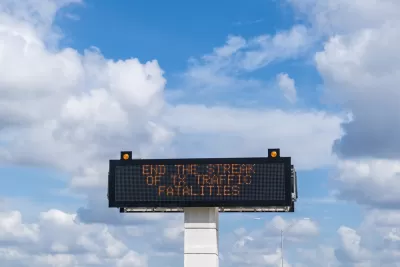
Writing in Next City, Benton Graham describes the criticism faced by the Texas Department of Transportation (TxDOT) for its messaging approach to road safety, which in most cases places the blame for crashes squarely on pedestrians (the top reason for pedestrian deaths, according to the department’s website, is “Pedestrians failing to yield the right-of-way to vehicles”) and cyclists.
Meanwhile, “While the state agency lists safety as its number one priority, it only dedicated around 4% of its funds to safety initiatives in its 10-year plan,” Graham notes. Jay Blazek Crossley, executive director of Farm & City and an advocate for safer roads, says “TxDOT investing in safe, multimodal streets is the most important thing that it can do to make roads less dangerous.”
Advocates like Blazek Crossley see cause for optimism in recent state and local initiatives, however. “In addition to infrastructure changes, Blazek Crossley said there is opportunity for safety improvements through policy changes.” FOr example, “The Lisa Torrey Smith Act passed during the 2021 Texas Legislative Session requires drivers to stop and yield to pedestrians in crosswalks.” TxDOT also recently added a pedestrian design section to its roadway design manual, and cities like Houston are making serious investments in bike and pedestrian infrastructure.
FULL STORY: Texas Is Trying To Fight Pedestrian And Cyclist Deaths With Words. Is It Enough?

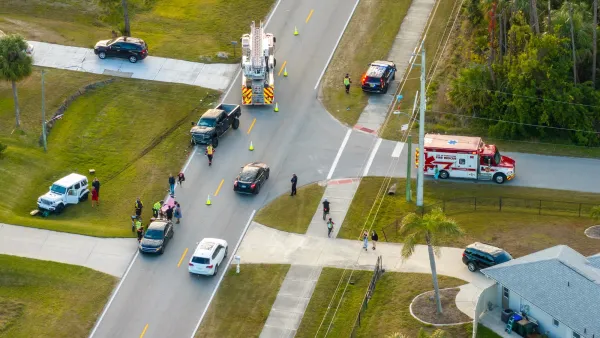
Pedestrian Deaths Fell by Largest Percentage in 15 Years, but Remain Above Pre-Pandemic Levels
After a spike in deaths during the Covid-19 years, road deaths fell to 3,024 in the first half of 2025.
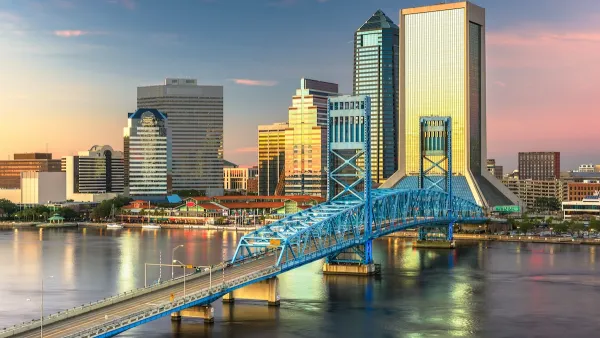
Jacksonville Takes Action on Vision Zero
The city is implementing its first-ever Vision Zero Action Plan in an effort to reduce pedestrian and cyclist deaths and serious injuries.
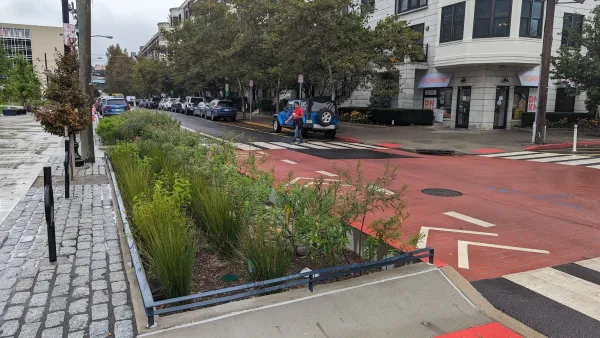
Hoboken's $20 Vision Zero fix
The New Jersey city eliminated traffic deaths for the last nine years in a row.

Planetizen Federal Action Tracker
A weekly monitor of how Trump’s orders and actions are impacting planners and planning in America.

The state-sanctioned urbicide of Austin
People don’t kill cities. Freeways do.

US to reduce Colorado River water deliveries to Mexico
A new Colorado Treaty amendment reduces Mexico’s Colorado River water allocation by 250,000 acre feet.

5 New England states march closer to 800 megawatt wind energy project
Securing federal approval for the project may be complicated under the Trump administration, which has historically been hostile towards domestic wind power.

Baltimore to break ground on $50 million Transit Priority Project
The project will bring faster bus trips, safer streets and better bike connections to Baltimore.

Airbnb launches $250 million 'last-dollar financing' housing accelerator, makes first investment in Austin
The company will put $6.4 million towards affordable housing development in Texas’ capital.

FREE Course: Walkable City 1: Why Walkability?
After describing his path towards focusing on walkability as the essence of good planning, Jeff Speck marches through his five principal reasons for making more walkable places.
Reinventing Malls: Planning Alchemy—Turning Gray Fields Into Gold
The course focuses on the opportunities and imperatives that shape reinvention of mall sites.

Eagle County Government
Harvard University Graduate School of Design
Nashville Planning Department
The Architects Foundation
University of Cincinnati Online
The Pocatello Development Authority
The Urban Renewal Agency of the City of Pocatello
Journal of the American Planning Association