A local transit advocate is using legal pressure in an effort to hold the Metropolitan Atlanta Rapid Transit Authority (MARTA) accountable for bus transit cuts in the early months of the pandemic.


"DeKalb County resident Ed Williams has asked a Fulton County Superior Court judge to order the [MARTA] transit agency to restore 70 bus routes it eliminated in April to promote social distancing and focus service on key corridors," reports David Wickert.
"Williams also has filed a complaint with the Federal Transit Administration, saying MARTA’s actions were illegal and disproportionately affected minority customers," adds Wickert.
MARTA eliminated 70 of its 100 bus routes in April, and has already restored some bus service, but has yet to set a timetable to fully restore service. The decision to eliminate service during the pandemic as a result of public health requirements and in response to plummeting ridership has been common among transit systems around the country.
According to Wickert, the lawsuit claims that MARTA lacked the authority to cut service without public input.
FULL STORY: Lawsuit seeks restoration of MARTA bus routes

The Realities of Pandemic Public Transit Service
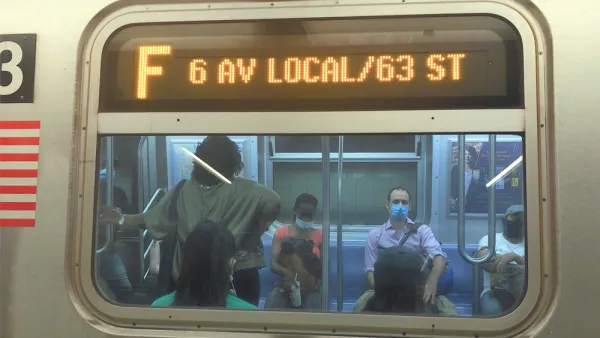
Recent analysis by TransitCenter quantifies the effects of the pandemic for the 150 largest U.S. transit systems.
D.C. Metro Seeks Public Input on Proposed Service Cuts
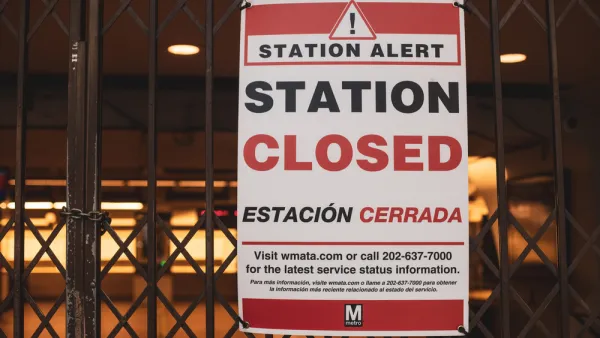
D.C. Metro Seeks Public Input on Proposed Service Cuts

Post-Pandemic Transit Plan Announced in San Francisco
The recently announced post-COVID plan for public transit in San Francisco looks a lot different than the pre-COVID days.

The state-sanctioned urbicide of Austin
People don’t kill cities. Freeways do.

US to reduce Colorado River water deliveries to Mexico
A new Colorado Treaty amendment reduces Mexico’s Colorado River water allocation by 250,000 acre feet.

New Jersey’s second-largest city bans standalone data centers
Jersey City will continue to allow co-location facilities, such as those meant for research institutions that store their own data.

Amtrak not solely to blame for New Jersey commuter rail's unreliability, report finds
A new study from the Garden State Initiative found that NJ Transit’s budget grew 20% across a 4 year period, but reliability declined significantly over the same period.

EPA erases limits on planet-warming pollution from power plants
Under Monday’s plan, power plants would still have some limits on how much mercury, arsenic and other contaminants they can emit.

Phoenix announces new on-demand transit service, more frequent RAPID buses
Both new services will launch in October, and are part of Phoenix's Project Effective Access Solutions for Easing Congestion.

FREE Course: Walkable City 1: Why Walkability?
After describing his path towards focusing on walkability as the essence of good planning, Jeff Speck marches through his five principal reasons for making more walkable places.
Reinventing Malls: Planning Alchemy—Turning Gray Fields Into Gold
The course focuses on the opportunities and imperatives that shape reinvention of mall sites.


Eagle County Government
Harvard University Graduate School of Design
Nashville Planning Department
The Architects Foundation
University of Cincinnati Online
The Pocatello Development Authority
The Urban Renewal Agency of the City of Pocatello
Journal of the American Planning Association