The extra costs of automobile dependency turn assumptions about affordability on their head, according to a recently published report by the Citizens Budget Commission.


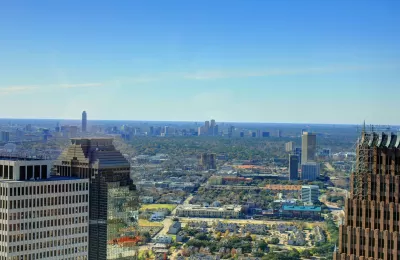
Peter Holley writes on the changes that rapid growth have brought to Houston, and the underappreciate costs of living in a sprawling city:
Though we don’t have up-to-date grotto figures, several million people found Houston’s sales pitch compelling enough to move to the Bayou City in recent decades, with the region gaining 1.1 million residents since 2010 alone, according to the Greater Houston Partnership. Outside a few ritzy pockets intimately tied to oil prices, the city evolved into a sprawling mass of suburban affordability—a Levittown on steroids for the new American South.
According to Holley, the "seemingly endless suburban growth" has had a "crucial downside" that doesn't have to do with repeated, catastrophic flooding: increasing housing costs.
While the seemingly endless suburban growth has traditionally offered the city the veneer of affordability, the sprawl has also spiked transportation costs, so much so that the city’s combined transportation and living costs now place it on par with New York City….
The conclusion comes from a report by the Citizens Budget Commission, titled "Rent and Ride."
"Monthly median housing costs in Houston in 2016 (the most recent year data was available) were $1,379, nearly $400 less than New York City. However, median transportation costs were $1,152, a figure 38 percent higher than for New Yorkers," according to Holley. "In total, the study found, living in Houston was only $79 cheaper each month than New York."
Planetizen blogger and founder and executive director of the Victoria Transport Policy Institute Todd Litman has done similar work to document a more clear and thorough picture of affordability based on transportation costs, as exemplified in the following posts, among others.
- More Critique of Demographia's International Housing Affordability Survey (January 2015)
- Study: Sprawl Costs the U.S. Economy $1 Trillion Annually (March 2015)
- Smart Growth Policies for Urban Affordability and Fertility (February 2016)
- The International Sprawl Tax (June 2016)
- Unaffordability is a Problem but Sprawl is a Terrible Solution (February 2017)
- Houses Appreciate. Cars Depreciate. Walkable Urban Neighborhoods Help Families Build Wealth. (August 2017)
- True Affordability: Critiquing the International Housing Affordability Survey (March 2018)
- Understanding Location-Efficient Affordability Impacts (April 2018)
FULL STORY: Houston Is Now Less Affordable Than New York City

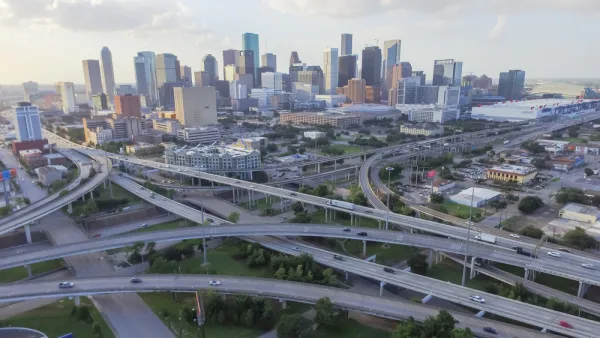
Houston More Expensive Than New York? Not So Fast
A recent study claiming that transportation costs in Houston, among other expenses, raise the cost of living almost to the same level as living in New York City. Some took exception to the study's methodology.

Cost of living too high? Planners to the rescue!
Excessive costs of living force many people to work more than optimal hours, leaving less time for family and fun. Local policies that favor affordable housing and transportation increase freedom, opportunity and happiness.

Planetizen Federal Action Tracker
A weekly monitor of how Trump’s orders and actions are impacting planners and planning in America.

The state-sanctioned urbicide of Austin
People don’t kill cities. Freeways do.

US to reduce Colorado River water deliveries to Mexico
A new Colorado Treaty amendment reduces Mexico’s Colorado River water allocation by 250,000 acre feet.

5 New England states march closer to 800 megawatt wind energy project
Securing federal approval for the project may be complicated under the Trump administration, which has historically been hostile towards domestic wind power.

Baltimore to break ground on $50 million Transit Priority Project
The project will bring faster bus trips, safer streets and better bike connections to Baltimore.

Airbnb launches $250 million 'last-dollar financing' housing accelerator, makes first investment in Austin
The company will put $6.4 million towards affordable housing development in Texas’ capital.

FREE Course: Walkable City 1: Why Walkability?
After describing his path towards focusing on walkability as the essence of good planning, Jeff Speck marches through his five principal reasons for making more walkable places.
Reinventing Malls: Planning Alchemy—Turning Gray Fields Into Gold
The course focuses on the opportunities and imperatives that shape reinvention of mall sites.


Eagle County Government
Harvard University Graduate School of Design
Nashville Planning Department
The Architects Foundation
University of Cincinnati Online
The Pocatello Development Authority
The Urban Renewal Agency of the City of Pocatello
Journal of the American Planning Association