A new online tool allows cities to measure progress in providing access to alternative forms of transportation.


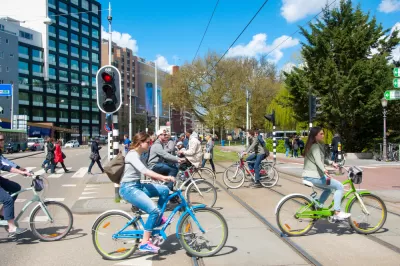
Adele Peters shares news of a new report and online tool from the Institute for Transportation and Development Policy that measures how well cities connect residents to their jobs through public transit, walking, or biking.
The "Indicators for Sustainable Mobility," as the tool is called, "considered 12 different factors, including how close homes and jobs are to rapid transit, how many people have access to transit that runs frequently at rush hour, the size of city blocks, and how many people could get to work in a half an hour or an hour by walking, biking on protected bike lanes, or on public transit," according to Peters.
Peters uses the comparative power of the tool to compare the transit access successes of the city of Minneapolis, for instance, to cities with a lot more work to do, like Nashville and Indianapolis.
Andrew Small also picked up on the news of the new tool from the Institute for Transportation and Development Policy, and focused on the lessons cities could apply when deciding how to improve access to alternative transportation.
"The key, the reports stresses, is getting a better balance between jobs, low-income households, and people in proximity to public transit," writes Small.
Read the full story: Which cities make it easiest to commute without a car?

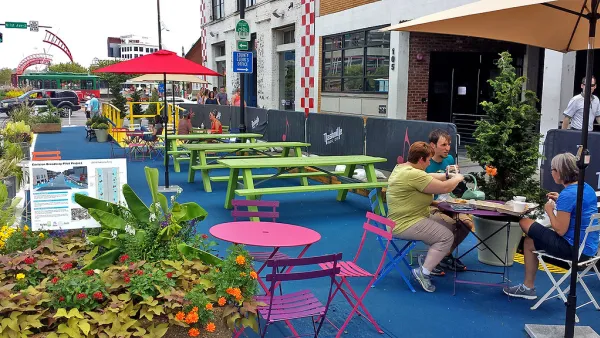
Op-Ed: Don't Reverse the Progress Made by 'Pandemic Streets'
In many cities, the public realm saw a drastic shift towards pedestrian-oriented infrastructure. The L.A. Times editorial board argues we should keep it that way.
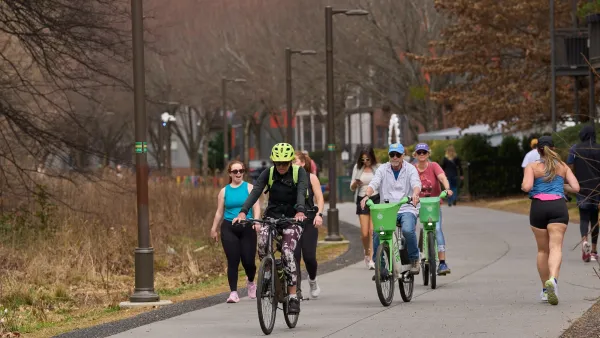
Atlanta could add dedicated bike lane to Beltline
A city councilmember says a dedicated lane would prevent conflicts between cyclists and pedestrians, but others worry it would impede efforts to build transit along the Beltline.
Seattle Mayor Raises Transportation Levy by $100 Million
The proposal sent to City Council includes more funding for multimodal transportation and road safety.

Planetizen Federal Action Tracker
A weekly monitor of how Trump’s orders and actions are impacting planners and planning in America.

Northwest rail fans eager for Sept. 30 debut of Amtrak’s Airo fleet
Get ready for that new train smell and more seats. But they won’t go faster or run more frequently on the Cascades route in Washington and Oregon.

Record-breaking wildlife overpass in Colorado brings 91% reduction in animal collisions
Prior to the overpass, vehicles were hitting one deer per day on Colorado’s Interstate 25.

Detroit to transform waterfront with $2.2 billion investment
Developers will convert about 18 acres of unused parking lot space into civic spaces.

‘Going backwards:’ Baltimore mayor, students rally against state's transit funding plan
Maryland's proposed six-year plan provides no funding for Baltimore’s BMORE bus program and reduces its road maintenance funding.

Trump wants to cancel nearly 98% of funding for HUD housing support program
Multiple housing groups are suing the administration in an effort to preserve the funding.

FREE Course: Walkable City 1: Why Walkability?
After describing his path towards focusing on walkability as the essence of good planning, Jeff Speck marches through his five principal reasons for making more walkable places.
Reinventing Malls: Planning Alchemy—Turning Gray Fields Into Gold
The course focuses on the opportunities and imperatives that shape reinvention of mall sites.

City of Thousand Oaks
City of Wisconsin Rapids
Harvard University Graduate School of Design
The Architects Foundation
University of Cincinnati Online
Northern Illinois Transit Authority (NITA)
The Pocatello Development Authority
The Urban Renewal Agency of the City of Pocatello