Observers say the Trump Administration might be threatening to "kill the hostage" in a hardline negotiation tactic on the Gateway project to build a replacement rail tunnel under the Hudson River to connect New York and New Jersey.


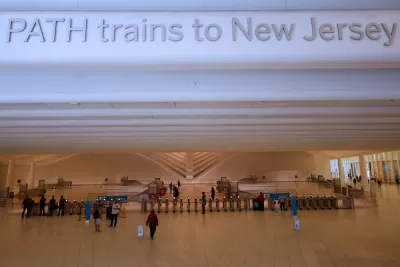
"The president officially scrapped his predecessor's proposal to have the federal government underwrite half the cost of a multi-billion-dollar Amtrak tunnel connecting New Jersey to Penn Station, the busiest transit hub in the U.S.," reports Will Bredderman.
"The administration released the news on the cusp of a holiday weekend in a letter from a top Federal Transit Administration official to Gov. Andrew Cuomo and his New Jersey counterpart Chris Christie, who had agreed with the Obama administration to split the project's costs 50-50," adds Bredderman.
The timing of the news, from Friday before the New Year's holiday, means officials and the public were just becoming aware of the implications of the news. Previously in the week, however, Planetizen correspondent Irvin Dawid picked up on hints from the Trump Administration that they might scrap the funding plan.
Bredderman reports that sources "have previously suggested to Crain's that the president's handling of the project has political overtones, as its greatest champion has been Schumer, the most powerful Democrat in Washington." The essence of this thinking is that the Trump Administration could fold the Gateway project into a larger infrastructure package, expected for public release early this year, in the hopes of securing votes from Senator Schumer.
Patrick McGeehan also reports on the decision by the Trump Administration to nullify the financing plan for the project, finding some experts who don't believe the Gateway project is completely dead. John Porcari, the executive director of the Gateway Development Corporation, is quoted in the article saying planners are still "plowing full speed ahead" on the project.
For background on the project, and some explanation of why some are calling the Gateway project the most important infrastructure project in the nation, see an article from June 2017 by Jeff Davis, written for the Eno Center for Transportation.
Read the full story: Trump administration kills Gateway tunnel deal
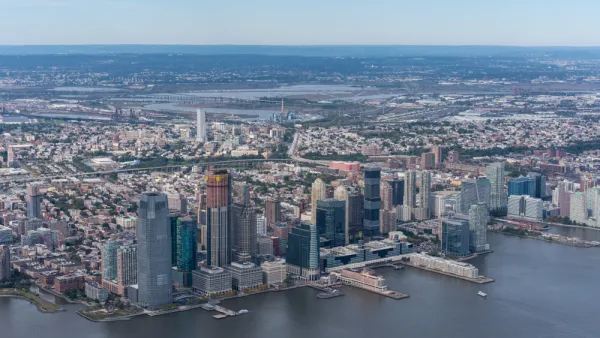
Costs, Delays Ballon on Hudson River Tunnel Project
Developers are baling the latest delays and cost increases for the Hudson Tunnel Project on uncertainty surrounding federal environmental review.
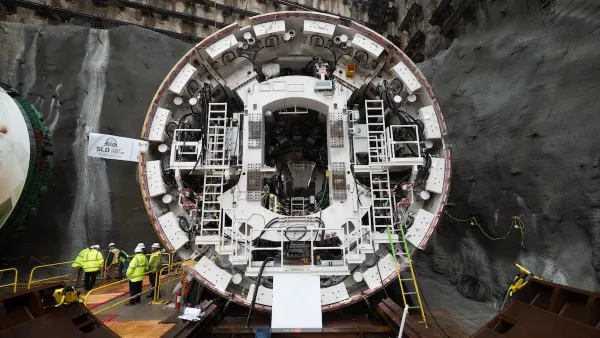
Massive tunnel-boring machine breaks ground on Gateway Project
The Trump administration revoked funding for the project in October 2025, and then restored it earlier this year.
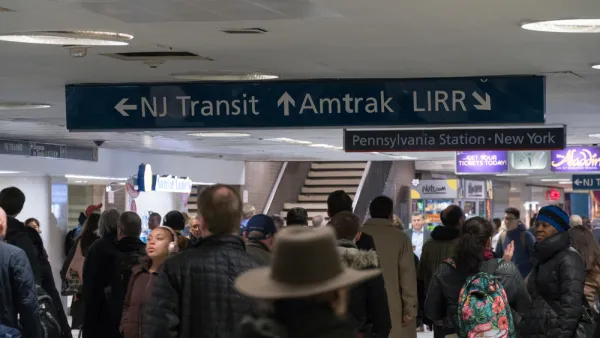
Gateway Program Encounters Barrier in Trump
President Trump has not been a friend to the $30 billion Gateway Program, a transportation project meant to replace aging rail infrastructure connecting New York and New Jersey.

Planetizen Federal Action Tracker
A weekly monitor of how Trump’s orders and actions are impacting planners and planning in America.

California plans to bury El Niño’s downpour
If the state plays its cards right, it may be able to store a billion acre-feet of El Niño’s water in aquifers.

Desperate measures: Advocates weigh draining Lake Powell to fill Colorado River
Draining the reservoir could reduce evaporation losses by a couple hundred thousand acre-feet.

Los Angeles just elected an urban planner as its mayor
Transportation analysts are optimistic that Raman will be more aggressive in addressing transit issues than Bass.

Mamdani’s pied-à-terre tax survives legal challenge
A panel of judges found that the plaintiffs failed to demonstrate injury as a result of New York City's implementation of the tax.

Eastern Nebraska is running out of electricity
Data centers and electrification are straining eastern Nebraska’s grid, throttling economic development.

FREE Course: Walkable City 1: Why Walkability?
After describing his path towards focusing on walkability as the essence of good planning, Jeff Speck marches through his five principal reasons for making more walkable places.
Reinventing Malls: Planning Alchemy—Turning Gray Fields Into Gold
The course focuses on the opportunities and imperatives that shape reinvention of mall sites.

City of Rosemead
Rutgers University, Edward J. Bloustein School of Planning and Public Policy
One Hundred Miles
University of Michigan School for Environment and Sustainability (SEAS)
Hunter College, City University of New York (CUNY)
The Architects Foundation
City of Cambridge
Montrose County
The Pocatello Development Authority