Developers are baling the latest delays and cost increases for the Hudson Tunnel Project on uncertainty surrounding federal environmental review.


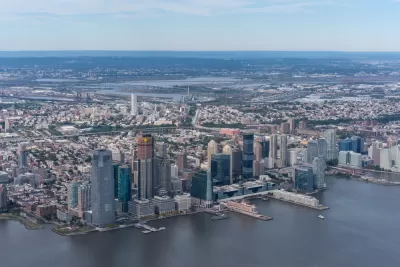
"Costs for the proposed Hudson River rail tunnel project yo-yoed back up as planners postponed the projected start date by a year," reports Eydie Cubarrubia, citing documents revealed in August by the Gateway Program Development Corp. and the Port Authority of New York and New Jersey.
Cubarrubia summarizes the shifting cost estimates for the project thusly:
The $11.6 billion project includes $1.8 billion to rehabilitate the existing North River Tunnel between the two states and $9.8 billion for a new tunnel. The total price tag, cited in a submission to the Federal Transit Administration’s 2020 call for projects for the Capital Investment Grant, is a 2.4% increase from the 2019 submission’s $11.3 billion. Last year’s submission itself was a reduction from $12.7 billion.
According to the Gateway Development Corps., the reason for the delay, and the ensuing cost increase, can be traced to delays at the federal level in completing the Final Environmental Impact Statement and Record of Decision. The story sounds similar to the delays that have beset the city of New York's congestion pricing scheme. The story of the Trump administration's obstruction of the tunnel project is also familiar.
FULL STORY: Hudson River Tunnel Project Cost Rises to $11.6B as Construction is Further Delayed

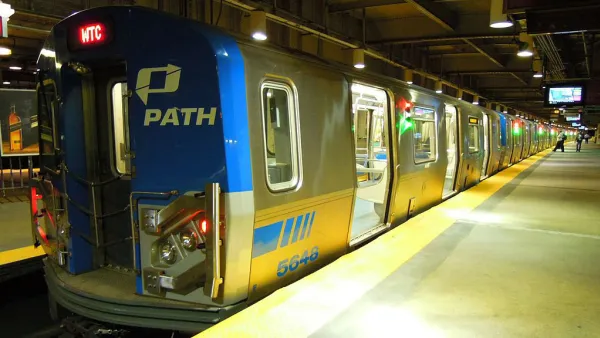
Financing of Hudson River Rail Tunnels in Peril
A funding agreement between New York, New Jersey, and the U.S. DOT for one of the most important rail projects in the nation is in danger of collapsing because of the way the two states are financing their share of the $12.9 billion cost.
Biden Would Finally Get the Gateway Project Moving, Advocates Say
A group of regional experts and advocates provide details on how a win by former Vice President Joe Biden might change the direction of the Gateway Project to repair the rail link between New Jersey and New York.
Gateway Program Encounters Barrier in Trump
President Trump has not been a friend to the $30 billion Gateway Program, a transportation project meant to replace aging rail infrastructure connecting New York and New Jersey.

The state-sanctioned urbicide of Austin
People don’t kill cities. Freeways do.

US to reduce Colorado River water deliveries to Mexico
A new Colorado Treaty amendment reduces Mexico’s Colorado River water allocation by 250,000 acre feet.

New Jersey’s second-largest city bans standalone data centers
Jersey City will continue to allow co-location facilities, such as those meant for research institutions that store their own data.

Amtrak not solely to blame for New Jersey commuter rail's unreliability, report finds
A new study from the Garden State Initiative found that NJ Transit’s budget grew 20% across a 4 year period, but reliability declined significantly over the same period.

EPA erases limits on planet-warming pollution from power plants
Under Monday’s plan, power plants would still have some limits on how much mercury, arsenic and other contaminants they can emit.

Phoenix announces new on-demand transit service, more frequent RAPID buses
Both new services will launch in October, and are part of Phoenix's Project Effective Access Solutions for Easing Congestion.

FREE Course: Walkable City 1: Why Walkability?
After describing his path towards focusing on walkability as the essence of good planning, Jeff Speck marches through his five principal reasons for making more walkable places.
Reinventing Malls: Planning Alchemy—Turning Gray Fields Into Gold
The course focuses on the opportunities and imperatives that shape reinvention of mall sites.

Eagle County Government
Harvard University Graduate School of Design
Nashville Planning Department
The Architects Foundation
University of Cincinnati Online
The Pocatello Development Authority
The Urban Renewal Agency of the City of Pocatello
Journal of the American Planning Association